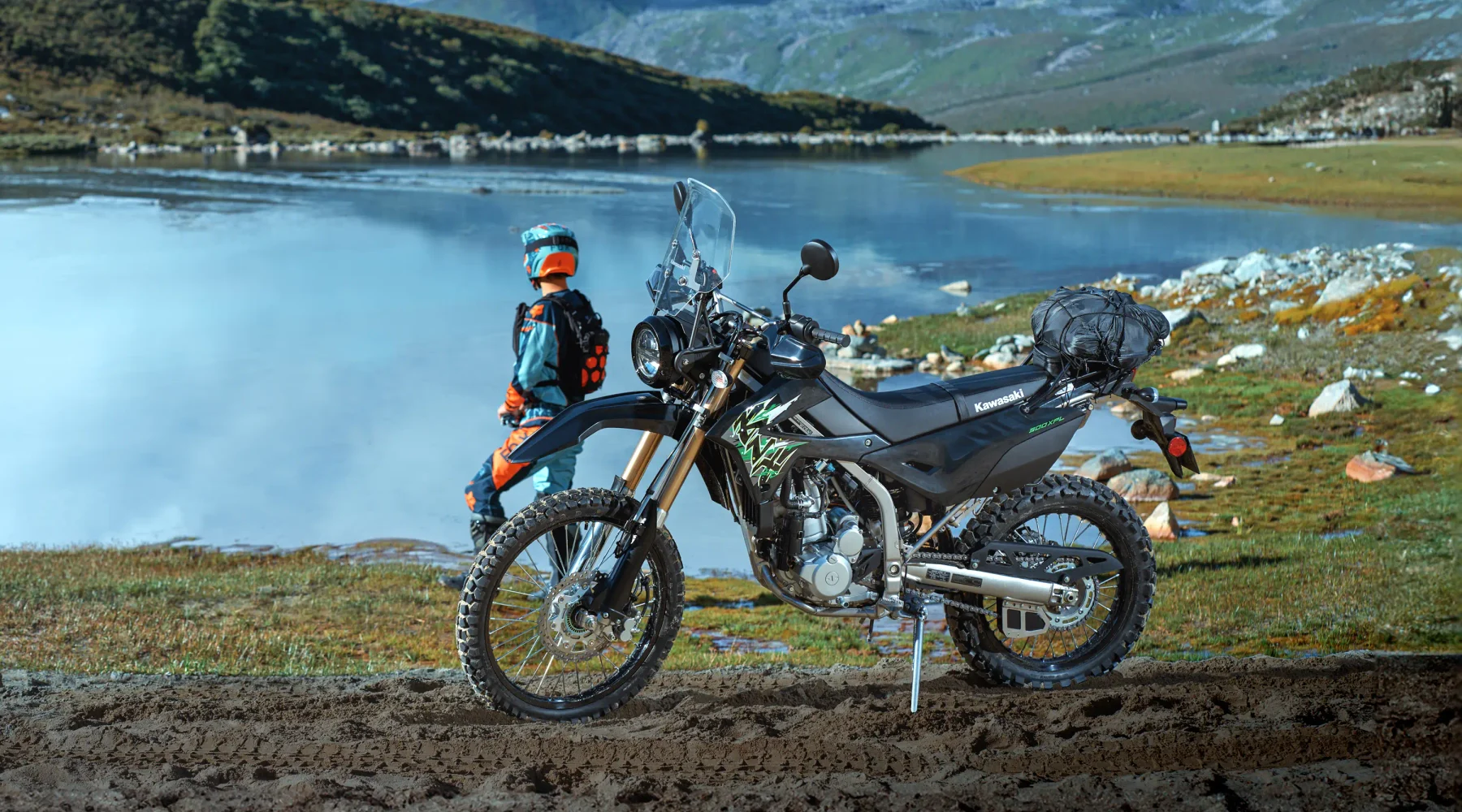
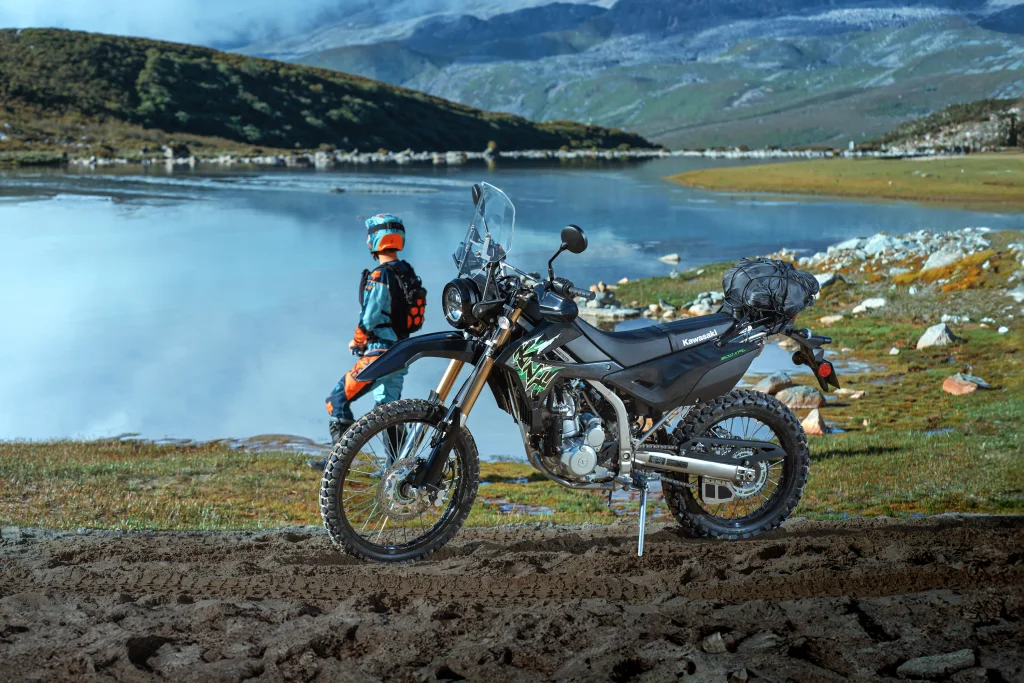
Kawasaki’s new KLX300 XPL ABS adds practical adventure equipment to a proven lightweight dual-sport platform.
Adventure motorcycles have spent the last two decades getting bigger.
More displacement. More electronics. More horsepower. More equipment.
And inevitably, more weight.
Meanwhile, a growing number of riders have been asking a different question:
What if we started with a genuinely lightweight dirt capable motorcycle and added only what was necessary to travel?
Kawasaki may have been listening.
For 2027, the company has introduced the KLX300 XPL ABS, a new explorer oriented version of its familiar KLX300 dual sport.
It isn’t a 450cc parallel twin. It doesn’t have a giant TFT display or electronically controlled suspension. It isn’t trying to compete with the Yamaha Ténéré 700 or KTM 890 Adventure R.
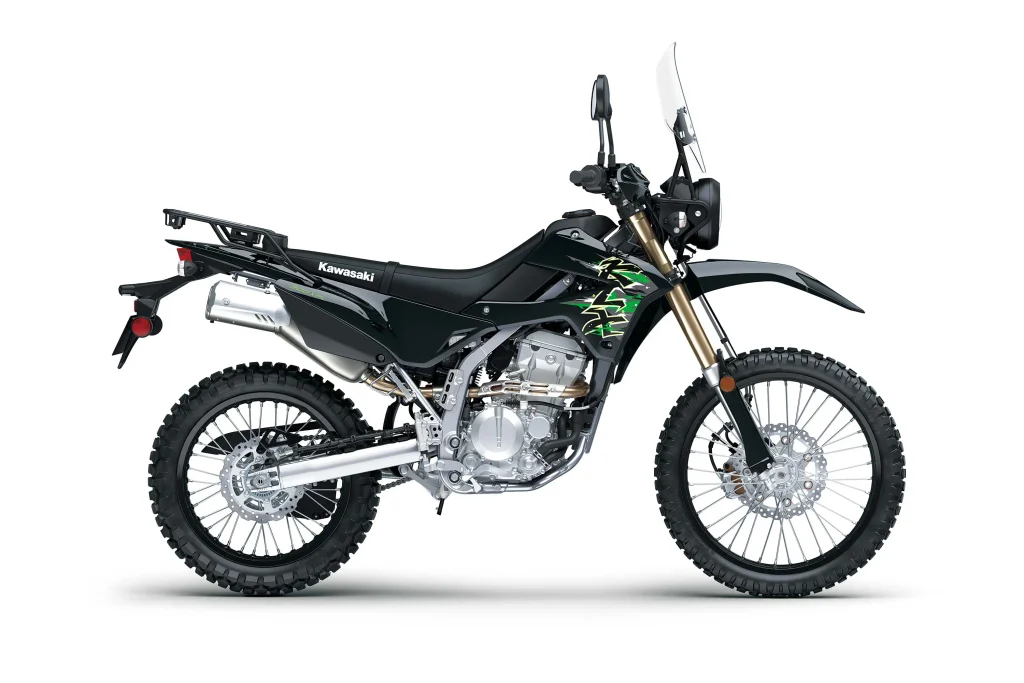
Instead, Kawasaki has taken a straightforward 292cc single cylinder motorcycle and equipped it with a windscreen, handguards, rear luggage carrier, improved lighting, and selectable front wheel ABS.
The result weighs a claimed 313.1 pounds ready to ride.
And it starts at $6,499.
That’s an interesting combination.
But does it make the KLX300 XPL a genuinely useful lightweight adventure motorcycle, or simply a better equipped dual sport?
Let’s take a closer look.
Kawasaki Has Taken a Different Approach
The adventure motorcycle market has become increasingly competitive at the smaller end.
The CFMOTO Ibex 450, Royal Enfield Himalayan 450, and KTM 390 Adventure R all offer different interpretations of affordable adventure riding.
But even these motorcycles generally start with a broader adventure travel mission.
The KLX300 XPL comes from a different direction.
Its foundation is a conventional dual sport motorcycle.
A narrow chassis. Long travel suspension. Full size off-road wheels. A modest single cylinder engine.
Rather than replacing that foundation with a heavier adventure platform, Kawasaki has added equipment that makes the existing motorcycle more practical beyond the trailhead.
That distinction matters.
Because while the XPL may give up considerable highway performance to its larger competitors, it begins with something they cannot easily replicate:
A curb weight barely over 300 pounds.
2027 Kawasaki KLX300 XPL ABS Specifications
| Specification | 2027 KLX300 XPL ABS |
|---|---|
| Engine | 292cc liquid-cooled DOHC single |
| Horsepower | 26.8 hp @ 8,000 rpm |
| Torque | 18.4 lb-ft @ 6,800 rpm |
| Transmission | 6-speed |
| Front suspension | 43mm inverted fork |
| Front travel | 10.0 inches |
| Rear suspension | Uni-Trak shock |
| Rear travel | 9.1 inches |
| Front wheel | 21 inches |
| Rear wheel | 18 inches |
| Ground clearance | 11.0 inches |
| Seat height | 35.2 inches |
| Fuel capacity | 2.0 gallons |
| Curb weight | 313.1 pounds |
| Brakes | Front and rear discs; selectable front ABS |
| U.S. MSRP | $6,499 |
| Destination charge | $650 |
| Color | Ebony |
Specifications are Kawasaki’s published U.S. figures and may change.
Those numbers reveal a motorcycle with a very clear set of priorities.
The suspension and ground clearance are serious for this price category.
The engine output is modest.
The fuel tank is small.
And the motorcycle remains exceptionally light compared with most modern adventure machines.
In other words, the KLX300 XPL is already asking riders to choose what matters most.
The Explorer Treatment: Useful Equipment Without Reinventing the Motorcycle
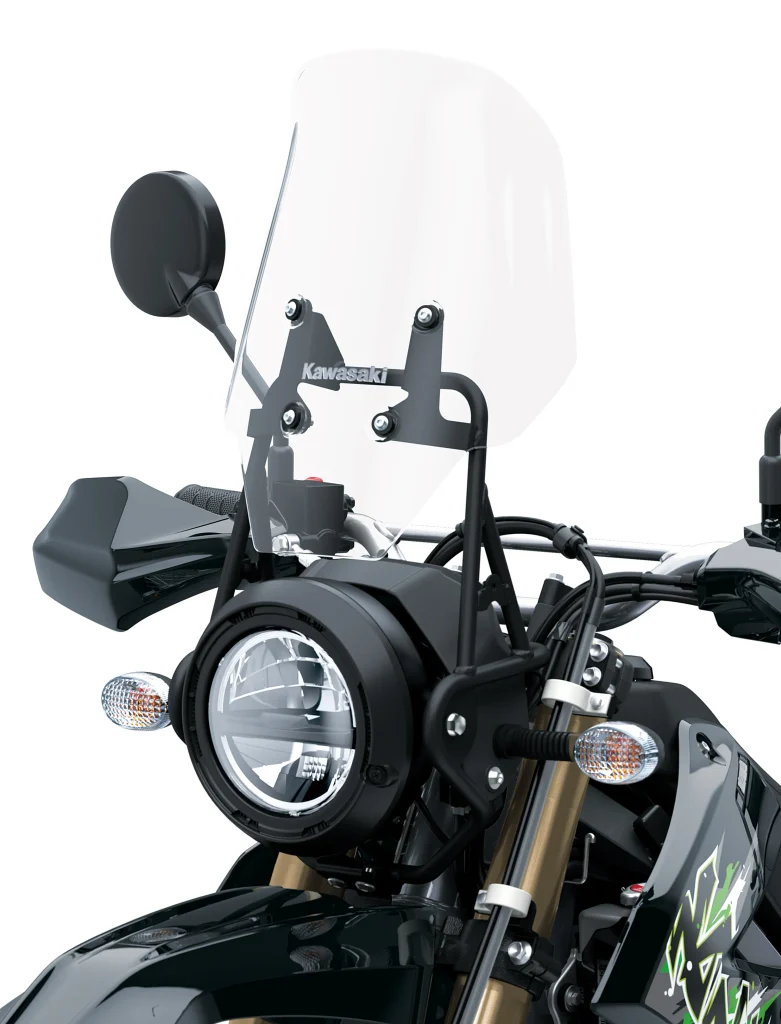
Kawasaki has made several visible changes to distinguish the XPL from the standard KLX300.
The most obvious is the front end.
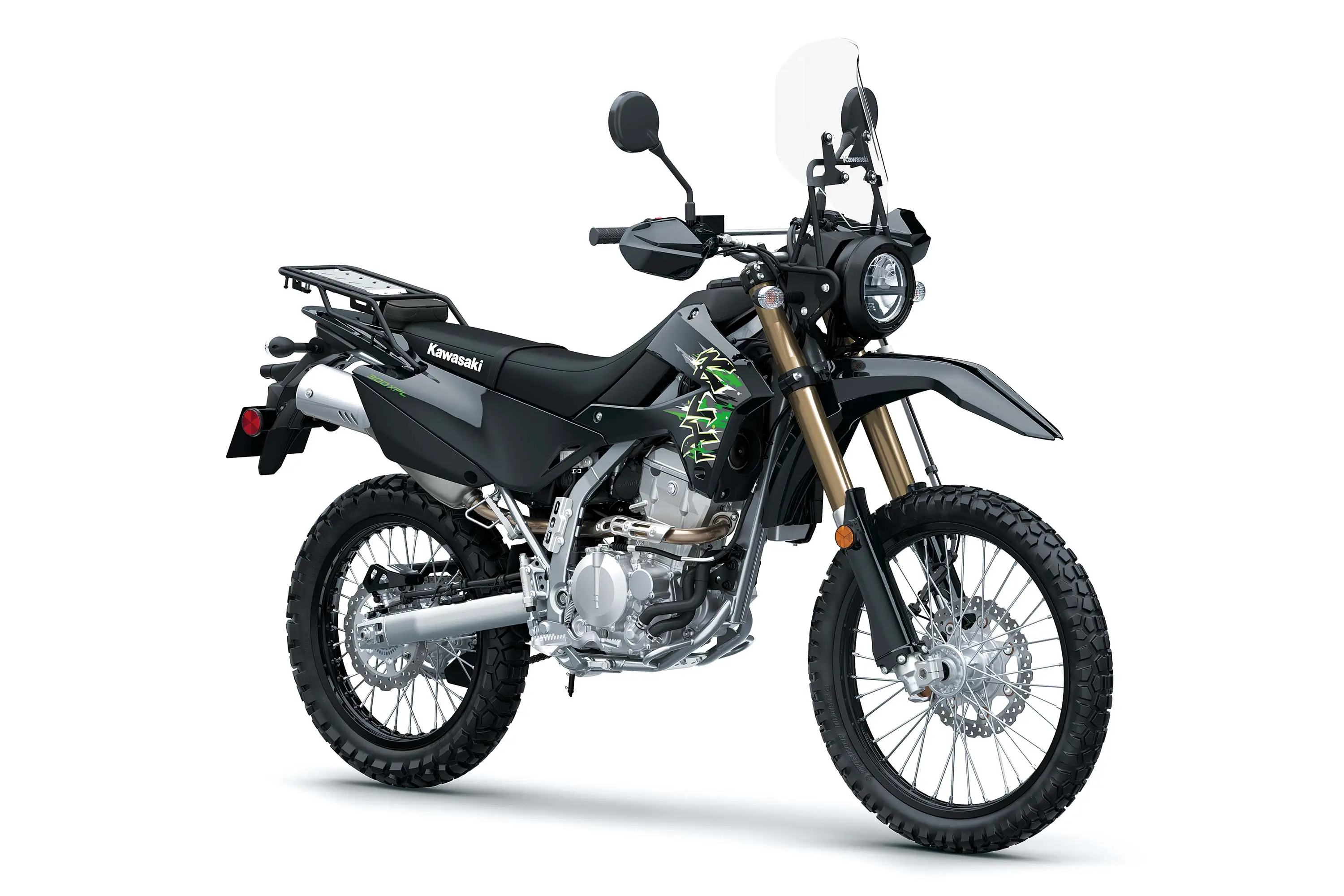
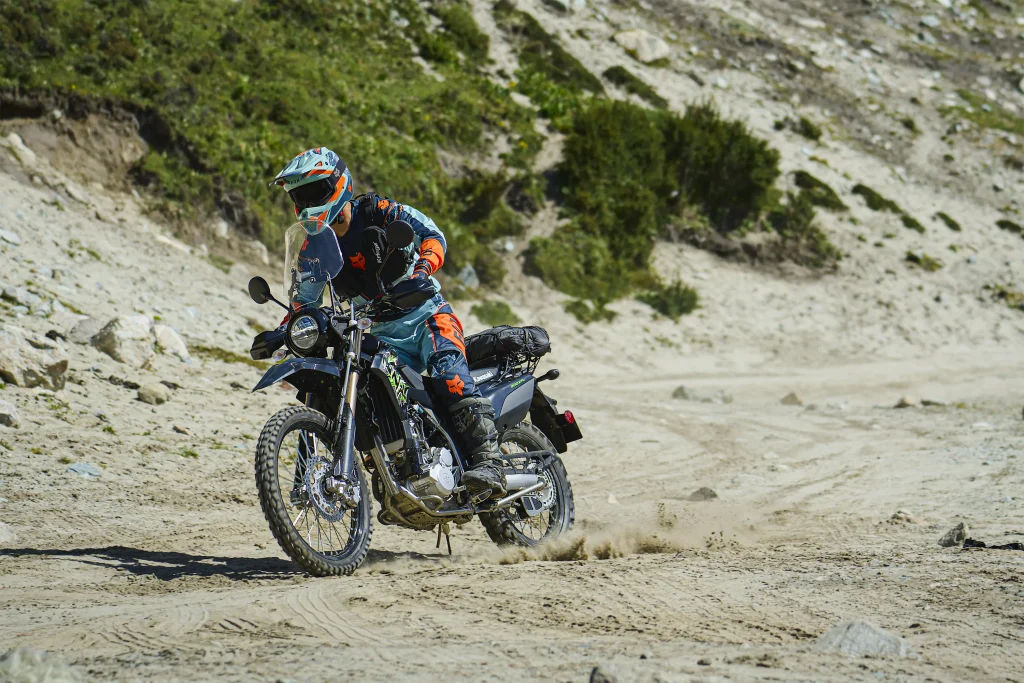
A round 5.1 inch LED headlight gives the motorcycle a distinctly retro appearance, while a tall windscreen adds protection that conventional dual-sports often lack.
Handguards provide additional protection from weather, brush, and minor impacts.
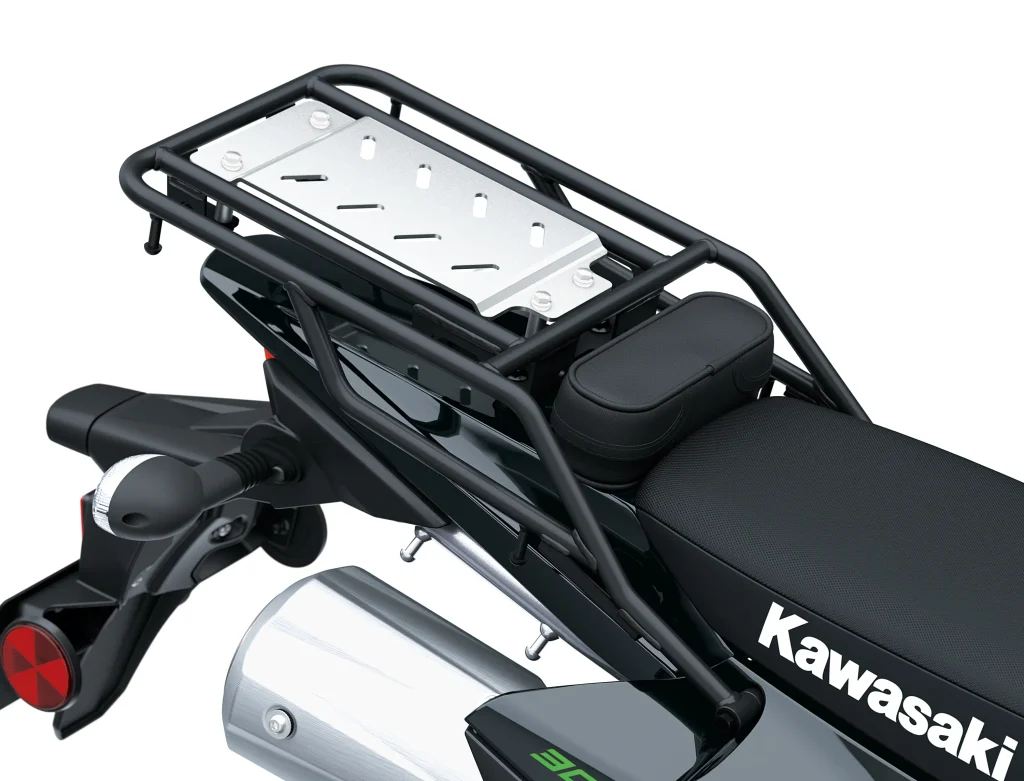
At the rear, Kawasaki includes a luggage carrier with integrated tie down provisions.
There’s also retro inspired graphics drawing from Kawasaki’s motocross heritage.
Individually, none of these additions is revolutionary.
But together they address some of the first modifications riders typically make when converting a dual sport into a lightweight travel motorcycle.
And that may be the smartest thing about the XPL.
Kawasaki hasn’t tried to transform the KLX300 into something completely different.
It has simply made it more useful for getting somewhere.
The Weight Is the Headline
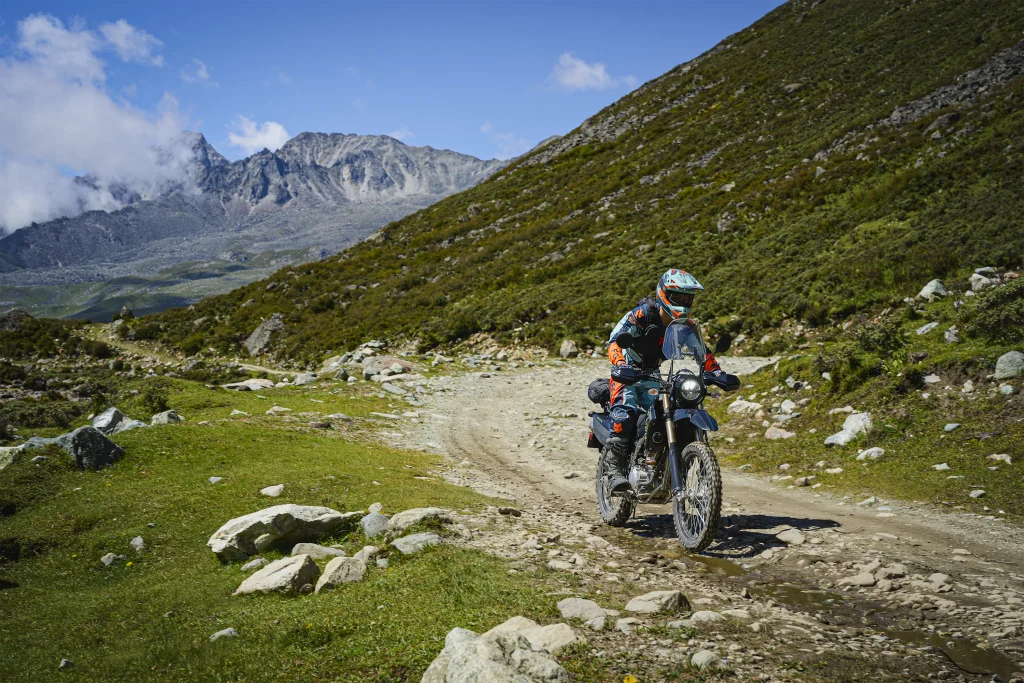
At In A Day’s Ride, we’ve spent considerable time discussing what adventure motorcycles actually weigh once they’re ready for a trip.
The KLX300 XPL gives us a fascinating starting point.
At 313.1 pounds curb weight, it is dramatically lighter than motorcycles such as the Ibex 450 and Ténéré 700.
Using our initial standardized 55-pound IADR BDR Loadout, the Kawasaki would weigh approximately:
313.1 + 55 = 368.1 pounds
That’s before any additional bike specific modifications, fuel beyond the stock capacity, or other equipment not included in the standard loadout.
It’s also a theoretical planning number, not a measured travel weight.
But the comparison is revealing.
| Motorcycle | Starting Weight | With 55-lb Loadout |
|---|---|---|
| Kawasaki KLX300 XPL ABS | 313.1 lb | 368.1 lb |
| CFMOTO Ibex 450 | ~419 lb | ~474 lb |
| Yamaha Ténéré 700 | 459 lb | 514 lb |
Weights use previously documented U.S. model figures; loaded totals are IADR calculations rather than manufacturer specifications.
That puts the Kawasaki more than 100 pounds below the loaded Ibex 450 in this illustrative comparison.
Anyone who has picked up an adventure motorcycle on a steep, loose trail knows how significant that difference can be.
And the advantage isn’t limited to picking up a fallen bike.
Less mass can make a motorcycle easier to maneuver, less intimidating in technical terrain and less exhausting over a difficult day.
Of course, weight alone doesn’t determine off road performance.
But it changes the equation.
The Engine: Enough for Adventure, or Not Enough for the Highway?
Here’s where the KLX300 XPL becomes more complicated.
Its 292cc single produces a claimed 26.8 horsepower and 18.4 lb-ft of torque.
Those aren’t impressive numbers by modern adventure motorcycle standards.
But horsepower needs context.
For a lightweight motorcycle navigating forest roads, gravel, narrow trails and technical terrain, enormous power isn’t necessary.
Predictable throttle response and manageable weight may matter considerably more.
Where the Kawasaki could struggle is sustained highway travel.
Long distances at freeway speeds, strong headwinds, steep grades, and loaded luggage will ask much more of a 292cc engine than an afternoon exploring forest roads.
The six-speed transmission helps provide flexibility, but it cannot manufacture additional horsepower.
That makes the XPL’s mission important.
If your adventure begins 20 miles from home, this could be an excellent platform.
If it begins with 500 miles of interstate, the compromises become more significant.
The KLX300 XPL looks much more like a motorcycle for exploring a region than crossing a continent at freeway speeds.
That isn’t necessarily a weakness.
It’s a design choice.
The Two-Gallon Tank Is the Biggest Question Mark
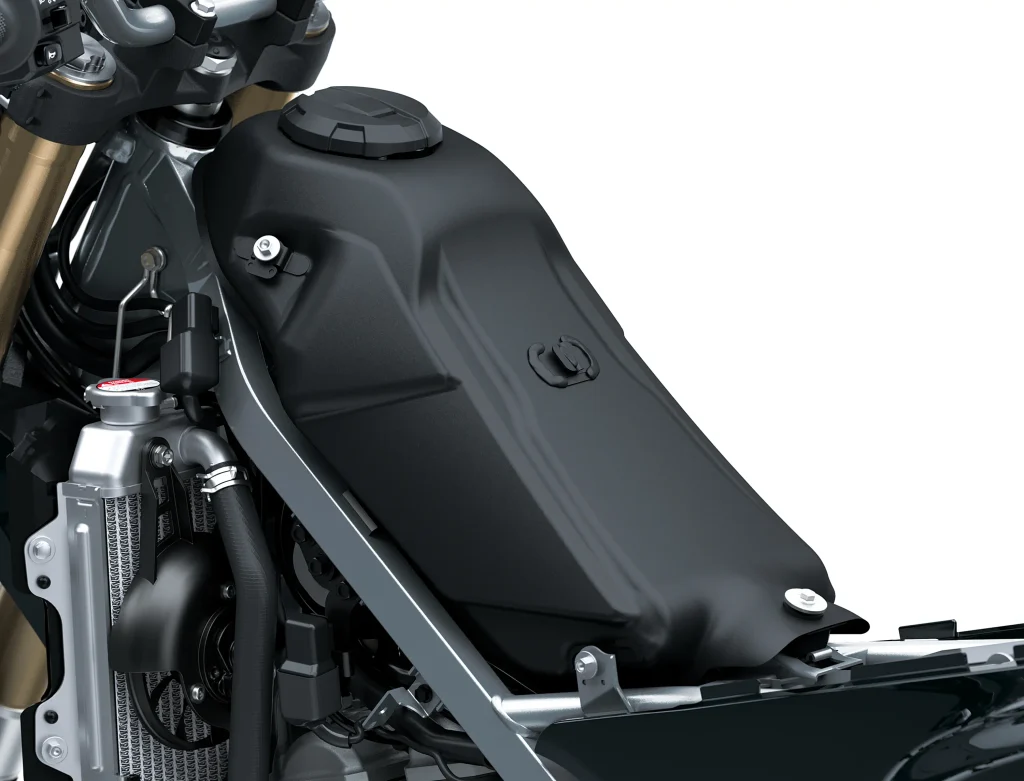
For all the thoughtful additions Kawasaki has made, one specification stands out as a missed opportunity.
Fuel capacity is just 2.0 gallons.
For a motorcycle carrying the XPL or Explorer designation, that’s surprisingly modest.
Real world range will depend on fuel economy, speed, terrain, wind, luggage, and riding style.
Until the motorcycle is independently tested, we shouldn’t assume a particular range.
But the limitation is obvious.
Remote travel requires range planning, and two gallons doesn’t leave much room for uncertainty.
For some routes, additional fuel capacity may become one of the first necessary modifications.
That introduces extra weight, cost, and packaging considerations.
It also raises an important question:
Why add a windscreen, handguards and luggage carrier for longer distance exploration without providing more fuel capacity?
Perhaps Kawasaki wanted to preserve the KLX300’s narrow dimensions and low weight.
That’s a reasonable tradeoff.
But for riders looking at multi day BDR travel, fuel capacity deserves serious consideration.
Real Suspension, Not Just Adventure Styling
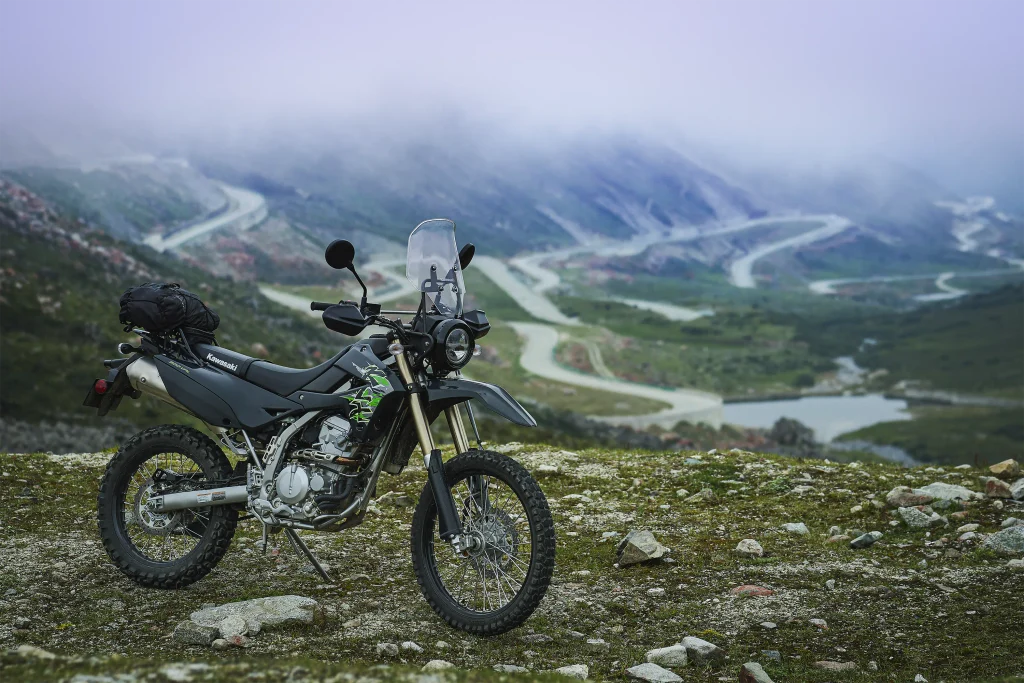
The XPL retains one of the KLX platform’s most important advantages.
Actual dual sport suspension.
The 43mm inverted front fork provides 10 inches of travel, with adjustable compression damping.
The Uni-Trak rear suspension offers 9.1 inches of travel, with compression, rebound. and spring preload adjustment.
Ground clearance is a substantial 11 inches.
These are meaningful specifications for riding rough terrain.
Rather than starting with a street oriented motorcycle and attempting to make it off road capable, Kawasaki is working with a chassis already intended for dirt riding.
That should give the XPL a useful foundation for technical trails, rocky climbs, and rough forest roads.
The unanswered question is how well the suspension works with additional luggage.
Travel capacity and load capacity aren’t the same thing.
A loaded BDR motorcycle needs correct sag, appropriate spring rates, and enough remaining suspension performance to handle rough terrain safely.
That’s something we’d want to evaluate in a proper road and trail test.
Selectable Front ABS Makes Sense
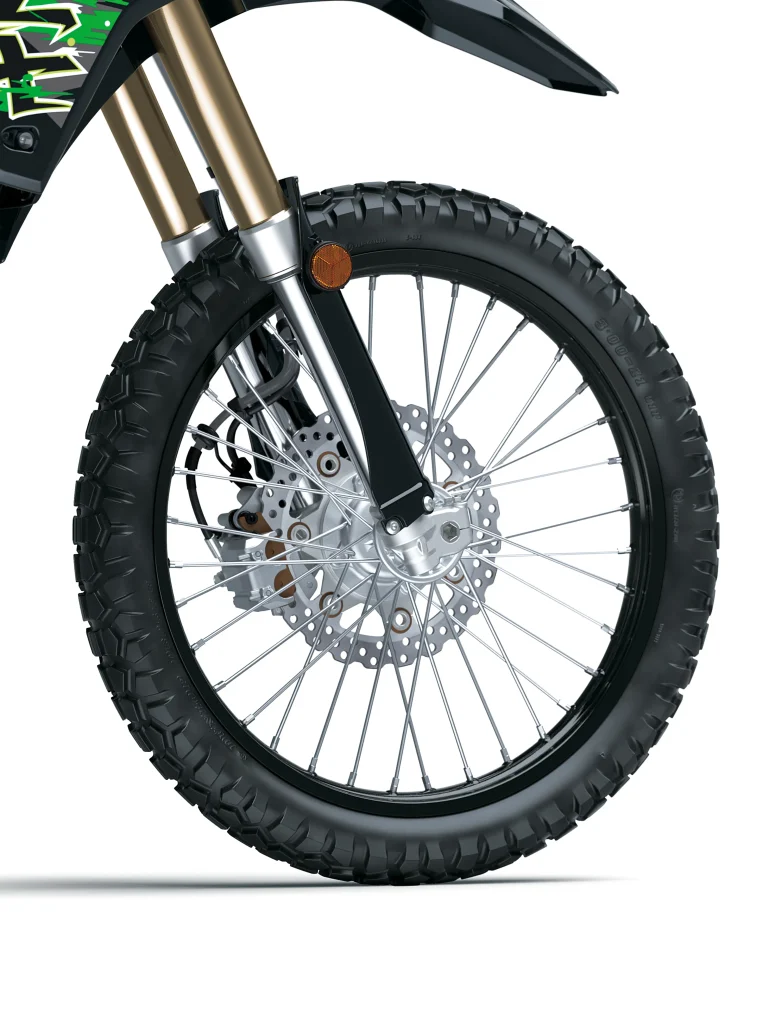
One of the more meaningful updates for 2027 is the addition of front wheel ABS with an on/off function.
Kawasaki’s arrangement allows riders to disable front ABS when appropriate for off road conditions.
The rear brake remains without ABS intervention, allowing rear wheel lockup.
This is an interesting approach for a motorcycle with a strong dirt riding focus.
On pavement, front ABS provides an additional safety system.
Off-road, riders retain the option to switch it off where terrain and technique call for different braking behavior.
The system returns to its default enabled state after restarting the motorcycle.
That’s a small operational detail riders should understand before heading onto the trail.
It’s also refreshing to see Kawasaki adding technology that serves a clear purpose without turning the motorcycle into an electronics showcase.
A 35.2-Inch Seat Isn’t for Everyone
The XPL’s seat height is 35.2 inches.
That’s tall.
Although the motorcycle’s relatively low weight and narrow dual sport layout may help riders manage it, shorter riders will still want to assess their ability to stop and maneuver confidently.
For taller riders, the seat height may be entirely reasonable.
But a motorcycle’s accessibility depends on more than a specification sheet.
Seat width, suspension sag, rider inseam and overall balance all matter.
The important point is that Kawasaki hasn’t dramatically lowered the chassis to create a more road oriented explorer.
It has preserved meaningful suspension travel and ground clearance.
That’s a compromise worth understanding before buying.
What About the Competition?
The KLX300 XPL enters a market with several compelling small displacement options.
But direct specification comparisons can be misleading because these motorcycles are built around different priorities.
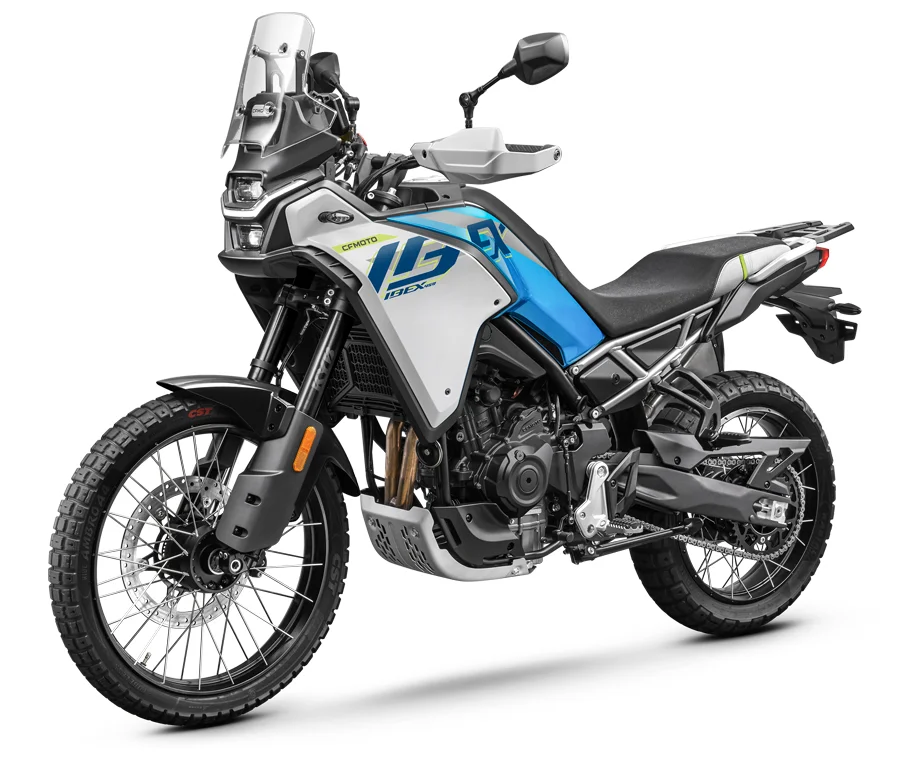
The CFMOTO Ibex 450 offers a larger twin-cylinder engine, greater fuel capacity, and more substantial road-travel equipment.
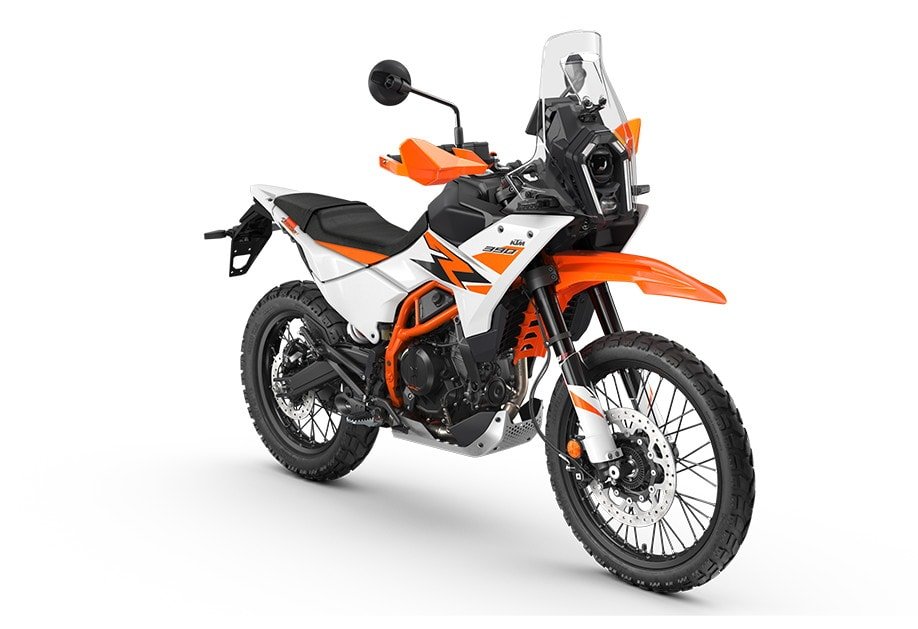
The KTM 390 Adventure R offers significantly more power than the Kawasaki while retaining a serious off road emphasis.
The Royal Enfield Himalayan 450 leans further toward approachable, all-around adventure travel.
The Kawasaki takes the lightweight dual sport approach.
It offers less engine performance and fuel capacity, but a substantially lower starting weight than many conventional adventure motorcycles.
That makes the buying decision less about which motorcycle is objectively best and more about the kind of riding each owner intends to do.
For someone who spends most of their time on pavement and occasionally ventures onto gravel, the KLX300 XPL probably isn’t the most practical choice.
For someone whose favorite rides involve difficult forest roads and remote trails connected by short stretches of pavement, it becomes much more interesting.
Is the KLX300 XPL Actually BDR-Ready?
This is the question I’d most like to explore.
The motorcycle has several attributes we look for in a BDR platform.
Full size off road wheels.
Long suspension travel.
Generous ground clearance.
Low weight.
A straightforward single cylinder engine.
Practical luggage attachment points.
Basic wind and hand protection.
Those are strong fundamentals.
But a motorcycle intended for multi day backcountry travel also needs to carry the rider, luggage, tools, water, shelter, and food.
And it needs enough fuel range for the planned route.
The XPL’s rear carrier is a useful starting point, but its rated capacity and the motorcycle’s total payload allowance must be checked before selecting luggage.
The small tank may also require route specific solutions.
Then there’s the highway question.
Some BDR trips involve substantial paved travel before and after the route.
A motorcycle that feels wonderful on technical dirt can become tiring if it spends hours operating near the upper end of its comfortable cruising range.
So the answer is nuanced.
The KLX300 XPL appears to be an excellent starting point for a lightweight BDR build.
Whether it’s the right finished motorcycle depends on the rider, route, luggage, and distance required to reach the trail.
The Price Makes the Proposition Even More Interesting
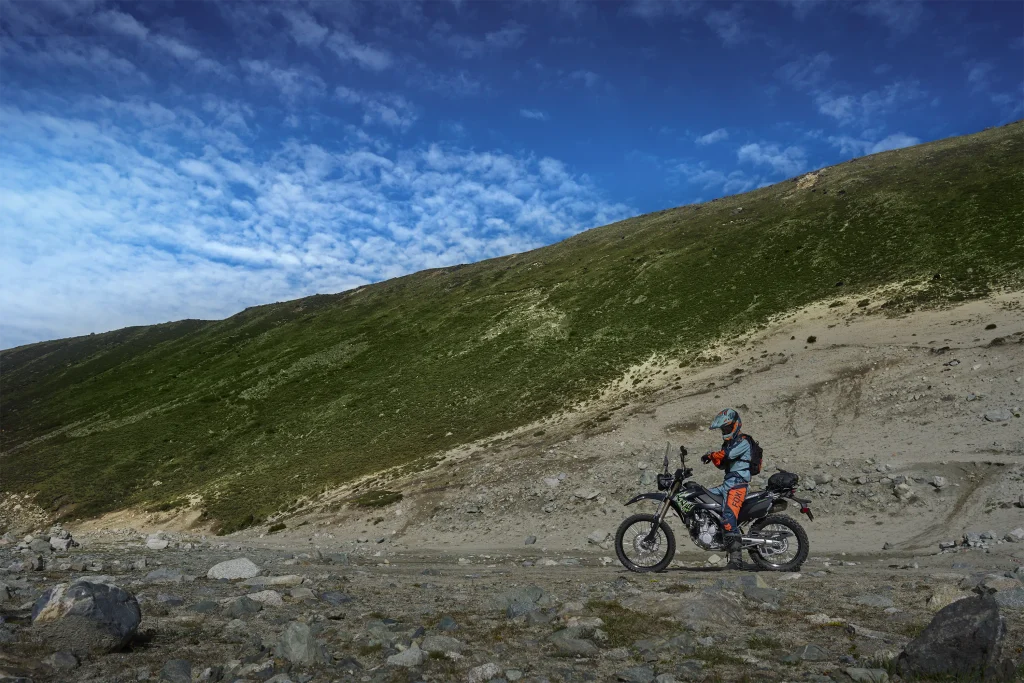
At $6,499 MSRP, the XPL costs $500 more than the base 2027 KLX300 ABS in its standard colors.
For that premium, buyers receive the explorer styling and travel oriented accessories.
Kawasaki lists another $650 in destination charges, bringing the XPL to $7,149 before applicable taxes, registration and dealer fees.
That’s not insignificant money.
But compared with buying a standard motorcycle and individually adding a quality windscreen, headlight solution, handguards and rear carrier, the factory package could represent reasonable value.
The real question is whether Kawasaki selected the equipment that owners would have purchased anyway.
And whether the equipment works well enough to keep.
That requires testing.
What We’d Want to Test
Before calling the KLX300 XPL an ideal lightweight adventure motorcycle, we’d want answers to several practical questions:
- Highway performance: How comfortable is sustained cruising with luggage?
- Fuel economy and range: How far can it travel under real mixed conditions?
- Loaded handling: How does the suspension behave with camping equipment?
- Wind protection: Does the screen reduce fatigue without creating excessive turbulence?
- Luggage practicality: What can the carrier and chassis safely support?
- Off-road control: How does the ABS system behave across different surfaces?
- Maintenance: How easily can the motorcycle be serviced using a compact trail tool kit?
These are the questions that matter when a motorcycle transitions from a promising specification sheet to an actual adventure travel platform.
Kawasaki May Have Identified Something Important
We’ve spent years watching manufacturers develop increasingly sophisticated adventure motorcycles.
And many of them are extraordinary.
But sophistication isn’t the same as suitability.
Sometimes the better answer isn’t more motorcycle.
It’s less motorcycle, equipped intelligently.
That’s what makes the KLX300 XPL ABS worth paying attention to.
Kawasaki hasn’t built the fastest lightweight adventure motorcycle.
It hasn’t built the most powerful.
It hasn’t given us a giant fuel tank or an elaborate electronics package.
Instead, it has taken a dirt capable dual sport and added a few practical features that make it more useful for travel.
There are obvious compromises.
The engine is small.
The fuel tank is smaller than we’d like.
The seat is tall.
And its long-distance highway capability remains an important unanswered question.
But at approximately 313 pounds ready to ride, it offers something increasingly rare in the adventure motorcycle market.
A motorcycle that starts light and gives the owner room to decide what equipment actually matters.
That philosophy aligns remarkably well with what we’ve been exploring at In A Day’s Ride.
Maybe the KLX300 XPL isn’t the ultimate adventure motorcycle.
Maybe it’s too small for some trips and too compromised for others.
But it raises a question that deserves serious consideration.
What if the adventure motorcycle most riders need isn’t a smaller version of a big ADV bike?
What if it’s simply a good dual sport with enough equipment to go farther?
The 2027 Kawasaki KLX300 XPL ABS makes that argument more convincingly than its modest specifications might suggest.
And that’s why we’re interested.
Continue Reading
When Did Adventure Bikes Get Too Big?
How adventure motorcycles evolved from lightweight explorers into increasingly large touring machines.
The Best Adventure Bike Isn’t the Biggest One: How to Choose the Right ADV by Mission
Why choosing the right motorcycle begins with deciding what kind of riding you actually do.
Is the Ibex 450 the Adventure Bike Most Riders Actually Need?
Another approach to affordable, manageable adventure travel.
Adventure Bike Weight Is Lying to You: What Your Motorcycle Really Weighs Ready for a BDR
Why curb weight is only the beginning of the adventure motorcycle weight discussion.
What Does a BDR Ready Adventure Bike Actually Need?
The practical equipment and preparation required for multi day backcountry travel.
Editorial disclosure: This is a first-look analysis based on Kawasaki’s published information. In A Day’s Ride has not ridden or independently tested the 2027 KLX300 XPL ABS. Riding impressions and real world performance assessments will require hands on evaluation.