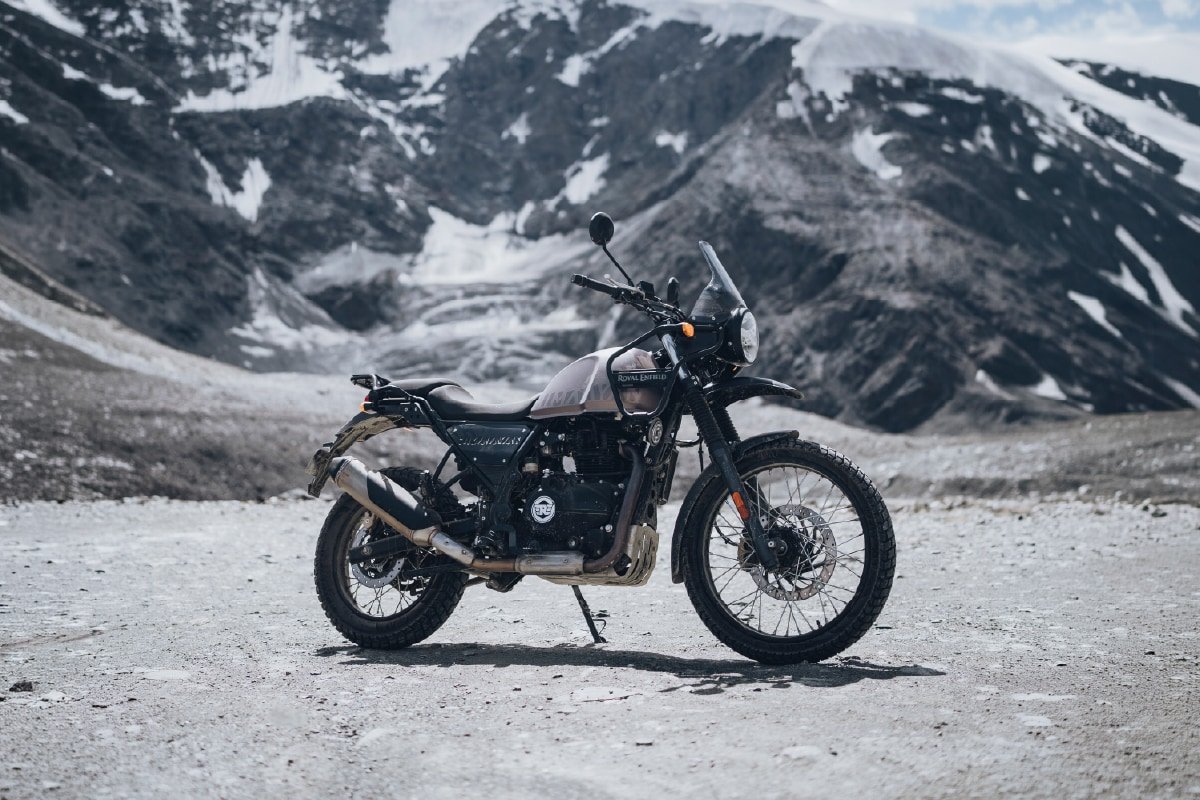
Royal Enfield appears to be reviving the character of the original Himalayan with more displacement, a six-speed gearbox, and carefully chosen updates without abandoning the simplicity that made the motorcycle so appealing.
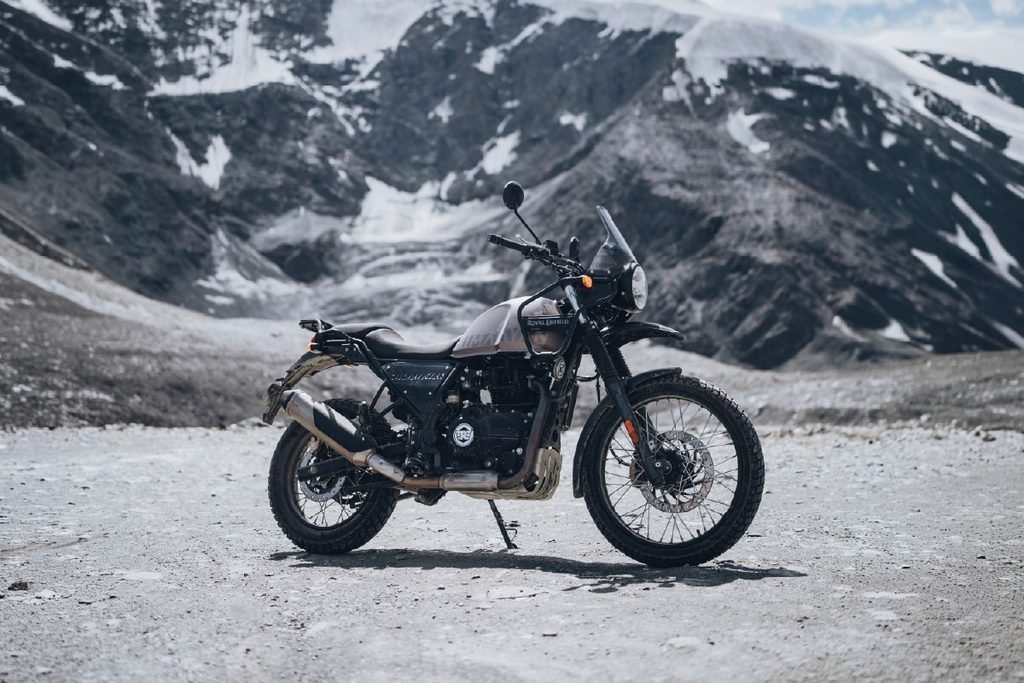
Image courtesy of Royal Enfield, © 2026, Royal Enfield
Few motorcycles earn affection through modesty quite like the original Royal Enfield Himalayan.
The Himalayan 411 was never the fastest, lightest, or most technologically advanced adventure motorcycle. Its appeal came from somewhere else: accessible performance, comfortable ergonomics, mechanical simplicity, and an unhurried character that encouraged riders to keep exploring after the pavement ended.
The new 440 appears intended to preserve that philosophy while correcting some of the original motorcycle’s most frequently discussed limitations.
A Different Direction From the Himalayan 450
The 440 should not be viewed simply as a smaller or less expensive Himalayan 450.
The liquid cooled Himalayan 450 represents Royal Enfield’s modern interpretation of the middleweight adventure motorcycle. It offers substantially more power, sophisticated electronics, contemporary suspension, and stronger highway performance.
The 440 appears to take a different path. Rather than replacing the original formula with a more performance oriented platform, it brings that familiar formula forward with incremental improvements. That distinction may prove to be the most important thing about the motorcycle.
The Himalayan 411 was born for the mountain roads and varied levels of Indian infrastructure. This made it perfect for the gravel logging roads of the PNW. The 440 seems poised to build on that with even more capability adding the power and 6th gear for the highway commutes to your next adventure.
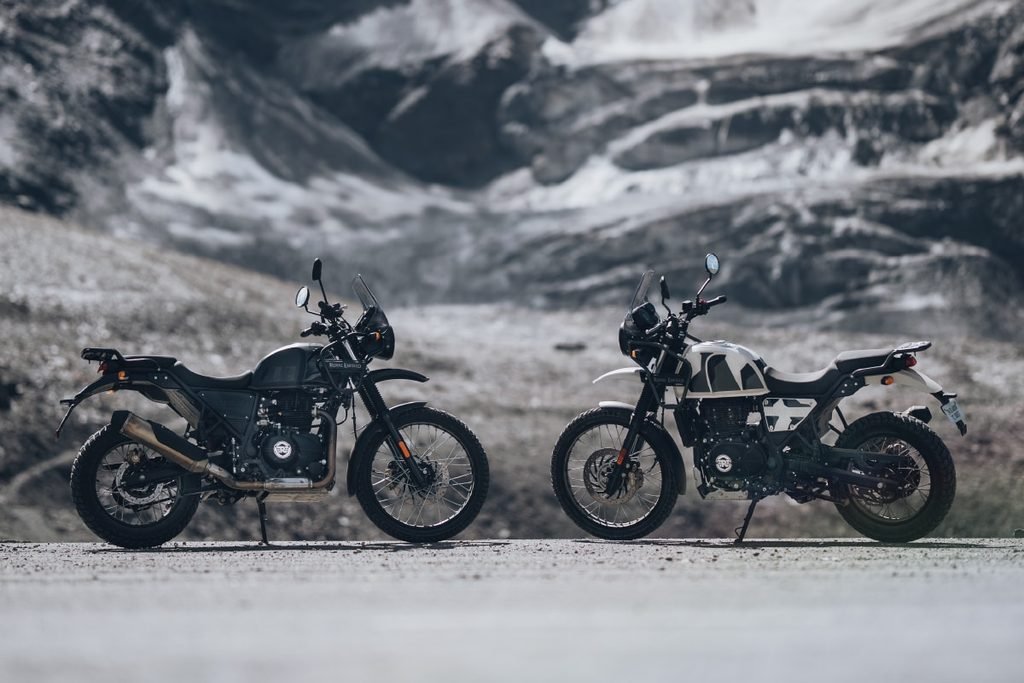
Image courtesy of Royal Enfield, © 2026, Royal Enfield
What Has Changed
The Himalayan 440 uses a 443cc air/oil-cooled single cylinder engine related to the unit introduced in the Scram 440.
The additional displacement is expected to provide a modest increase in power and torque compared with the Himalayan 411. More importantly, the engine should offer stronger low and mid-range response. The area that matters most when carrying luggage, climbing loose terrain, or maintaining speed into a headwind.
The addition of a six-speed gearbox may be an equally meaningful improvement. The original Himalayan’s five speed transmission contributed to its relaxed back road personality but left relatively little flexibility at sustained highway speeds.
Preliminary Specification Comparison
| Specification | Himalayan 411 | Himalayan 440 |
|---|---|---|
| Engine | 411cc air/oil-cooled single | 443cc air/oil-cooled single |
| Maximum power | 24.3 hp | 25.4 BHP (18.7 kW) @ 6250 RPM |
| Maximum torque | 32 Nm | 34.0 Nm @ 4000 RPM |
| Transmission | Five-speed | Reported six-speed |
| Front/rear wheels | 21-/17-inch spoked | 21-/17-inch spoked |
| Fuel capacity | 15 liters | 15 liters |
| Seat height | 800 mm | 800 mm |
| Wet weight | 199 kg | 199 Kg (90% Fuel and oil) |
| ABS | Dual-channel; rear switchable on later models | Dual-channel, switchable ABS at rear |
| U.S. price | MSRP $5,499, Discontinued* | Not announced |
| U.S. availability | Discontinued | Not confirmed |
What Appears to Have Stayed the Same
The most encouraging aspect of the Himalayan 440 may be what Royal Enfield has apparently chosen not to change.
The 440 retains the visual identity and practical nature of the original Himalayan: an upright riding position, traditional adventure bike proportions, a large front wheel, protective bodywork, and a relatively simple single-cylinder engine.
The already capable Himalayan has grown up for daily rides. With the trend of global markets driving innovation and spec sheets, the American market benefits the most from the upgrades to the 440
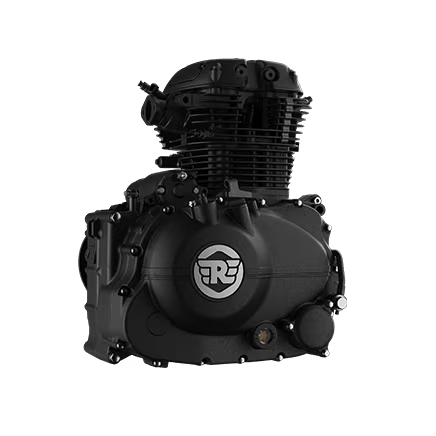
Image courtesy of Royal Enfield, © 2026, Royal Enfield
Why the Six-Speed Gearbox Matters
A modest power increase alone would not dramatically change the Himalayan experience. A properly spaced six-speed transmission could.
A lower first gear could improve slow speed control on steep or technical terrain, while a taller sixth gear could make the motorcycle more comfortable at highway speeds. Whether Royal Enfield has achieved both will depend on the final gear ratios and real-world testing.
The Suzuki DRZ-4S disappointment its fans with the lack of a 6th gear on the refresh. Its great to see Royal Enfield leading the way in responding to customer feedback here. Motorcyclists are vocal about their wants on new models. It is no surprise that Royal Enfield has found immense success in simply giving their customers what they want
Who Is the Himalayan 440 For?
- Riders who liked the original Himalayan but wanted better road performance
- Newer adventure riders who value manageable power and predictable handling
- Travelers who prefer mechanical simplicity over extensive electronics
- Riders looking for an affordable motorcycle for luggage and rough roads
- Himalayan 411 owners who want refinement without moving to the 450
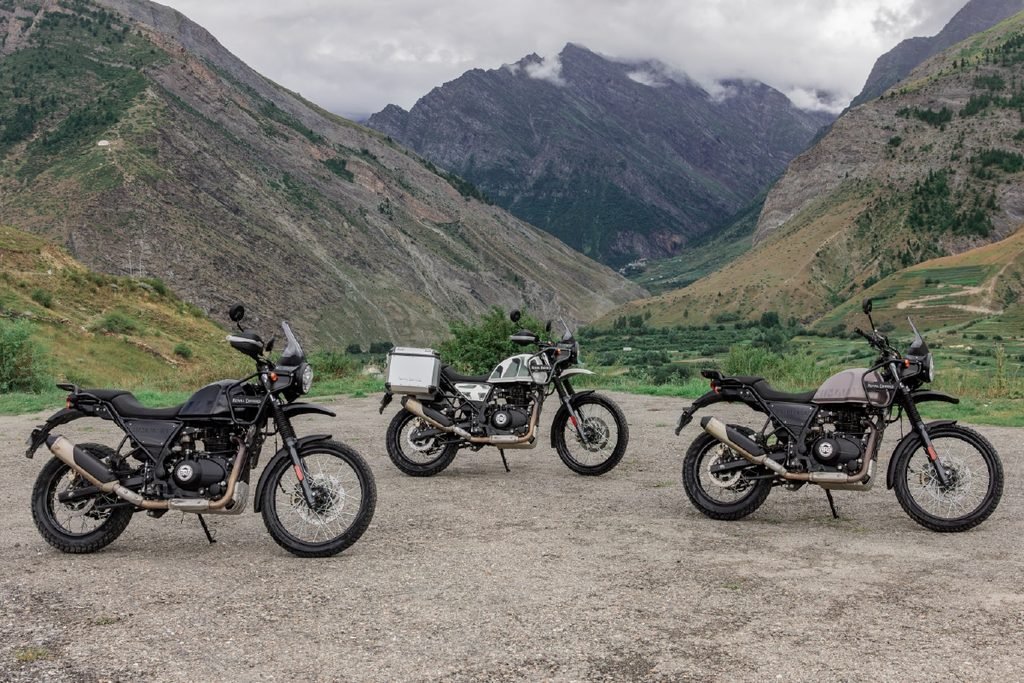
Image courtesy of Royal Enfield, © 2026, Royal Enfield
Questions That Still Need Answers
- Will tubeless wheel options be available?
- What are the first and sixth gear ratios?
- Has braking performance improved?
- What electrical output is available for accessories?
- Will it be sold in North America?
- How will it be priced relative to the Himalayan 450?
Initial Verdict
The Himalayan 440 looks promising because it does not appear to be chasing the rest of the adventure motorcycle market.
Instead, Royal Enfield seems to be returning to the qualities that made the original Himalayan memorable: simplicity, approachability, practicality, and character. The larger engine and six speed transmission could address the old bike’s most noticeable weaknesses without transforming it into something fundamentally different.
That makes the Himalayan 440 less of a replacement and more of a reunion. A familiar motorcycle returning with the changes riders had been asking for.
Whether it truly earns the title of a trusted friend will depend on the first ride, price, and of course the miles beyond the press release.
What do you think? Would you choose the simpler Himalayan 440, or does the additional performance and technology of the Himalayan 450 make it the better adventure motorcycle?
Sources and Updates
Disclosure: Images were supplied by Royal Enfield; “In a Day’s Ride received no compensation or editorial approval for this article.”