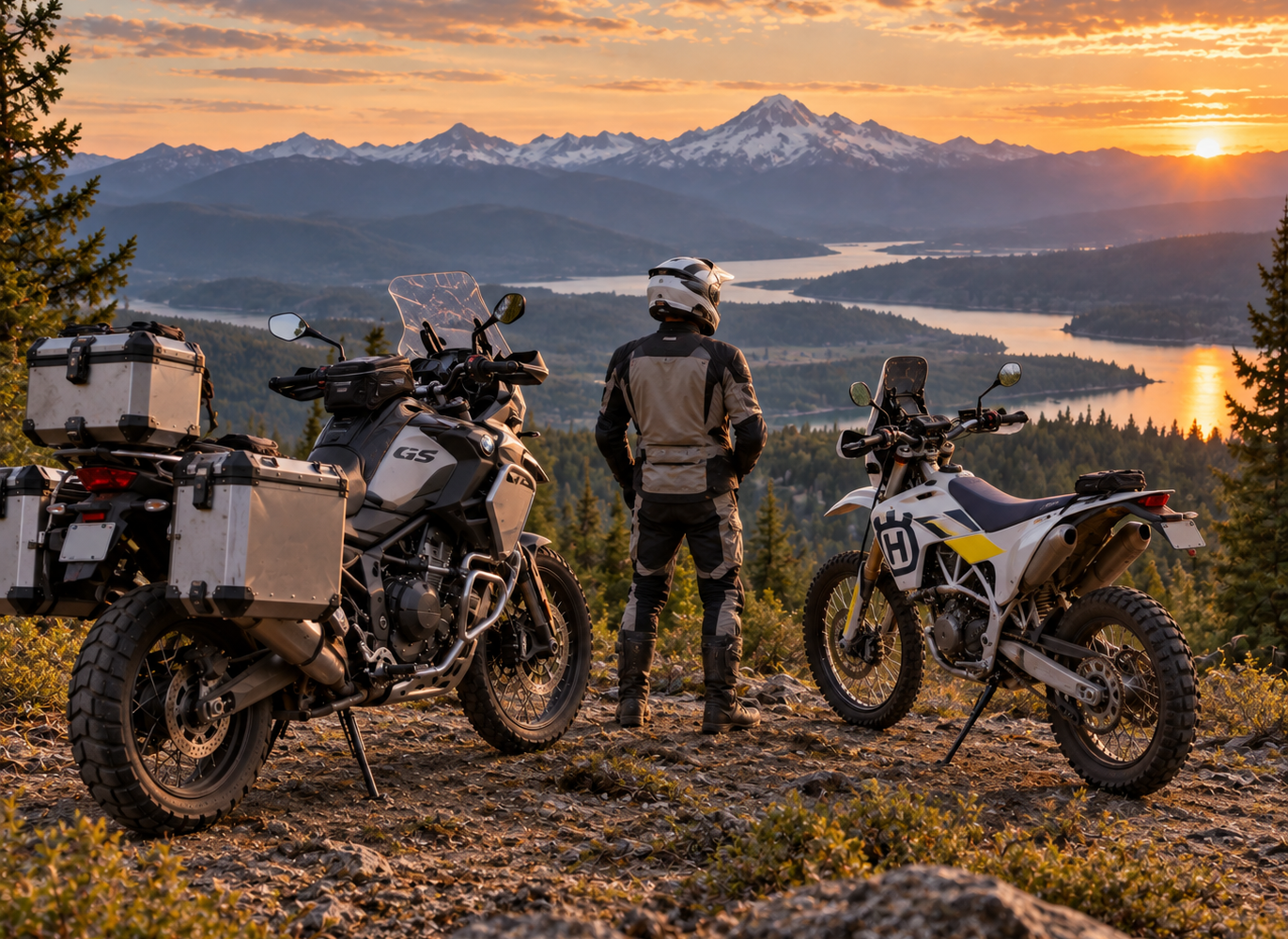
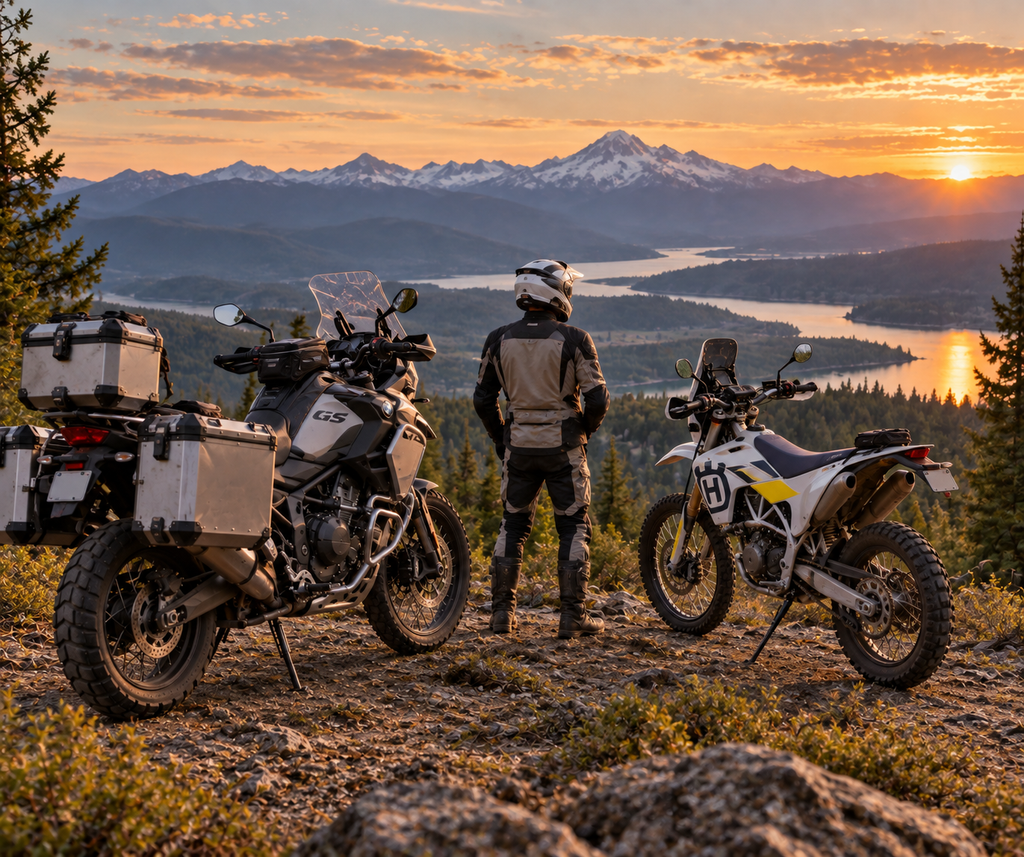
Adventure motorcycles used to have a fairly simple job description.
Carry enough fuel.
Carry enough gear.
Survive bad roads.
Handle dirt.
And get the rider home.
Somewhere along the way, that mission changed.
Today, many flagship adventure motorcycles make well over 100 horsepower, carry extensive electronics, offer electronically adjustable suspension, heated everything, radar-assisted rider aids and enough comfort to cross a continent without much complaint.
They’re extraordinary motorcycles.
They’re also enormous.
A current BMW R 1300 GS Adventure, for example, weighs about 593 pounds ready to ride and fully fueled, carries 7.9 gallons of fuel, and produces 145 horsepower. A 2026 Honda Africa Twin Adventure Sports ES comes in at 535 pounds with a 6.6-gallon tank. These machines are exceptionally capable long distance motorcycles, but they’re also operating in a very different world from the lighter rally derived adventure bikes that helped define the category.
Which raises a question that has been getting harder to ignore:
When did adventure motorcycles become so big that the motorcycle itself started limiting the adventure?
The Original Formula Was Surprisingly Simple
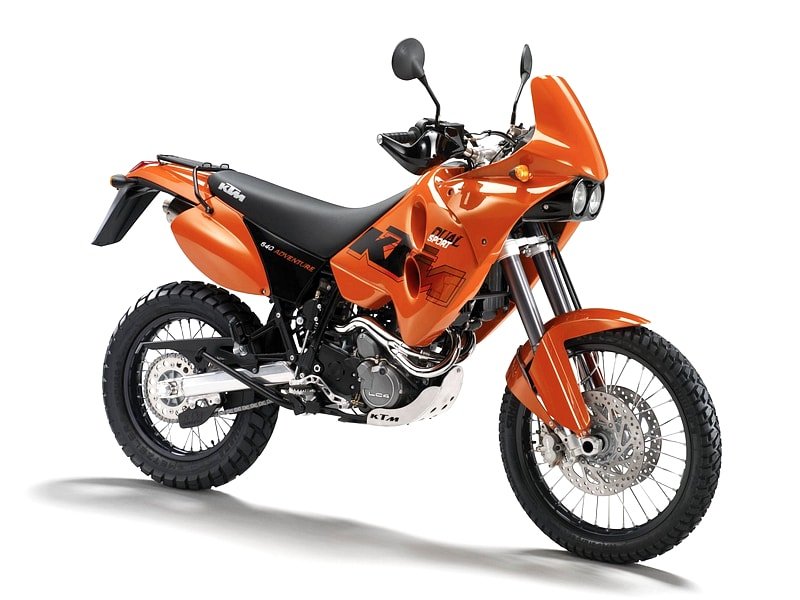
Look at something like the KTM 640 Adventure.
By modern standards, it almost seems improbable.
The 2006 model used a 625cc single producing roughly 54 horsepower, carried a huge 6.7 gallons of fuel, and weighed about 348 pounds dry. It had a 21 inch front wheel, 18 inch rear, serious ground clearance, and rally-derived chassis thinking.
It wasn’t refined.
It vibrated.
It was tall.
It wasn’t particularly friendly.
But its priorities were unmistakable.
Fuel. Suspension. Ground clearance. Durability. Dirt capability.
The 640 Adventure wasn’t trying to be a luxury touring bike that happened to tolerate gravel.
It was trying to make an off-road motorcycle capable of traveling a very long way.
That distinction matters.
Adventure Touring Became Touring First
The category’s growth makes perfect sense when viewed from the customer’s perspective.
Riders wanted more comfort.
Manufacturers gave them better seats.
Riders wanted easier highway travel.
Manufacturers added larger engines.
Riders wanted better weather protection.
Fairings grew.
Riders wanted more range.
Fuel tanks grew.
Riders wanted passenger comfort.
Sub frames, seats, and suspension became more substantial.
Riders wanted electronics.
So we got TFT displays, multiple ride modes, cruise control, cornering ABS, traction control, semi active suspension, and increasingly sophisticated rider assistance.
None of these changes was irrational.
In isolation, nearly all of them made the motorcycles better.
The problem was cumulative.
Every improvement brought some combination of:
More weight.
More complexity.
More cost.
More physical size.
Eventually, the motorcycle designed to make adventure easier became a motorcycle that required more skill, strength, and confidence once the road became difficult.
The BMW GS Changed the Definition of Adventure
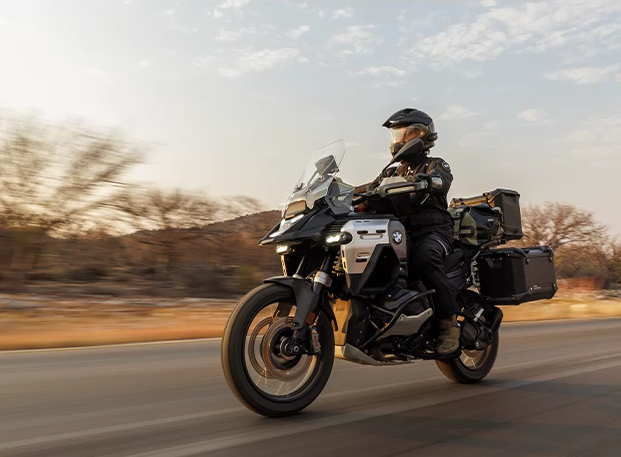
It would be impossible to discuss this evolution without talking about the BMW GS.
BMW proved there was an enormous market for motorcycles capable of crossing continents while still giving riders access to gravel, dirt roads, and remote places.
And the formula worked.
Extremely well.
Modern GS models are astonishingly capable.
The current R 1300 GS Adventure produces 145 horsepower, carries 7.9 gallons of fuel, offers over eight inches of suspension travel, and can haul nearly 480 pounds of payload.
It’s hard to argue that isn’t an incredible piece of engineering.
But at 593 pounds ready to ride, it also illustrates exactly how far the category has traveled.
Add:
Crash protection.
Panniers.
Tools.
Camping gear.
Water.
A full day’s supplies.
And suddenly the motorcycle you’re taking off road can easily approach or exceed 650 pounds.
That’s a lot of motorcycle when the trail becomes narrow.
Six Hundred Pounds Is Fine Until It Isn’t
Weight on an adventure bike behaves strangely.
On pavement, it can actually be beneficial.
More mass can provide highway stability.
It can make the motorcycle feel planted in crosswinds.
Large bikes often carry passengers and luggage better.
And modern low center of gravity engineering can make even very heavy motorcycles feel surprisingly manageable while moving.
But all of that changes at three miles per hour.
Weight becomes brutally honest when:
The front wheel slips sideways.
The trail cambers downhill.
You’re trying to turn around on a narrow shelf road.
The rear tire sinks into mud.
You stall halfway up a climb.
Or the bike simply falls over.
At that point, horsepower doesn’t matter.
Radar cruise doesn’t matter.
TFT size doesn’t matter.
You have a very heavy object lying on the ground.
Weight Doesn’t Just Make Pickups Harder
This is an important distinction.
The problem isn’t simply whether you can deadlift the bike after a fall.
More weight influences nearly every aspect of difficult riding.
A heavier motorcycle:
Carries more momentum when a line goes wrong.
Requires more force to change direction.
Places greater demand on the tires.
Punishes suspension mistakes harder.
Uses more rider energy.
Becomes more difficult to recover once it begins falling.
And increases the consequences of choosing the wrong line.
A skilled rider can make a large ADV bike do extraordinary things.
We’ve all seen it.
But that doesn’t mean the bike is making the job easier.
Capability and manageability are not the same thing.
The Industry Started Selling Capability Most Riders Rarely Use
Modern flagship adventure motorcycles can travel extremely quickly.
That’s part of the appeal.
One hundred horsepower.
One hundred and twenty.
One hundred and forty five.
Even more in some cases.
It’s entertaining.
But ask a different question:
How much horsepower do you actually use on a rocky BDR climb?
Probably not much.
The rider is controlling traction.
Managing balance.
Looking for grip.
Picking a line.
Trying not to stall.
Trying not to spin the rear tire.
The difference between 50 horsepower and 150 is mostly irrelevant there.
But the weight required to support the larger engine and motorcycle follows you everywhere.
The Horsepower Arms Race Made More Sense on Pavement
There’s nothing wrong with performance.
A powerful adventure motorcycle can be tremendous fun.
It makes interstate travel effortless.
Passing becomes easy.
Two-up touring becomes easier.
Loaded mountain road riding becomes entertaining.
And that explains why the market moved in this direction.
Most adventure motorcycles spend most of their lives on pavement.
Manufacturers understandably optimized around how customers actually used them.
The category became increasingly good at:
Highways.
Long distance touring.
Passengers.
Fast pavement.
Technology.
Comfort.
The irony is that the motorcycles became increasingly impressive at everything surrounding the adventure.
And sometimes less approachable during the adventure itself.
The Africa Twin Shows the Middle Ground
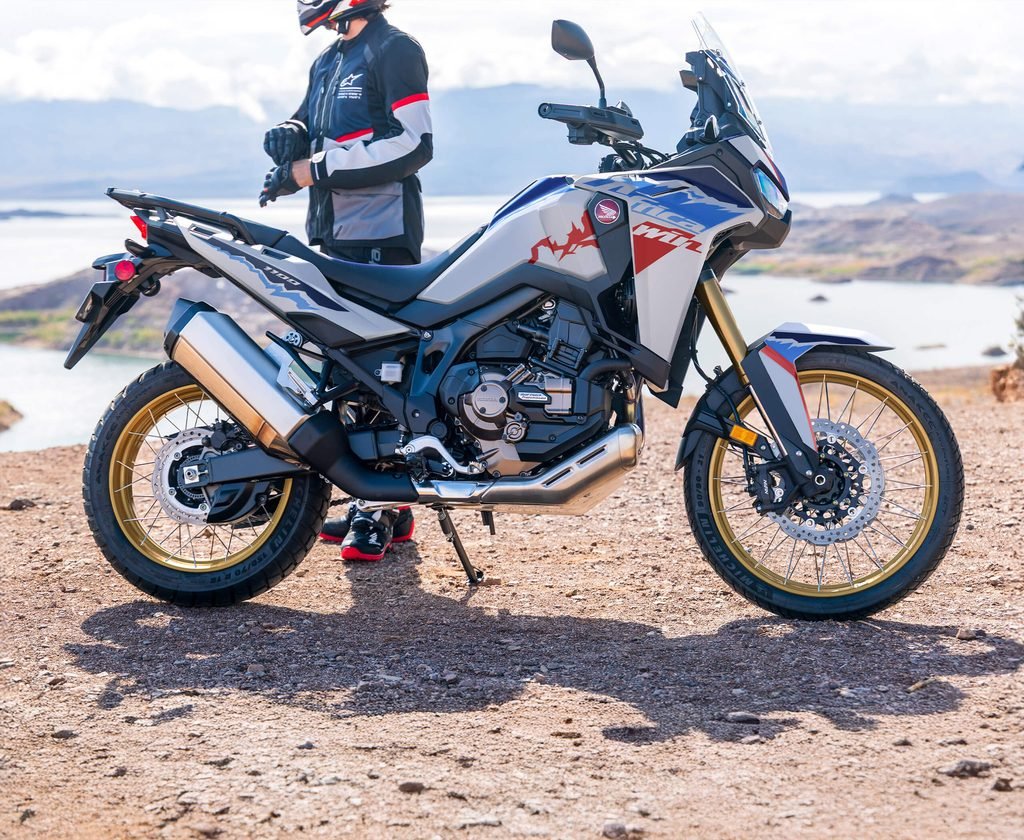
Honda’s Africa Twin is a useful example because the range itself illustrates the split.
The standard 2026 Africa Twin retains a more dirt-oriented 21/18 inch wheel setup, approximately 9.1 inches of front suspension travel, and weighs about 510 pounds ready to ride.
The Adventure Sports version shifts toward touring.
It uses a 19 inch front wheel, carries 6.6 gallons of fuel, and weighs about 535 pounds with the manual transmission.
Neither is wrong.
They’re just optimizing different priorities.
And that may be the clearest way to understand what happened to adventure motorcycles.
The category didn’t lose its way.
It split into two different jobs.
We Started Calling Adventure Tourers Adventure Bikes
This may be the heart of the issue.
There is a meaningful difference between:
An adventure motorcycle.
And:
An adventure touring motorcycle.
The first starts with dirt capability and adds enough road ability to travel.
The second starts with travel comfort and adds enough off road ability to explore.
Those sound similar.
In practice, they produce very different motorcycles.
A KTM 640 Adventure belongs strongly to the first philosophy.
A BMW GS Adventure belongs strongly to the second.
Neither approach is invalid.
The problem comes when we treat them as though they’re competing to solve the exact same problem.
The 700cc Class Started Pushing Back
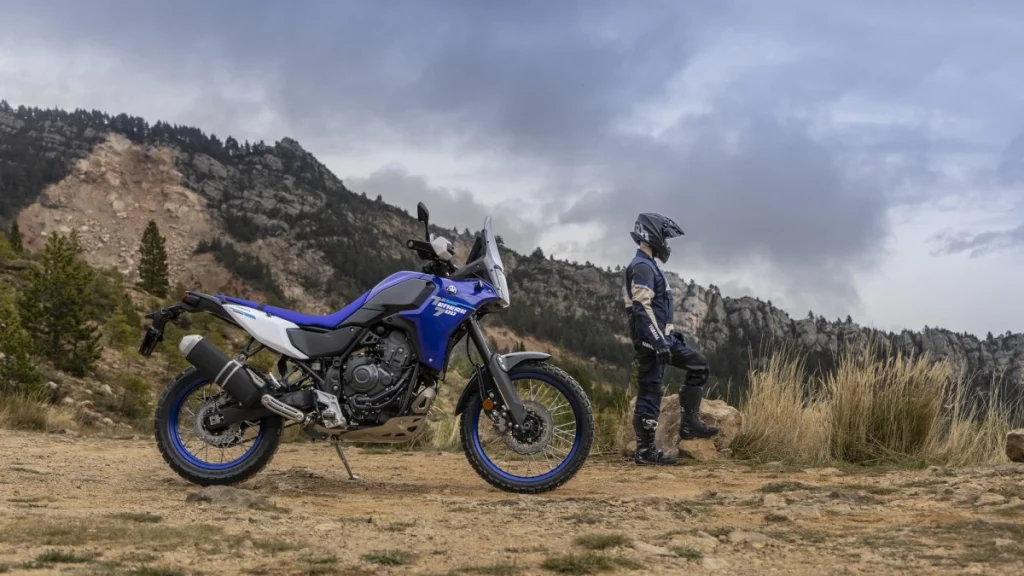
Eventually riders started asking for something smaller again.
Not necessarily smaller engines because they couldn’t afford bigger ones.
Smaller motorcycles because they wanted something easier to ride.
This is part of what made motorcycles such as the Yamaha Ténéré 700 so important.
The appeal wasn’t simply that it had fewer electronics or less power.
It represented a change in priorities.
Enough engine for the highway.
Enough chassis for serious dirt.
Reasonable range.
Manageable complexity.
And less motorcycle underneath you.
The same logic helps explain the continuing appeal of the KTM 690 Enduro R.
A modern 690 Enduro R can sit around the mid 300 pound range ready to ride while producing roughly 79 horsepower, with substantial suspension travel, and ground clearance.
That’s an entirely different proposition from a 550 or 600 pound ADV machine.
But Even the Middleweights Started Getting Heavy
Then something funny happened.
“Middleweight” adventure motorcycles started approaching 500 pounds.
A motorcycle could have an 800 or 900cc engine, weigh nearly a quarter ton, and still be described as a middleweight.
That’s technically true when the flagship class has moved to 1200 and 1300cc.
But it also shows how the reference point changed.
What once looked large began looking medium because everything above it got larger.
The Ibex 450 Makes This Especially Obvious
This is why motorcycles like the CFMOTO Ibex 450 are so interesting.
Its 44 horsepower won’t impress anyone comparing dyno graphs.
Its approximately 419 pound curb weight won’t impress a dual sport rider either.
But put it next to modern ADV bikes and its purpose becomes clear.
It still has:
A parallel twin.
A useful fuel tank.
A 21 inch front wheel.
An 18 inch rear.
Long travel suspension.
Wind protection.
Luggage capability.
Highway capability.
Tubeless spoked wheels.
And even a 1st place finish at Red Bull Romaniacs in the Ultimate ADV class
It isn’t trying to eliminate the adventure motorcycle.
It’s trying to remove the excess while preserving the useful parts.
That may be exactly what the category needs.
The Himalayan 450 Makes the Same Argument Differently
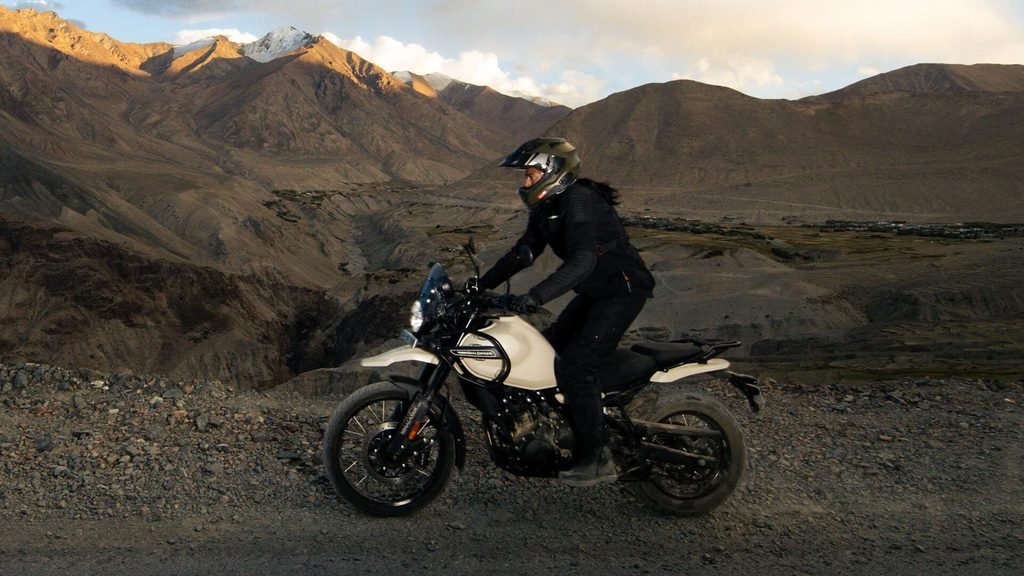
Royal Enfield arrives at a similar conclusion from another direction.
The Himalayan doesn’t chase huge horsepower.
It doesn’t pretend to be a rally bike.
It emphasizes travel.
Range.
Comfort.
Bad road capability.
Simplicity of purpose.
The result is a motorcycle that asks a fundamentally different question from a 145 horsepower flagship ADV:
Do you actually need to travel faster, or do you just need to keep traveling?
That question becomes increasingly relevant the farther you get from an interstate.
Then KTM Built the 390 Adventure R
The KTM 390 Adventure R pushes the correction even further toward dirt.
At roughly 388 pounds fully fueled, with 9.1 inches of suspension travel, 10.7 inches of ground clearance, and 21/18 inch wheels, it looks much closer to the old idea of a travel enduro than a downsized luxury ADV bike.
That’s important.
Because lightweight ADV isn’t necessarily a new category.
In some ways, it’s a return to an old one.
Maybe 400–700cc Is Where Adventure Bikes Belong
Enough power to travel. Light enough to explore.
That may be the most useful definition of the adventure bike sweet spot.
Not a specific engine size.
Not a particular number on a scale.
A balance.
The motorcycle must be powerful enough to handle highway connections.
Comfortable enough to travel.
Strong enough to carry luggage.
Durable enough for remote use.
But still manageable enough that the rider isn’t discouraged from taking the harder route.
For many riders, that balance may exist somewhere between 400 and 700cc.
Not because larger motorcycles are incapable.
Because the smaller ones may remove less freedom.
The BDR Test Exposes Everything
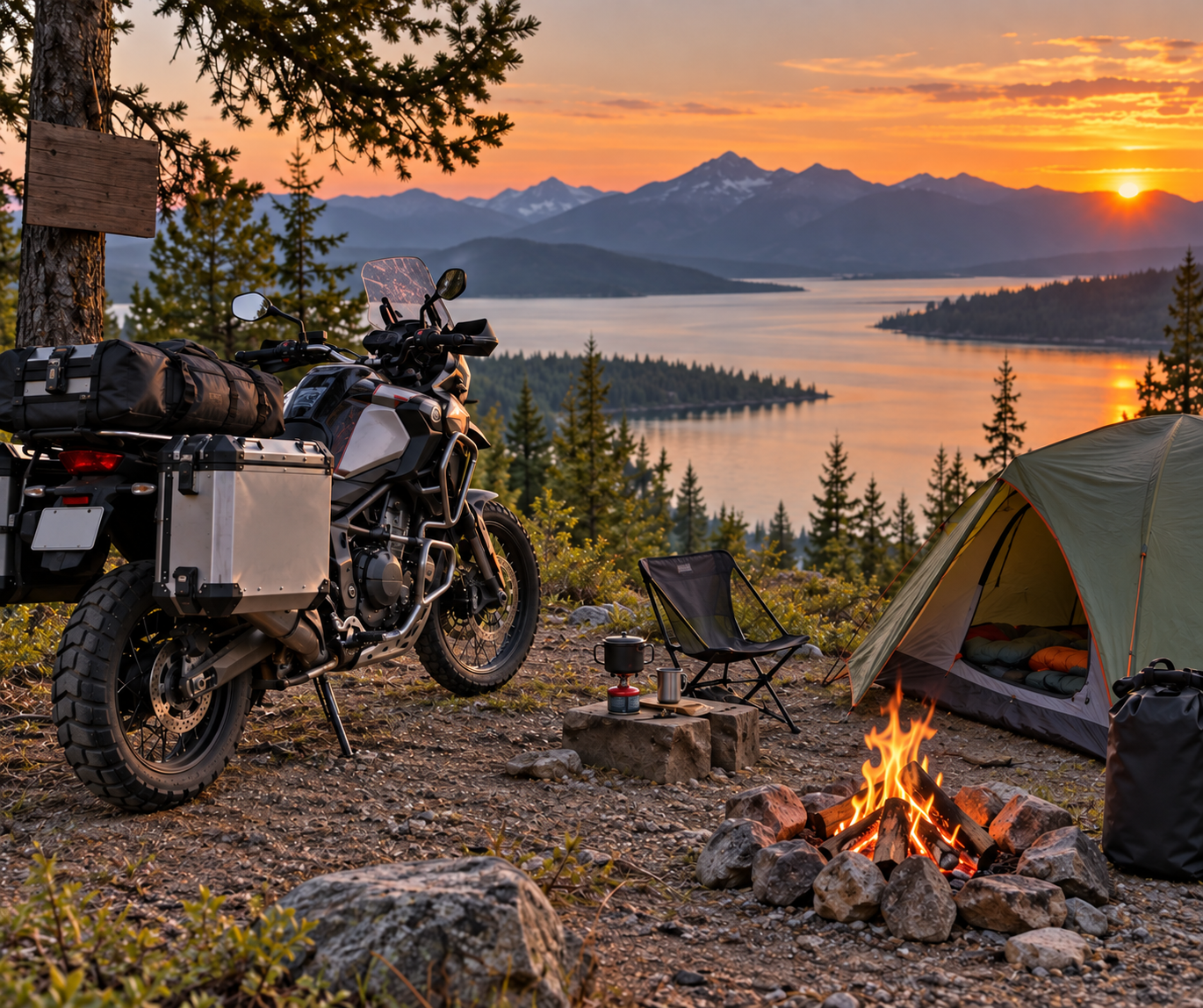
The best way to evaluate this isn’t by standing in a showroom.
Imagine an actual trip.
Ride 250 miles from home.
Start a Backcountry Discovery Route.
Carry camping gear.
Tools.
Water.
Food.
Ride several days.
Encounter:
Loose climbs.
Rocks.
Deep gravel.
Mud.
Washouts.
Unexpected dead ends.
Then ride home.
Now ask which motorcycle you’d rather have.
The highway miles favor the larger bike.
Almost everything after the pavement ends begins moving the argument toward the smaller one.
That’s the adventure bike compromise in one trip.
Big Adventure Bikes Solve the Highway Problem
And they solve it brilliantly.
That’s worth stating clearly.
If your travel regularly includes:
500 mile interstate days.
A passenger.
Hard panniers.
Heavy luggage.
High speed cruising.
Large wind protection.
Cold weather equipment.
Then a large ADV bike makes tremendous sense.
The GS Adventure isn’t too big for that job.
It’s exceptionally well suited to it.
An Africa Twin Adventure Sports isn’t too big for that job either.
The problem comes when the rider buys that motorcycle primarily for technical dirt because it wears an ADV badge.
The motorcycle may be capable.
But capability isn’t the same as optimization.
Small Adventure Bikes Solve the Exploration Problem
The lightweight end of the category encourages a different style of riding.
See a narrow road?
Take it.
Trail getting worse?
Keep going.
Need to turn around?
Fine.
Drop the bike?
Pick it up.
Need to squeeze around a washout?
Maybe.
The lighter motorcycle lowers the consequences of curiosity.
That is an enormous advantage for an adventure motorcycle.
Because curiosity is supposed to be the point.
A motorcycle that makes you more willing to explore may be more adventurous than one capable of crossing a continent at 90 mph.
The Fear Factor Matters More Than We Admit
This rarely appears in specifications.
Riders behave differently depending on what they’re riding.
A $25,000 motorcycle covered in expensive bodywork creates one kind of decision-making.
A simpler $6,000 motorcycle creates another.
The same is true of weight.
If you’re alone and looking down a difficult trail, knowing you’ll have to lift 600 pounds if things go wrong affects the decision.
Maybe consciously.
Maybe not.
A lighter motorcycle reduces that barrier.
And once you’re willing to try more roads, the motorcycle starts delivering more adventure.
Bigger Bikes Can Actually Reduce Skill Development
There’s another uncomfortable possibility.
Modern big ADV bikes are astonishingly good at protecting riders from mistakes.
Traction control manages wheelspin.
Cornering ABS manages braking.
Semi active suspension adapts continuously.
Ride modes change throttle response.
All useful.
But smaller motorcycles can encourage riders to develop more mechanical sympathy and technique.
Momentum.
Clutch control.
Throttle precision.
Line selection.
Body position.
Balance.
The motorcycle does less for you.
So you learn to do more.
That doesn’t make older or simpler motorcycles morally superior.
It just means there is educational value in riding something that isn’t overpowering the terrain.
We May Have Confused Luxury With Capability
This is probably where the adventure category drifted the farthest.
Heated seats are good.
Radar cruise is good.
Large displays are good.
Electronic suspension is good.
Keyless ignition can be convenient.
None of those things inherently makes a motorcycle more capable of reaching a remote campsite.
They make the experience more comfortable.
Comfort has value.
But we should call it what it is.
Luxury and capability overlap, but they’re not the same thing.
And adventure motorcycles became very expensive partly because we’ve increasingly demanded both.
The Old 640 Adventure Wasn’t Better
This article shouldn’t turn into nostalgia.
The KTM 640 Adventure had plenty of faults.
Vibration alone could make long pavement sections memorable for the wrong reasons.
Carburetion demanded more owner involvement.
Maintenance expectations were different.
Its seat was hardly luxurious.
Its height excluded plenty of riders.
Modern motorcycles are vastly better in many measurable ways.
The lesson isn’t that the industry should recreate a 2006 motorcycle.
It’s that the old bike’s priorities may still have value.
Low weight.
Long suspension.
Large fuel capacity.
Simple mission.
Enough engine.
Build that philosophy with modern fuel injection, modern metallurgy, good ABS, and contemporary reliability.
Now things get interesting.
That’s Why the New 690 Idea Is So Interesting
This connects directly to the argument we’ve already been exploring with KTM’s new generation 690 concept.
The old 640 Adventure occupied a space the industry largely abandoned:
big single + rally chassis + real fuel range + travel equipment.
The 690 Enduro R preserved the dirt oriented side of that equation but generally left owners to add the travel equipment themselves.
A modern rally influenced 690 Adventure could restore that missing middle.
That’s compelling precisely because the category around it has become so large.
And That’s Why the Ibex 950 Is Interesting Too
At first, an article criticizing ever-larger adventure motorcycles may seem inconsistent with our interest in the 946cc Ibex 950.
It isn’t.
The Ibex 950 matters because CFMOTO appears to be asking how much performance and equipment can fit into a package that still takes off-road chassis design seriously.
21/18 wheels.
Long suspension.
Low mounted fuel.
Meaningful ground clearance.
It’s still a large motorcycle.
But there’s a philosophical difference between building a powerful motorcycle that retains serious dirt intent and simply adding adventure styling to a tourer.
That distinction should matter.
There Isn’t One Correct Size
This is ultimately not an argument that everyone should ride a 450.
A 450 can be the wrong motorcycle.
So can a 1300.
The right motorcycle depends on where your compromise belongs.
If the majority of your trip is:
Interstate and paved touring:
Large ADV.
Pavement, gravel and occasional easy dirt:
Middleweight ADV.
BDRs, rough roads and mixed travel:
400–700cc starts making enormous sense.
Technical backcountry and minimal pavement:
Dual-sport or enduro territory may be better still.
The problem isn’t that large adventure motorcycles exist.
The problem is assuming they’re the inevitable upgrade.
Bigger Isn’t the Final Level
Motorcycling often teaches us to think in progression.
- 125cc
- 250cc
- 450cc
- 600cc
- 1000cc
You “move up.”
But adventure motorcycles don’t work that way.
A rider may start on a 450.
Move to a 1200.
Gain years of experience.
Then return to a 450 or 700 because they understand their riding better.
That’s not moving backward.
It’s selecting the correct tool.
Experience often teaches riders that using less motorcycle well is more rewarding than managing more motorcycle than they need.
So When Did Adventure Bikes Get Too Big?
There wasn’t a specific year.
No single manufacturer ruined anything.
No particular model crossed some universal line.
Adventure bikes got bigger gradually because riders kept asking them to do more.
More highway.
More luggage.
More passenger comfort.
More electronics.
More speed.
More range.
More luxury.
The motorcycles evolved logically.
But eventually, enough reasonable additions produced something quite different from where the category began.
The adventure bike became an adventure tourer.
And now the pendulum appears to be moving back.
The Correction Is Already Happening
Look at what’s becoming interesting again.
CFMOTO Ibex 450.
Royal Enfield Himalayan 450.
KTM 390 Adventure R.
Yamaha Ténéré 700.
KTM 690 Adventure.
Potential rally-style 690-class machines.
These motorcycles don’t all solve the problem the same way.
But they share something important.
Restraint.
Enough engine instead of maximum engine.
Manageability instead of maximum equipment.
Dirt capability before luxury.
That doesn’t mean the era of the giant ADV bike is ending.
It means riders finally have meaningful alternatives again.
Maybe the Industry Didn’t Get Adventure Bikes Wrong
Maybe we just asked the wrong question.
For years we’ve asked:
How much motorcycle can we build that still goes off road?
Maybe the better question is:
How little motorcycle do we need to go everywhere we actually want to go?
That’s a very different engineering brief.
It leads to smaller engines.
Less weight.
Simpler equipment.
Lower purchase prices.
And motorcycles that may look less impressive parked outside a coffee shop.
But something interesting happens when the pavement ends.
They become easier.
Less intimidating.
Less exhausting.
Less expensive to drop.
And more willing accomplices when curiosity says:
“I wonder where that road goes.”
Perhaps that’s the real measure of an adventure motorcycle.
Not how much technology it carries.
Not how much horsepower it makes.
Not how far it can cruise at 90 mph.
But how rarely the motorcycle itself becomes the reason you decide not to continue.
And by that standard, the future of adventure motorcycles may look surprisingly similar to their past.
Enough power. Enough fuel. Good suspension. Low weight. And a long road disappearing into somewhere you haven’t been yet.
Continue Reading
690 Rally vs 640 Adventure: Did KTM Finally Build the 640’s Successor?
Is the Ibex 450 the Adventure Bike Most Riders Actually Need?
The Lightweight ADV Sweet Spot: Ibex 450 vs Himalayan 450 vs KTM 390 Adventure R
2027 CFMOTO Ibex 950: Did CFMOTO Just Build the KTM 990 Adventure We Were Waiting For?
CFMOTO Ibex 950 vs KTM 890 Adventure R: How Close Are They Really?