Adventure motorcycles have spent the last twenty years becoming more capable.
They’ve also spent the last twenty years becoming larger, faster, more complicated, and more expensive.
Today, a rider can buy an adventure motorcycle with superbike levels of horsepower, semi active suspension, radar cruise control, sophisticated traction management, and enough electronics to make an early Dakar machine look agricultural.
All of that technology is impressive.
But it raises an uncomfortable question:
How much of it do most adventure riders actually need?
The new generation of lightweight adventure motorcycles is beginning to challenge the assumption that bigger automatically means better.
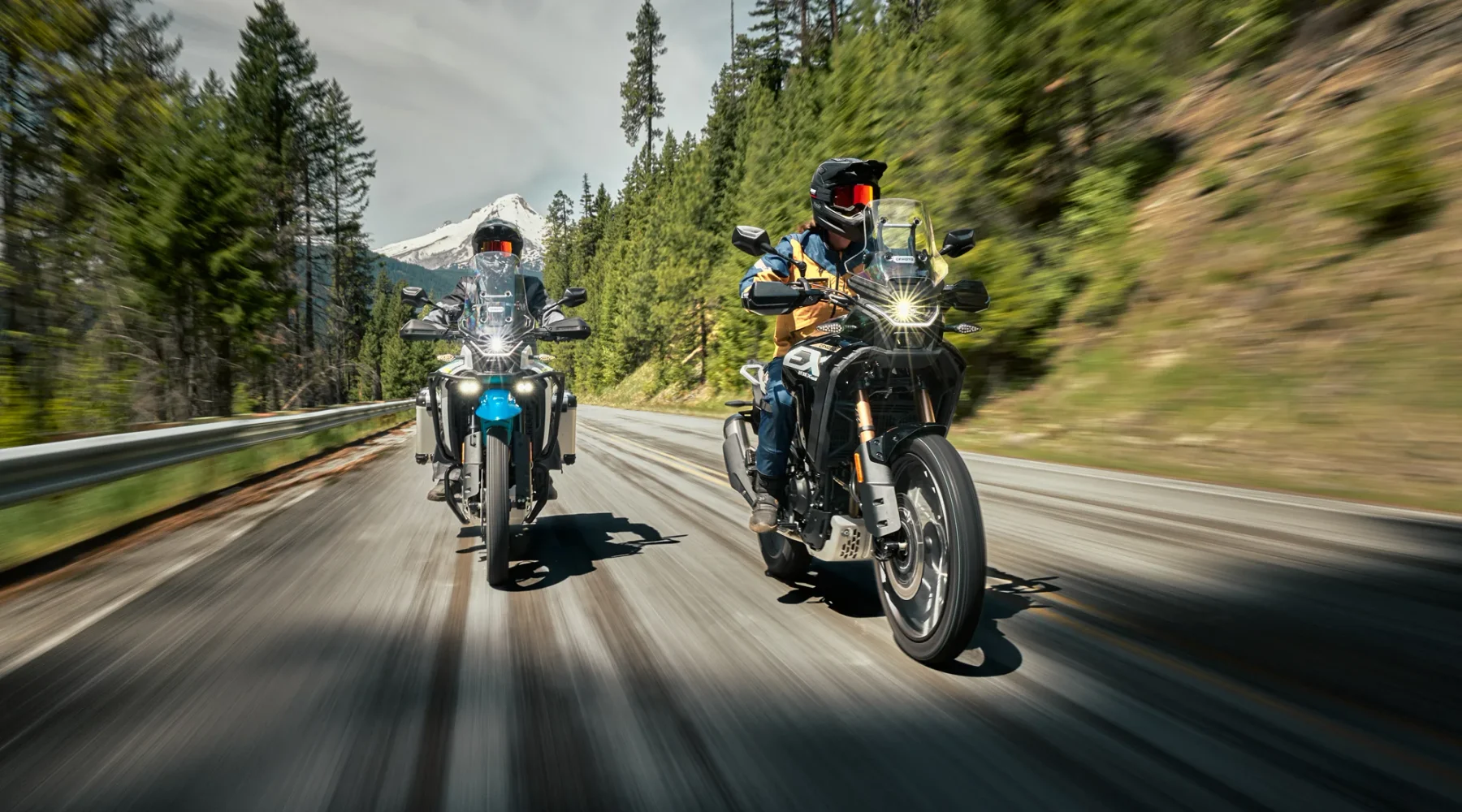
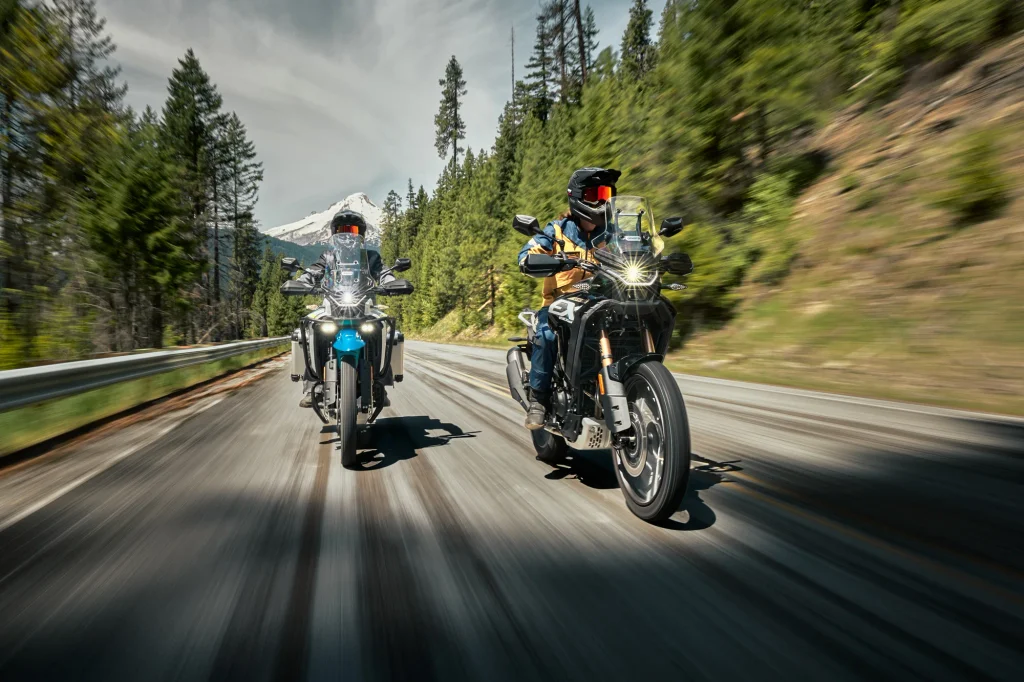
And few motorcycles make that argument more clearly than the CFMOTO Ibex 450.
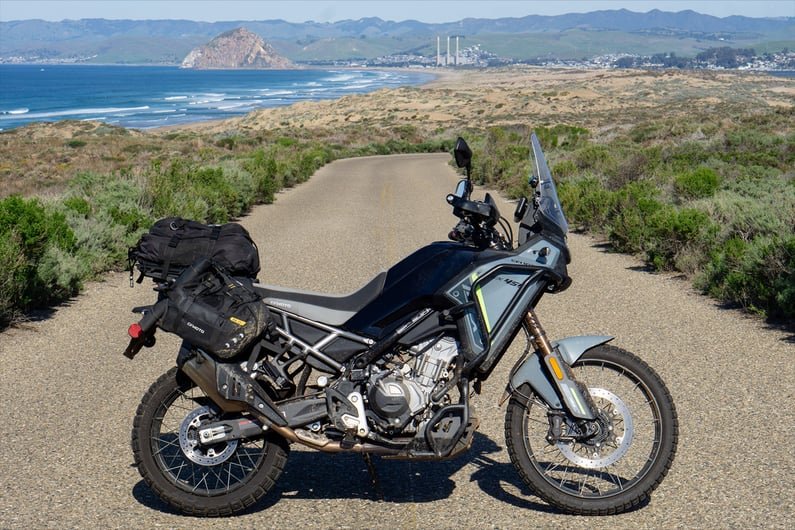
With 44 horsepower, roughly 419 pounds ready to ride, a 4.6-gallon fuel tank, 21/18-inch wheels, and serious KYB suspension the Ibex 450 doesn’t try to overwhelm the rider with numbers.
Instead, it offers something that may matter more once the pavement ends.
Manageability.
And for many riders, that may be the specification that matters most.
Adventure Motorcycles Have Become Very Good at the Wrong Part of the Trip
Think about how most adventure motorcycles are marketed.
Horsepower.
Top end electronics.
High speed stability.
Touring comfort.
Passenger accommodations.
Large TFT displays.
All useful things.
Particularly on the highway.
But adventure riding has a strange contradiction built into it.
The motorcycle that feels best riding to the trail may be the motorcycle you least want once the trail gets difficult.
A big engine feels wonderful during a highway pass.
A large fuel tank is comforting in remote country.
A tall windscreen is great in bad weather.
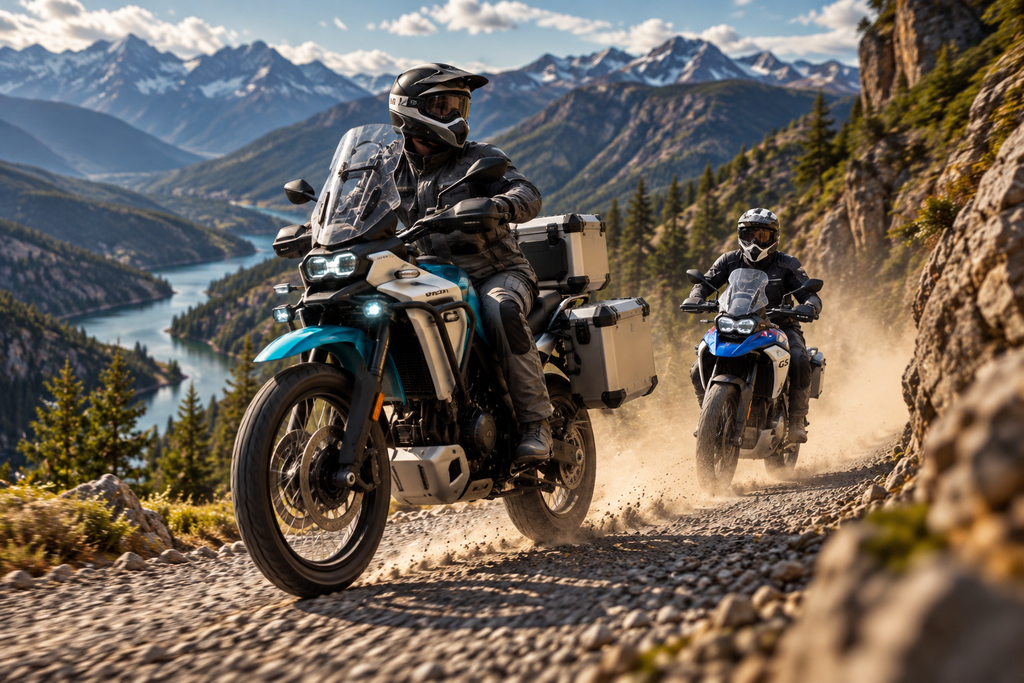
But none of those things helps much when the road narrows into loose two-track, turns sharply uphill, and ends in a pile of rocks.
At that point, one specification starts becoming disproportionately important.
Weight.
419 Pounds Changes the Conversation
The Ibex 450 has a claimed curb weight of approximately 418.9 pounds.
That’s not enduro light.
A 450cc competition motorcycle will weigh dramatically less.
But that’s the wrong comparison.
The Ibex is a road legal twin cylinder adventure motorcycle with:
- A meaningful fuel tank
- Wind protection
- A proper subframe
- Tubeless spoked wheels
- Long-travel suspension
- ABS
- A TFT display
- Real highway capability
Viewed against larger adventure motorcycles, roughly 419 pounds begins to look very attractive.
And the difference between 420 and 500-plus pounds is more significant off road than the numbers suggest.
Adventure Bike Weight Isn’t Linear
Pick up a motorcycle from a flat parking lot and 50 pounds may not seem transformative.
Now put the same motorcycle:
Halfway up a loose hill.
Pointing downhill across a rut.
Leaning against your uphill leg.
Loaded with camping equipment.
At the end of an eight hour riding day.
Suddenly every pound matters.
The consequences of weight also compound.
A heavier motorcycle requires more effort to stop once it begins moving sideways.
More strength to recover from a mistake.
More traction when climbing.
More braking effort descending.
And more energy from the rider throughout the day.
That fatigue eventually affects decision making.
The best motorcycle off road isn’t always the one capable of going fastest. It may be the one that leaves enough energy for the rider to keep going.
Forty Four Horsepower Is Enough
This might be the hardest part for some riders to accept.
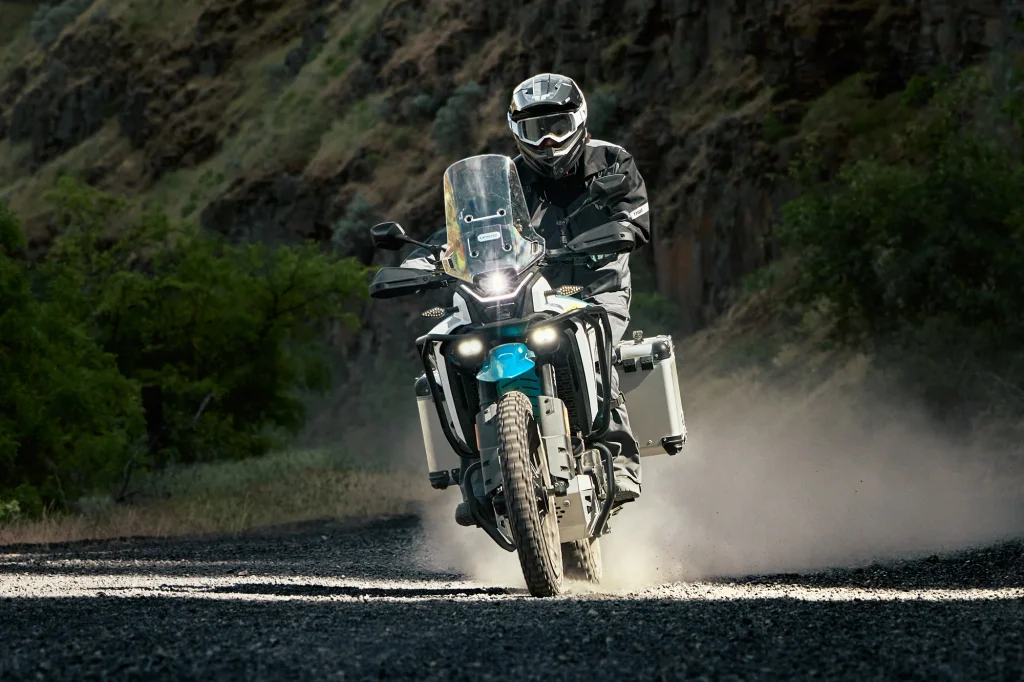
The Ibex 450 produces a claimed 44 horsepower at 8,500 rpm and 32.5 lb-ft of torque at 6,250 rpm.
That is not an impressive number in a market where adventure motorcycles routinely produce more than 100 horsepower.
But horsepower only matters when you can use it.
On pavement, more power is fun.
It makes passing easier.
It makes high speed touring more relaxed.
And it gives the motorcycle a broader performance envelope.
Off pavement, things change.
Most technical riding happens nowhere near peak horsepower.
The rider is managing traction.
Balancing throttle and clutch.
Trying to maintain momentum.
Avoiding wheelspin.
Choosing lines.
Controlling the motorcycle at relatively low speeds.
In that environment, an easily managed 44 horsepower can be more useful than a dramatic 112.
More Power Can Actually Make Things Harder
This doesn’t mean powerful adventure motorcycles are bad off road.
Far from it.
Modern traction control systems can make extraordinary horsepower surprisingly manageable.
But electronics can’t eliminate physics.
A larger engine generally contributes to a larger motorcycle.
A larger motorcycle generally carries more fuel, more structure, and more equipment.
And once the motorcycle is lying on its side, horsepower becomes irrelevant.
The Ibex 450’s modest output may actually encourage riders to use more of the engine more often.
Instead of managing excess power, the rider can concentrate on maintaining momentum.
That can be remarkably satisfying.
The 270 Degree Twin Matters
The Ibex 450 doesn’t use a single-cylinder engine.
Its 449.5cc parallel twin uses a 270 degree crankshaft, giving it a firing character increasingly popular in modern adventure motorcycles.
That architecture helps distinguish the Ibex from traditional small dual-sports.
A single cylinder motorcycle remains one of the simplest and lightest ways to build a serious dirt oriented travel bike.
But singles come with compromises.
Vibration.
Highway refinement.
Sustained high rpm operation.
The parallel twin gives the Ibex a potentially useful middle ground.
Enough smoothness for extended pavement travel without requiring the size and power of an 800 or 950cc engine.
That may be one of the motorcycle’s most important attributes.
It Still Has Proper Adventure Bike Hardware
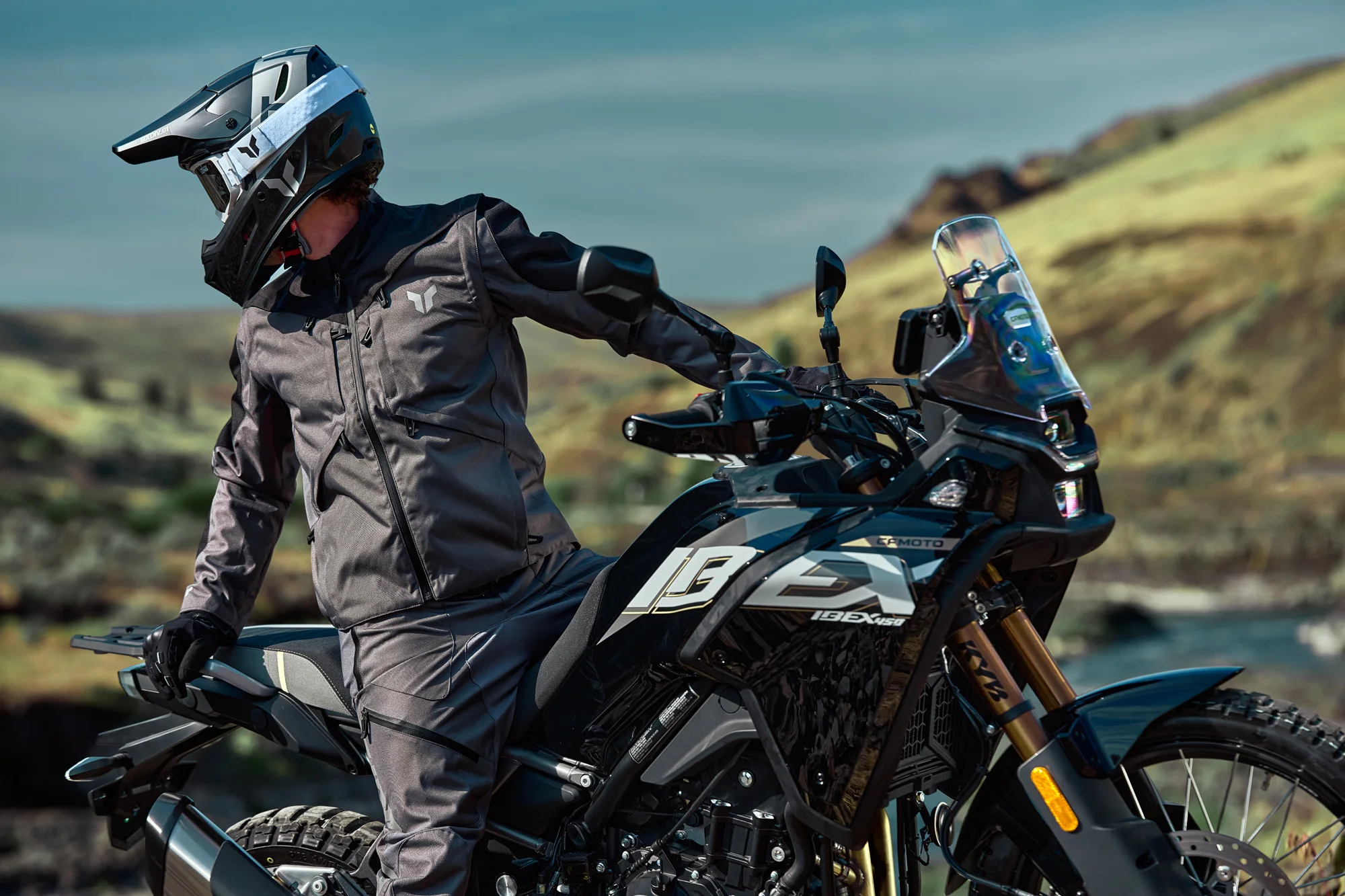
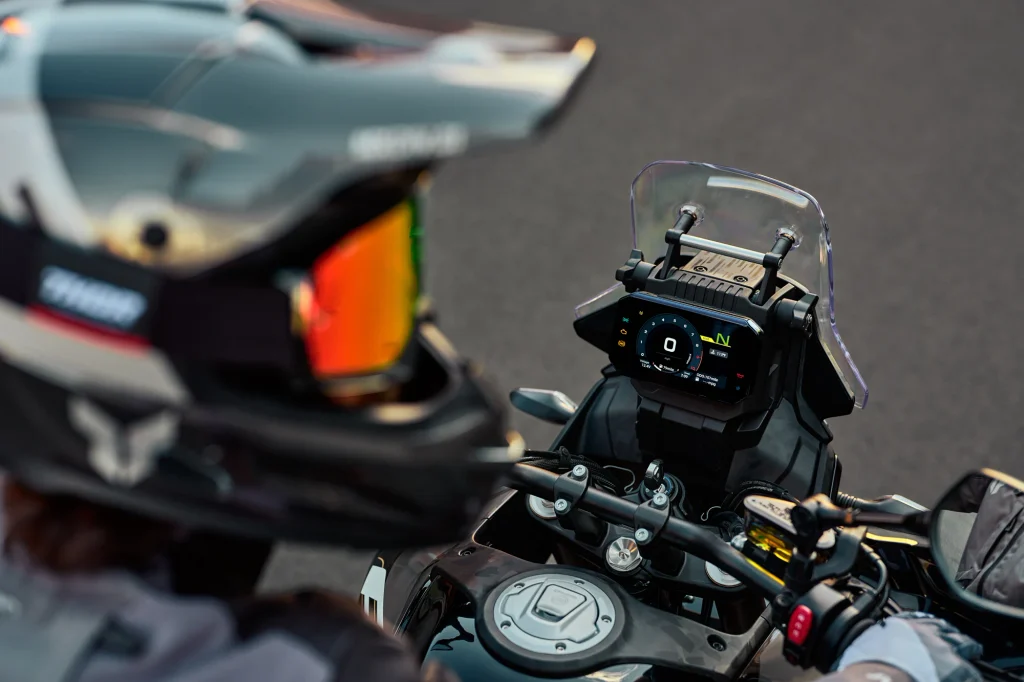
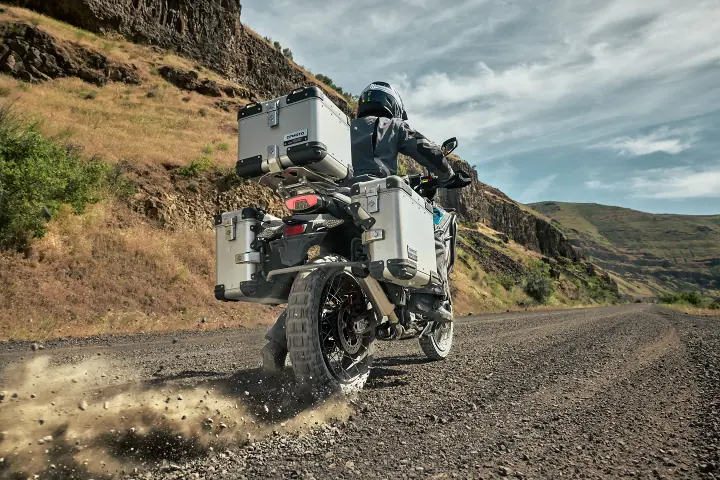
A lightweight adventure motorcycle only works if the chassis can support the mission.
The Ibex gets a 21-inch front and 18-inch rear tubeless spoked wheel combination, which remains the classic dirt-oriented setup for serious adventure riding.
Suspension is handled by KYB.
The inverted front fork provides 200 mm roughly 7.9 inches of travel, with preload, compression, and rebound adjustment. The rear uses a multi link KYB setup with the same 200 mm travel figure.
Ground clearance is approximately 8.6 inches.
Those aren’t styling exercises.
They’re useful numbers.
The 450 has been designed to leave pavement.
The Tubeless Wheels Deserve More Attention
This is one of those details that matters much more to owners than it does in advertisements.
The Ibex 450 combines spoked wheels with tubeless tires.
For a travel motorcycle, that can be a significant advantage.
A simple puncture can often be repaired without removing the wheel.
Plug the tire.
Inflate it.
Continue riding.
There are still arguments in favor of conventional tubes for very aggressive off road use, particularly when rim damage becomes a concern.
But for the typical adventure rider moving between highways, gravel, BDRs and forest roads, tubeless spoked wheels strike an extremely useful balance.
Range Matters More Than Horsepower in the Middle of Nowhere
The Ibex carries approximately 4.6 gallons of fuel.
That’s a useful amount for a 449cc engine.
Actual range will vary substantially with speed, load, altitude, and riding conditions, so we’d rather test it than pretend a theoretical MPG number tells the full story.
But the basic concept is right.
A smaller engine paired with meaningful fuel capacity can produce exactly what an adventure traveler needs:
Time between fuel stops.
An extra 20 horsepower doesn’t help much when the next gas station is 180 miles away.
Range does.
The Smaller Bike Lets You Explore Differently
This may be the strongest argument for motorcycles like the Ibex 450.
A larger adventure bike makes travel easy.
A smaller adventure bike can make exploration easier.
Imagine coming across an unfamiliar forest road.
You don’t know whether it becomes rocky.
You don’t know whether there’s a turnaround.
You don’t know whether it gets muddy.
You don’t know whether a bridge is washed out five miles ahead.
On a $20,000, 550-pound adventure motorcycle, those unknowns influence the decision.
On something lighter and considerably less expensive?
The adventure likely continues.
That difference is difficult to measure.
But it changes how the motorcycle gets used.
A motorcycle that makes you more willing to explore may ultimately take you to more interesting places than one capable of traveling faster.
The Ibex 450 Isn’t Just for Beginners
This deserves emphasis.
Small displacement is often treated as synonymous with beginner.
It shouldn’t be.
There are reasons a new rider may prefer the Ibex 450.
Manageable power.
Lower seat height.
Lower purchase price.
Lower weight.
Those are legitimate advantages.
But experience doesn’t make those advantages disappear.
Experienced off-road riders often understand them better.
A skilled rider knows how exhausting a heavy motorcycle can become.
Knows what repeated pickups do to energy levels.
Knows that difficult terrain can transform surprisingly quickly.
And knows that the ability to put both wheels exactly where you want them often matters more than acceleration.
Choosing the smaller motorcycle can be a deliberate decision made because of experience rather than despite it.
What the Ibex 450 Gives Up
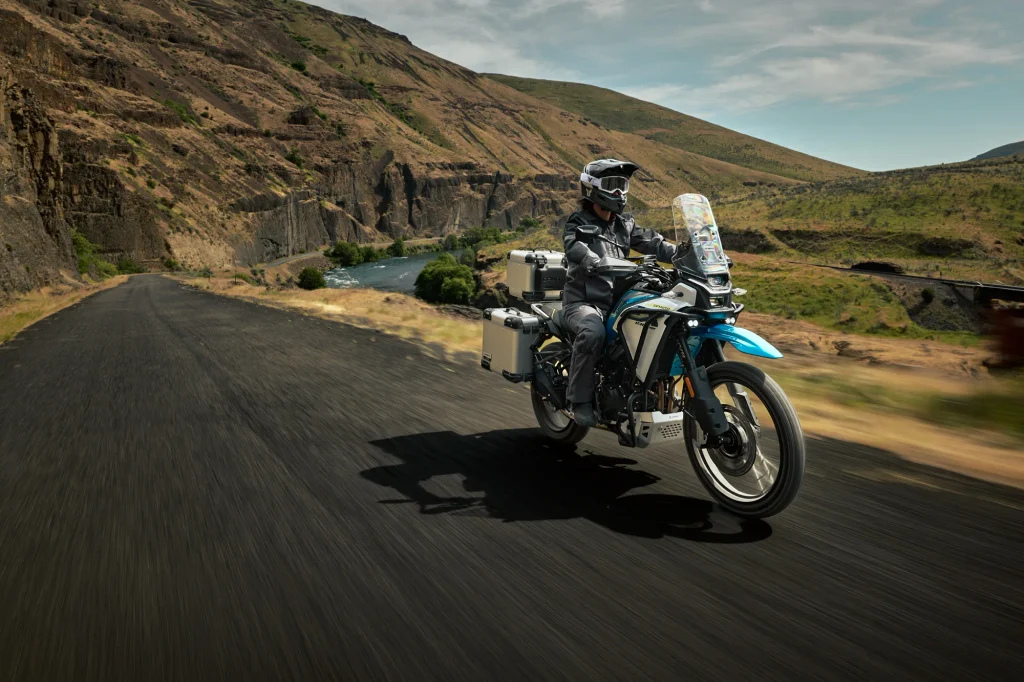
None of this makes the Ibex 450 perfect.
Physics works both directions.
A smaller engine has disadvantages.
High speed passing requires more planning.
Loaded travel reduces available performance.
Strong headwinds matter more.
High elevations matter more.
Two up touring places greater demands on the engine and chassis.
Sustained interstate speeds won’t feel as effortless as they do on a larger motorcycle.
And if your typical trip consists of 80 percent highway and 20 percent maintained gravel roads, buying a larger adventure motorcycle may make perfect sense.
The point isn’t that the Ibex 450 is better than the bigger alternatives.
It’s that many riders overestimate how much motorcycle their actual riding requires.
The Highway Question
For many prospective owners, this is probably the biggest concern.
Can a 450cc adventure motorcycle actually tour?
The answer depends heavily on your definition of touring.
Can it cruise on the highway?
Yes.
Can it carry luggage?
Yes.
Can you travel long distances on it?
Certainly.
Will it feel as relaxed doing 80 mph into a headwind as a 950cc motorcycle?
No.
And that’s where the buyer needs to be realistic.
If you spend hours every weekend at Western interstate speeds, displacement has real value.
If highways are primarily the connecting sections between back roads and trails, the calculation changes.
The question becomes:
How much road comfort are you willing to trade for more manageability once the interesting part begins?
What About the Seat Height?
Another interesting part of the package is accessibility.
CFMOTO lists an adjustable seat arrangement around 31.5 to 32.3 inches, depending on configuration.
That’s unusually approachable for a motorcycle with a 21-inch front wheel and nearly eight inches of suspension travel.
Seat height isn’t the same thing as accessibility, of course.
Seat width and chassis width matter.
Suspension sag matters.
Rider inseam matters.
But lower height reduces one of the common barriers to serious adventure motorcycles.
And confidence at a stop can make a major difference off road.
Dropping a Motorcycle Is Part of the Equation
Adventure bike advertising rarely shows this part.
Eventually you’re going to drop it.
Maybe at zero mph.
Maybe crossing a muddy rut.
Maybe trying to turn around on a cambered road.
It’s normal.
The important question is what happens afterward.
Can you pick it up alone?
Did expensive bodywork break?
Can you continue riding?
Is the motorcycle now leaking something?
The 450’s relative simplicity and lower weight give it an inherent advantage here.
CFMOTO also offers factory protection and travel accessories for the platform, including engine guards, a heavy-duty aluminum skidplate, handguards and luggage options.
That makes it possible to build the bike around actual backcountry use rather than just appearance.
$5,999 Changes the Risk Calculation
The 2027 U.S. MSRP has been listed at $5,999, making the Ibex 450 dramatically less expensive than most full-size adventure motorcycles.
Price isn’t merely a purchasing consideration.
It can affect how riders use motorcycles.
Most of us are more willing to take risks with a motorcycle that doesn’t represent a massive financial investment.
That doesn’t mean abusing it.
It means worrying less.
A scratch becomes a story rather than a crisis.
A tip-over becomes part of the trip.
A difficult trail becomes something worth attempting.
There is freedom in that.
The Money Left Over Matters
Consider the larger adventure motorcycle budget.
The motorcycle isn’t the entire expense.
You may also need:
Soft luggage.
Engine protection.
Navigation.
Camping equipment.
Tools.
Tires.
Riding gear.
Communication equipment.
Maintenance supplies.
Fuel.
Hotels.
Actual travel.
Spending less on the motorcycle itself can fund a substantial amount of the experience the motorcycle was purchased to provide.
Adventure isn’t measured by the MSRP of the motorcycle.
That sounds obvious.
The market sometimes behaves as though we’ve forgotten.
Is the 450 Enough for a BDR?
This may be where the Ibex makes its strongest argument.
A typical Backcountry Discovery Route asks a motorcycle to do several things well.
Cover pavement.
Carry luggage.
Travel substantial distances between services.
Handle loose gravel.
Climb rough roads.
Cross rocks and ruts.
Remain manageable when tired.
The Ibex 450 has the fundamental ingredients.
Twenty-one/eighteen inch wheels.
Reasonable range.
Long-travel suspension.
Twin-cylinder highway refinement.
Enough power.
And significantly less weight than many conventional ADV bikes.
The big question isn’t whether the 450 can complete a BDR.
The more interesting question may be:
Would the average rider actually have an easier time completing one on the 450?
In technical sections, there’s a good chance the answer is yes.
What About the Long Ride to the BDR?
That’s where the argument becomes more nuanced.
Suppose the route begins 600 miles from home.
The larger motorcycle will almost certainly make that transit easier.
More passing power.
Greater high-speed reserve.
Typically more wind protection.
More capacity for luggage and a passenger.
But once you reach the route, the advantages can reverse.
This is the central compromise of adventure motorcycles.
Do you optimize the motorcycle for getting to the trail—or for riding the trail?
The Ibex 450 clearly leans toward the second answer without abandoning the first.
For many riders, that’s exactly the right compromise.
Bigger Bikes Still Have a Place
None of this is an argument that everyone should sell their 900cc adventure bike.
The larger motorcycles exist for legitimate reasons.
If you regularly:
Ride two up.
Carry substantial luggage.
Spend entire days on interstate highways.
Tour at high speeds.
Want effortless passing power.
Ride primarily pavement and gravel.
A larger motorcycle can be the better tool.
That’s why the Ibex 950 is so interesting.
It’s attempting to offer serious off-road specifications while retaining large-bike performance.
But capability always comes with tradeoffs.
And for the rider primarily interested in backcountry travel rather than high-speed touring, the smaller motorcycle remains extremely compelling.
Maybe “Outgrowing” a 450 Is the Wrong Idea
Motorcycle culture has long encouraged riders to progress through displacement.
Start small.
Gain experience.
Buy something bigger.
Eventually reach the motorcycle you really wanted.
That logic makes sense in some categories.
But adventure riding complicates it.
Increasing skill can actually make a rider appreciate a smaller motorcycle more.
You begin recognizing how much speed can be carried with modest power.
How important suspension is.
How useful light weight becomes.
How little horsepower difficult terrain actually requires.
And how satisfying it can be to use most of a motorcycle’s capability rather than managing a fraction of it.
The Ibex 450 may be a motorcycle riders grow into, not merely grow out of.
Is It the Adventure Bike Most Riders Actually Need?
Probably more riders than the market would have us believe.
Not everyone.
The long-distance two up rider should probably look elsewhere.
The rider who loves 80 mph interstate travel may want more engine.
And someone looking for maximum all around performance may understandably prefer the Ibex 950.
But for the rider whose idea of adventure involves:
Back roads.
BDRs.
Forest roads.
Camping.
Solo travel.
Exploring unfamiliar routes.
Occasional highway connections.
And getting as far from pavement as practical.
The Ibex 450 makes an extraordinarily persuasive case.
It has enough engine.
Enough range.
Enough suspension.
The right wheel sizes.
Useful technology.
And considerably less motorcycle to manage when things become difficult.
Which may be exactly the point.
For years, adventure motorcycles have asked:
How much capability can we add?
Perhaps riders should start asking a different question.
How much motorcycle can we remove before we actually start losing the capability that matters?
The Ibex 450 suggests that threshold may be a lot lower than we thought.
And if that proves true in long term ownership, CFMOTO may have done something more significant than build a good inexpensive adventure bike.
It may have reminded us what an adventure motorcycle actually needs to be.
Continue Reading
Ibex 450 vs Ibex 800 vs Ibex 950: Which CFMOTO Adventure Bike Should You Buy?
2027 CFMOTO Ibex 950: Did CFMOTO Just Build the KTM 990 Adventure We Were Waiting For?
CFMOTO Ibex 950 vs KTM 890 Adventure R: How Close Are They Really?