A few years ago, shopping for a CFMOTO adventure motorcycle was relatively simple.
That’s changing quickly.
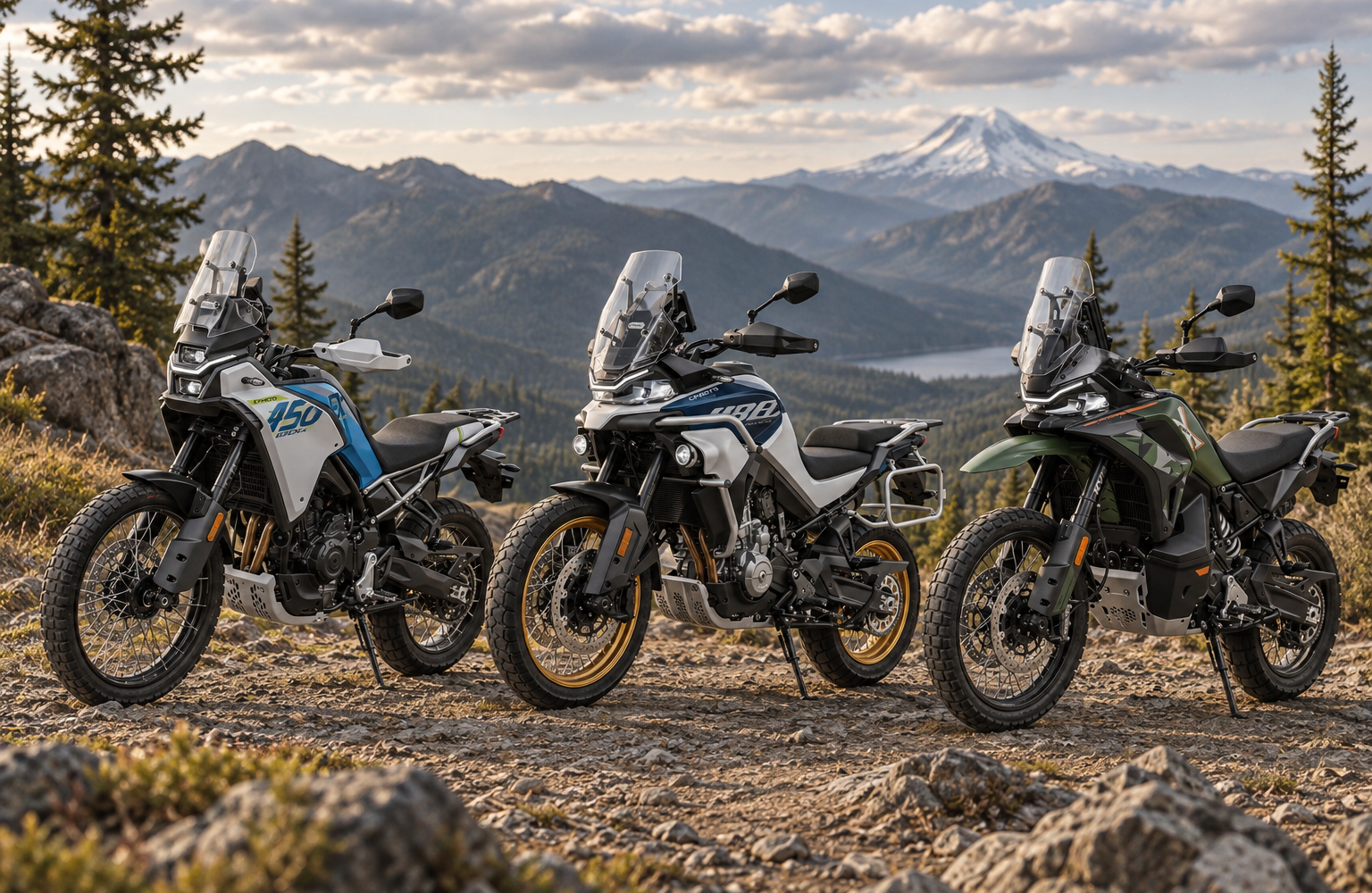
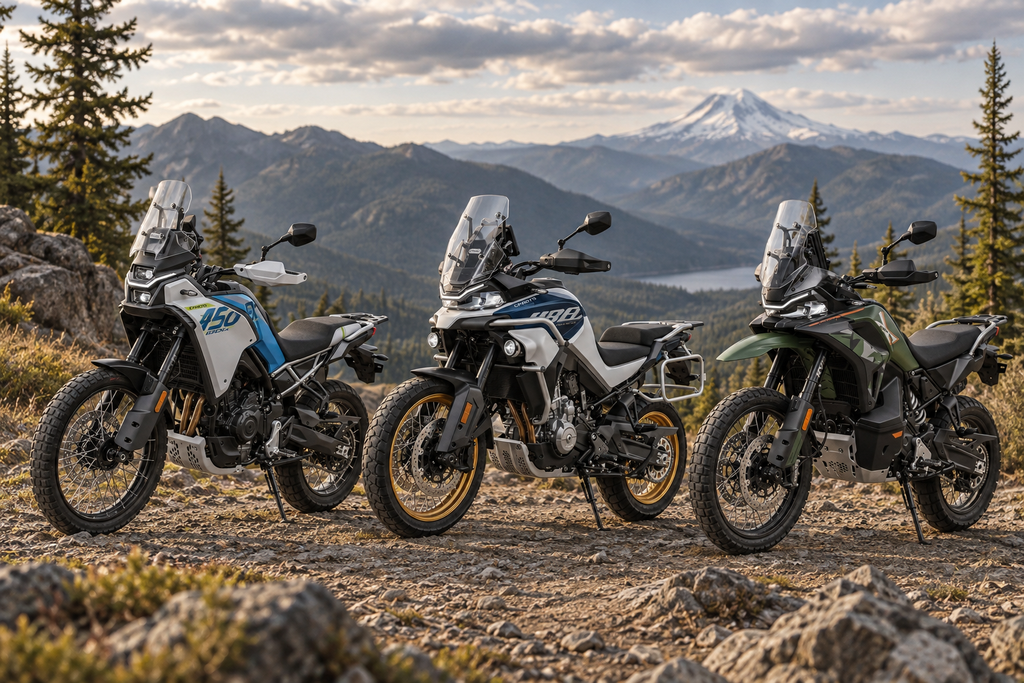
With the arrival of the new Ibex 950, CFMOTO now offers three distinctly different ways to approach adventure riding in the United States:
The lightweight Ibex 450.
The road-oriented Ibex 800 E.
And the new high performance Ibex 950.
At first glance, choosing between them seems like a simple question of displacement.
450, 800 or 950. Pick how much power you want and write the check.
But look more closely and something interesting happens.
These aren’t really three sizes of the same motorcycle.
They’re three different interpretations of what an adventure motorcycle should do.
And the motorcycle in the middle isn’t necessarily the compromise between the other two.
So rather than asking which Ibex is best, there’s a much more useful question:
Which CFMOTO Ibex is best for the way you actually ride?
Three Ibexes, Three Different Missions
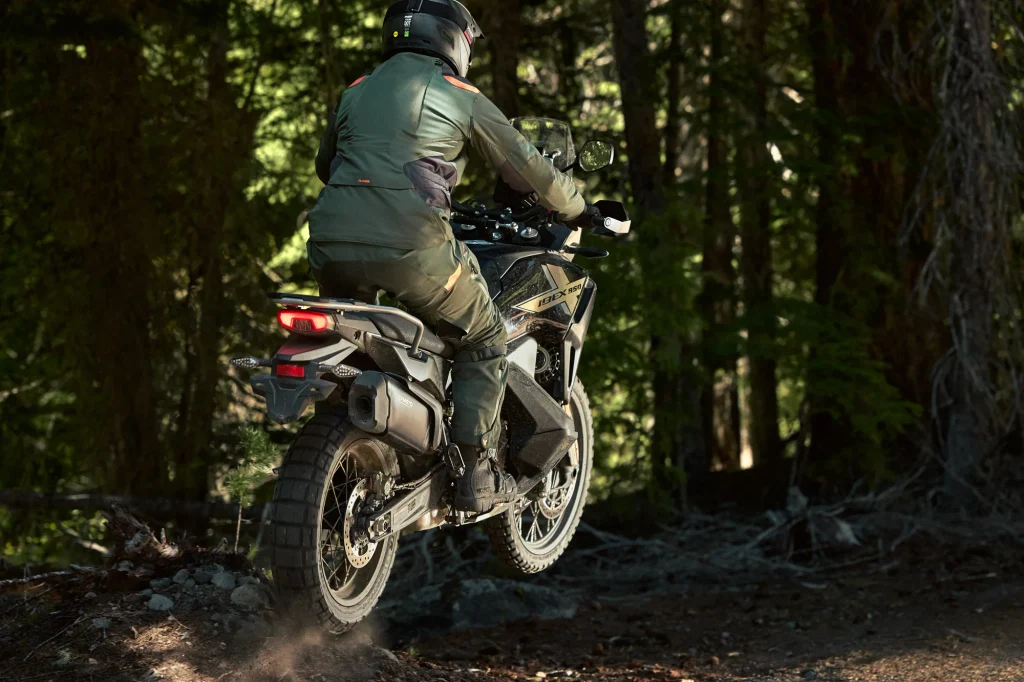
CFMOTO’s lineup now covers an unusually wide spectrum.
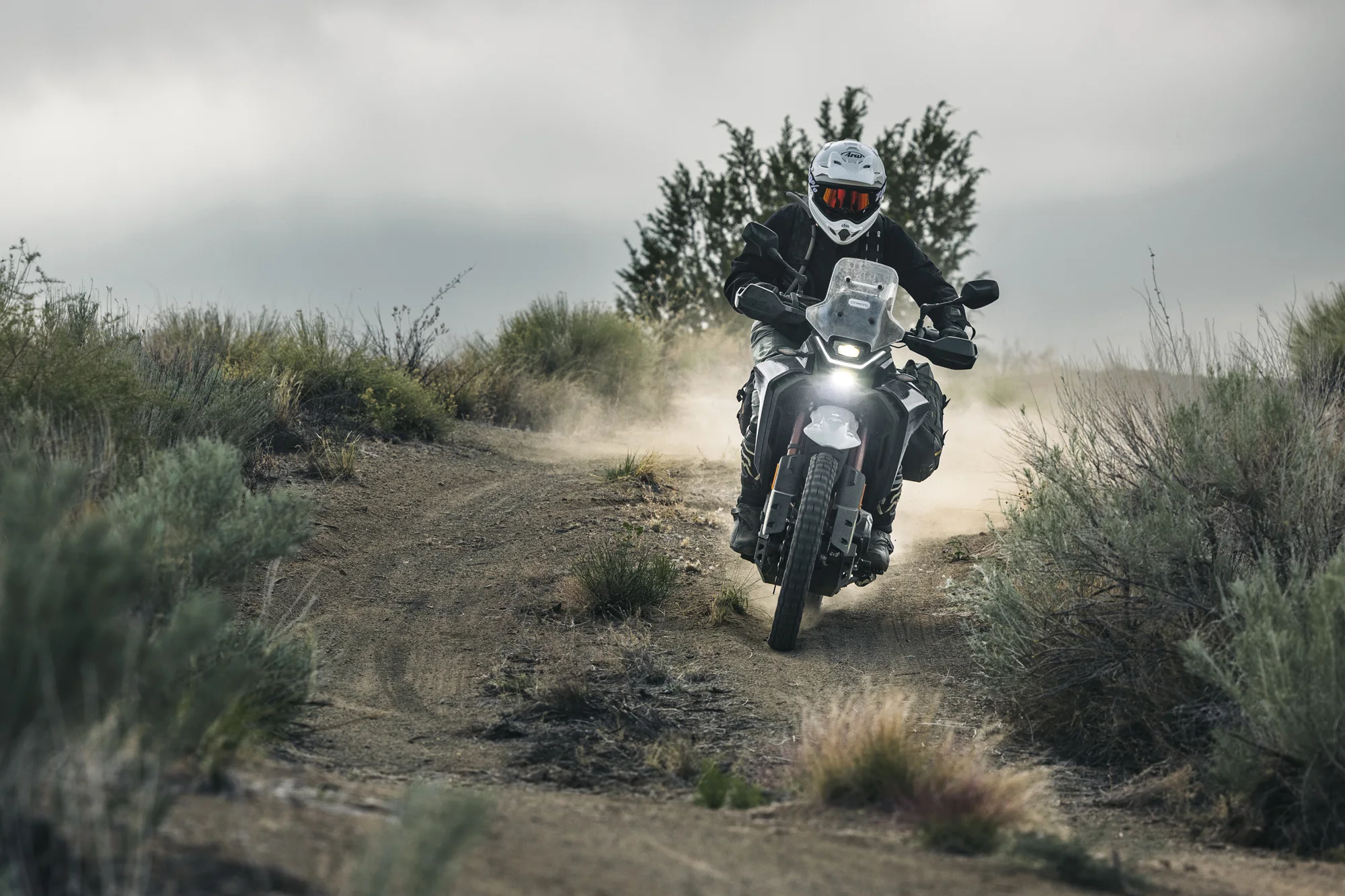
The Ibex 450 uses a 449cc parallel twin producing a claimed 44 horsepower. It weighs approximately 419 pounds ready to ride, uses 21/18 inch tubeless spoked wheels and provides roughly 7.9 inches of suspension travel.
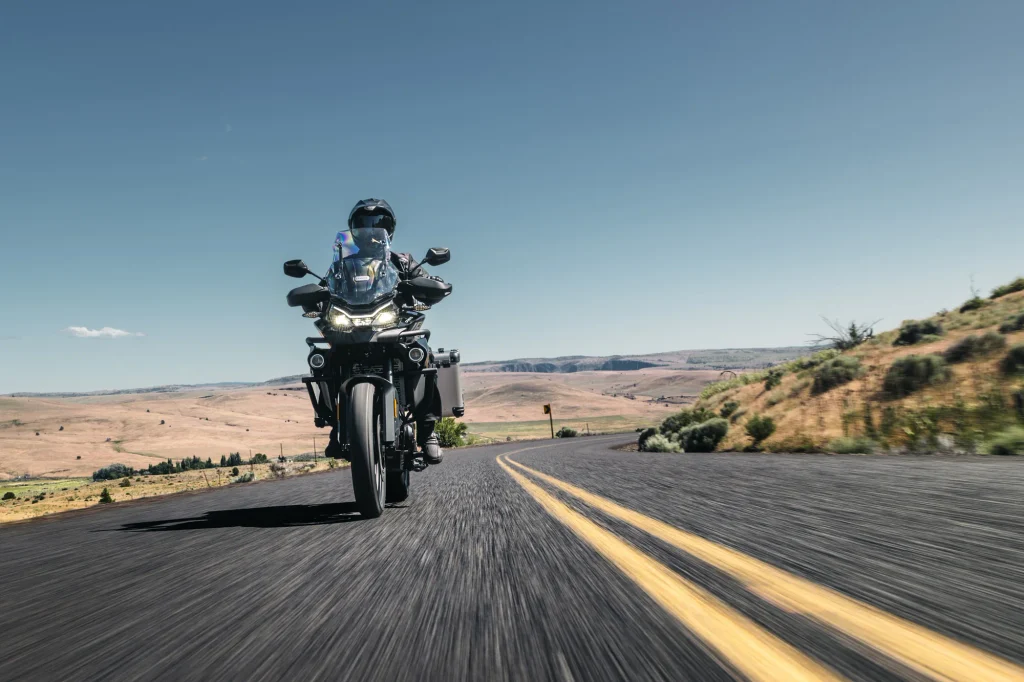
The Ibex 800 E jumps to a 799cc parallel twin producing 94 horsepower, but its mission changes with the displacement. It uses 19/17 inch wheels, approximately 6.3 inches of front and 5.9 inches of rear suspension travel, and weighs roughly 547 pounds ready to ride.
Then comes the Ibex 950.
Its 946cc parallel twin produces a claimed 112 horsepower, but CFMOTO returns to 21/18 inch wheels and gives the bike approximately 9.1 inches of suspension travel.
That tells us something immediately.
The Ibex lineup isn’t a straight progression from beginner bike to bigger bike to biggest bike.
The 450 and 950 bookend the 800 with two motorcycles that appear more interested in what happens when the road gets difficult.
Ibex 450 vs 800 vs 950: The Numbers
| Specification | Ibex 450 | Ibex 800 E | Ibex 950 |
|---|---|---|---|
| Engine | 449cc twin | 799cc twin | 946cc twin |
| Claimed power | 44 hp | 94 hp | 112 hp |
| Claimed torque | 32.5 lb-ft | 56.7 lb-ft | 77.5 lb-ft |
| Front wheel | 21 in | 19 in | 21 in |
| Rear wheel | 18 in | 17 in | 18 in |
| Front suspension travel | 7.9 in | 6.3 in | 9.1 in |
| Rear suspension travel | ~7.9 in | 5.9 in | 9.1 in |
| Ground clearance | 8.7 in | 7.5 in | 9.4 in |
| Seat height | 32.3 in | 32.5 in | 34.3 in |
| Fuel capacity | 4.6 gal | 5.0 gal | 5.9 gal |
| Approx. curb/wet weight | 419 lb | 547 lb | ~489 lb* |
| U.S. MSRP | $5,999 | $9,799 | $12,499 |
Ibex 950 wet weight is approximately calculated from CFMOTO’s published 440-pound dry weight and 5.9-gallon fuel capacity; actual ready-to-ride weight may vary.
The table reveals something that displacement alone doesn’t.
Each motorcycle has a clear specialty.
Ibex 450: The Lightweight Adventure Choice
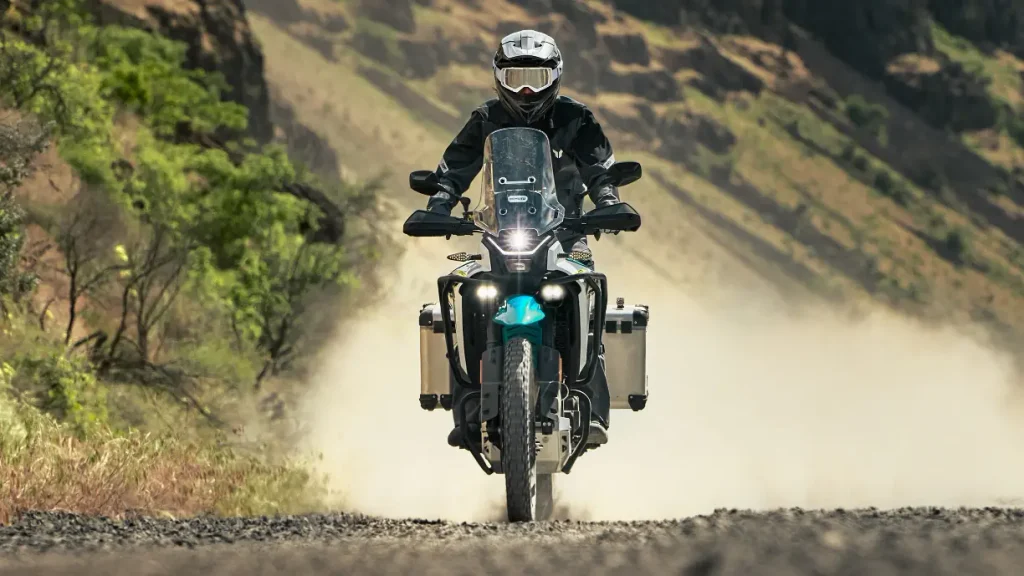
Let’s start with the smallest bike.
Calling the Ibex 450 a beginner motorcycle undersells it.
Yes, its approachable power, 32.3-inch seat height and relatively low purchase price make it attractive to newer adventure riders.
But those same characteristics have value for experienced riders.
The 449cc parallel twin produces a claimed 44 horsepower and 32.5 lb-ft of torque.
That won’t provide the effortless interstate passing power of the 950.
It doesn’t need to.
The 450’s biggest advantage appears farther down the specification sheet.
Approximately 419 pounds ready to ride.
That’s around 70 pounds less than the 950 and well over 100 pounds less than the 800 E.
Once the trail becomes technical, those numbers start to matter.
Less Motorcycle Can Mean More Adventure
This is one of the strange contradictions of adventure riding.
The motorcycles that feel best riding to the adventure aren’t always the motorcycles you want once you get there.
Horsepower is wonderful on the highway.
Large windscreens are wonderful in bad weather.
Extra fuel is wonderful in remote country.
But none of those things feels particularly wonderful when you’re trying to turn a 500-plus-pound motorcycle around on a washed-out mountain trail.
The 450 makes a compelling argument for restraint.
It has enough engine for real travel.
A substantial 4.6 gallon fuel tank.
21/18-inch wheels.
Tubeless spoked rims.
Adjustable KYB suspension.
And significantly less mass to manage when conditions deteriorate.
The Ibex 450 isn’t the bike you choose because you can’t handle the 950. It may be the bike you choose because you don’t want to.
Who Should Buy the Ibex 450?
The 450 makes the most sense for riders whose trips emphasize:
- BDRs and backcountry routes
- Gravel and forest roads
- Technical two track
- Solo travel
- Exploring unfamiliar trails
- Lower-speed off road riding
- Riders who value manageability over horsepower
- Riders trying to keep the entire motorcycle budget reasonable
It’s also arguably the best platform of the three for someone who expects to drop the motorcycle occasionally.
That isn’t an insult.
If you’re actually exploring, eventually gravity gets a vote.
A lighter, less expensive motorcycle can encourage riders to try roads they might avoid on something larger and more expensive.
That has real value.
Where the Ibex 450 Gives Something Up
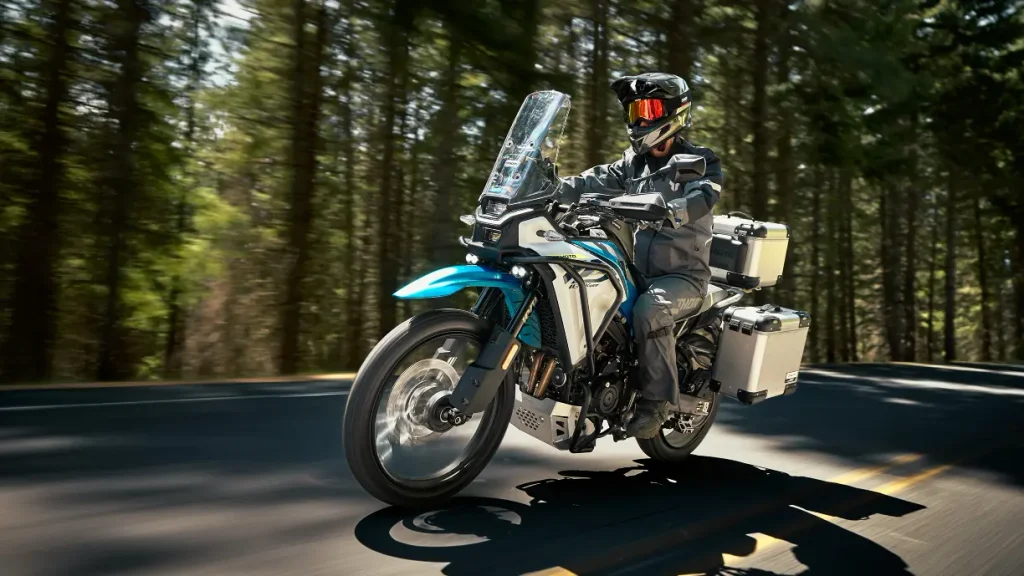
The compromise arrives when speeds increase.
Forty four horsepower is enough.
But there’s a difference between enough and effortless.
Add a rider, camping gear and luggage, point the bike into a strong headwind and ask for an interstate pass at elevation, and the larger motorcycles will have an obvious advantage.
Long highway days will also expose the difference between a lightweight adventure bike and a larger travel motorcycle.
If your idea of an adventure frequently starts with 500 miles of interstate, the 450 may not be the best Ibex.
Which brings us to the 800 E.
Ibex 800 E: The Road Traveler
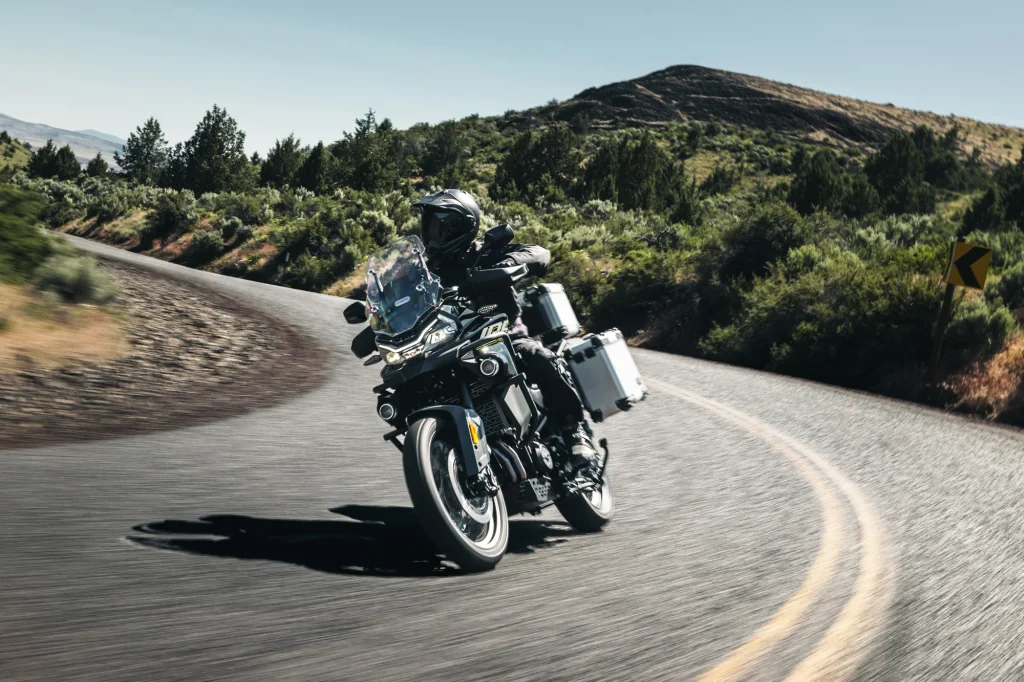
Here’s where the lineup gets interesting.
The Ibex 800 E isn’t simply a more powerful Ibex 450.
Its entire specification suggests a different purpose.
The 799cc parallel twin produces a healthy 94 horsepower and 56.7 lb-ft of torque.
But look at the chassis.
19 inch front wheel.
17 inch rear.
6.3 inches of front suspension travel.
5.9 inches at the rear.
7.5 inches of ground clearance.
And approximately 547 pounds curb weight.
Those aren’t the specifications of an oversized enduro.
They’re the specifications of an adventure tourer.
The 800 E Makes Sense When Pavement Matters
CFMOTO appears to have optimized the 800 E around covering distance.
And that’s not a lesser form of adventure riding.
Not everyone spends a trip searching for the most technical possible route.
Many riders want to cross states.
Travel two up.
Carry luggage.
Ride broken pavement.
Explore gravel roads.
Deal with bad weather.
And arrive several hundred miles later without feeling like they’ve spent the day wrestling a dirt bike.
The 800 E brings a large 8 inch display, cruise control, heated grips, heated seat, TPMS, and sophisticated rider electronics.
Its 19 inch front wheel should also provide a useful compromise between road steering and gravel road capability.
If the 450 says “let’s see where that trail goes,” the 800 says:
“Let’s see what’s three states away.”
But the 800 E Has a Weight Problem
There’s no getting around 547 pounds.
That’s roughly 128 pounds more than the 450.
More surprisingly, it’s also substantially heavier than the estimated wet weight of the larger and more powerful Ibex 950.
That creates an unusual situation.
The 800 E is the middleweight by displacement.
But not by actual weight.
If your riding is primarily pavement and maintained gravel, that may not matter much.
The lower 32.5 inch seat height may actually make the 800 easier to manage at a stop than the taller 950.
But the farther you travel into technical terrain, the harder that weight becomes to ignore.
Ibex 950: The Performance Adventure Bike
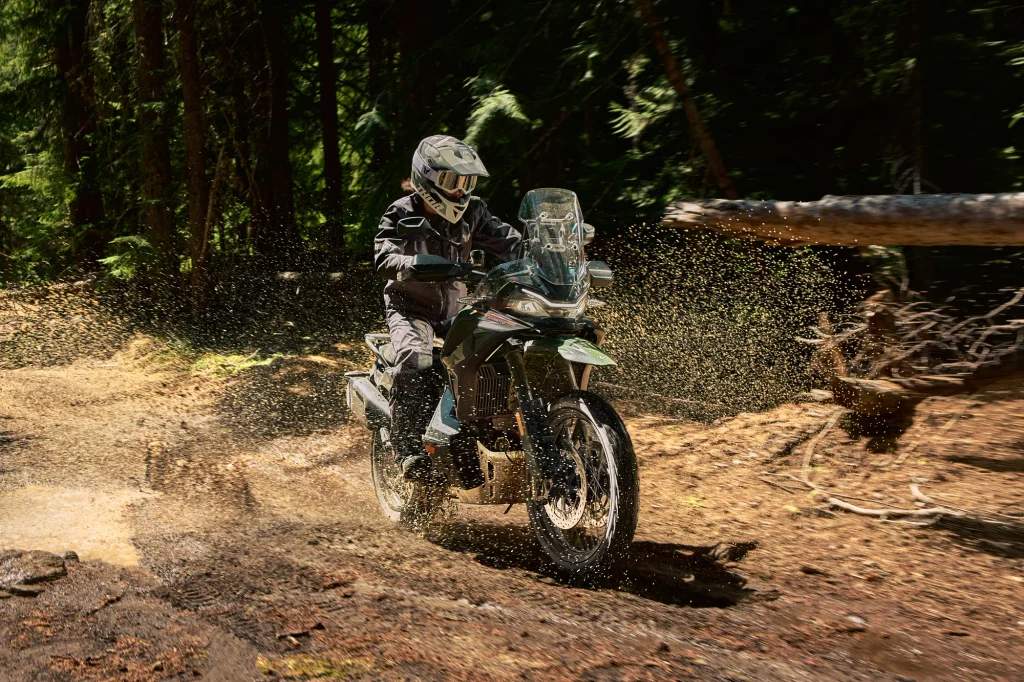
The new 950 changes the entire CFMOTO adventure lineup.
Its 946cc parallel twin produces 112 horsepower and 77.5 lb-ft of torque.
Those numbers put it firmly into serious high performance adventure territory.
But the engine isn’t what makes it particularly interesting.
CFMOTO could easily have made the 950 a larger, more luxurious 800.
It didn’t.
Instead, it gave the motorcycle:
21/18 inch wheels.
9.1 inches of suspension travel.
9.4 inches of ground clearance.
A low mounted 5.9 gallon fuel tank.
Those choices tell us exactly where CFMOTO wants this motorcycle positioned.
The 950 isn’t merely the biggest Ibex.
It’s the most ambitious one.
The Strange Thing: The 950 May Be More Dirt Oriented Than the 800
This is the most important takeaway from comparing the lineup.
Normally we’d expect:
450 = dirt
800 = mixed use
950 = road
CFMOTO has done something different.
The 450 remains the obvious lightweight dirt oriented choice.
But once you move beyond it, the 950 actually has the more serious off-road chassis specification.
It has a 21 inch rather than 19 inch front wheel.
An 18 inch rather than 17 inch rear.
Around three inches more suspension travel.
Nearly two inches more ground clearance.
And despite having 147cc more displacement and 18 additional horsepower, it appears to weigh substantially less than the 800 E when comparing their published figures.
That’s remarkable.
So Why Would Anyone Buy the 800?
Because specifications aren’t the same as mission.
The 950’s taller 34.3-inch seat alone will matter to some riders.
Its 21 inch front wheel and longer suspension favor rough terrain but aren’t automatically superior on pavement.
And not every rider needs 9.1 inches of suspension travel.
The 800’s lower seat, road biased wheel sizes, and touring equipment make perfect sense for someone whose adventure riding consists of:
Highways.
Secondary roads.
Mountain passes.
Broken pavement.
Gravel.
Occasional dirt roads.
And long days with luggage.
For that rider, buying the 950 because it has the biggest numbers may actually produce the wrong motorcycle.
What About the Price?
| Model | MSRP | Increase |
|---|---|---|
| Ibex 450 | $5,999 | — |
| Ibex 800 E | $9,799 | +$3,800 |
| Ibex 950 | $12,499 | +$2,700 |
This is where the 450 becomes incredibly compelling.
You could nearly buy two Ibex 450s for the price of one 950.
The jump from the 450 to 800 costs $3,800.
The jump from 800 to 950 costs another $2,700.
The question isn’t simply whether you can afford the larger motorcycle.
It’s what that additional money actually improves for the riding you intend to do.
$6,500 Buys a Lot of Adventure
The difference between a $5,999 Ibex 450 and $12,499 Ibex 950 is $6,500.
Think about that in terms of a complete adventure setup.
Soft luggage.
Protection.
GPS or navigation equipment.
Camping equipment.
Riding gear.
Tires.
Fuel.
Hotels.
And actual trips.
You could equip an Ibex 450 extremely well and still have thousands of dollars left before reaching the 950’s base MSRP.
That’s why comparing motorcycles purely on horsepower can be misleading.
The best adventure motorcycle isn’t necessarily the one that allows the biggest trip. Sometimes it’s the one that leaves enough money to take it.
But the 950 Could Replace Two Motorcycles
There’s another side to the argument.
Suppose you’re trying to own one motorcycle.
You commute.
Ride highways.
Tour.
Ride mountain roads.
Explore BDRs.
Carry camping equipment.
And still want enough power to make a Sunday morning ride entertaining.
Now the 950 starts making considerably more sense.
The 450’s highway compromises disappear.
The 800’s off-road compromises diminish.
And the 950 attempts to cover both ends of the spectrum.
That’s what you’re paying for.
Not simply another 68 horsepower over the 450.
You’re paying for breadth.
Which Ibex Is Best for a BDR?
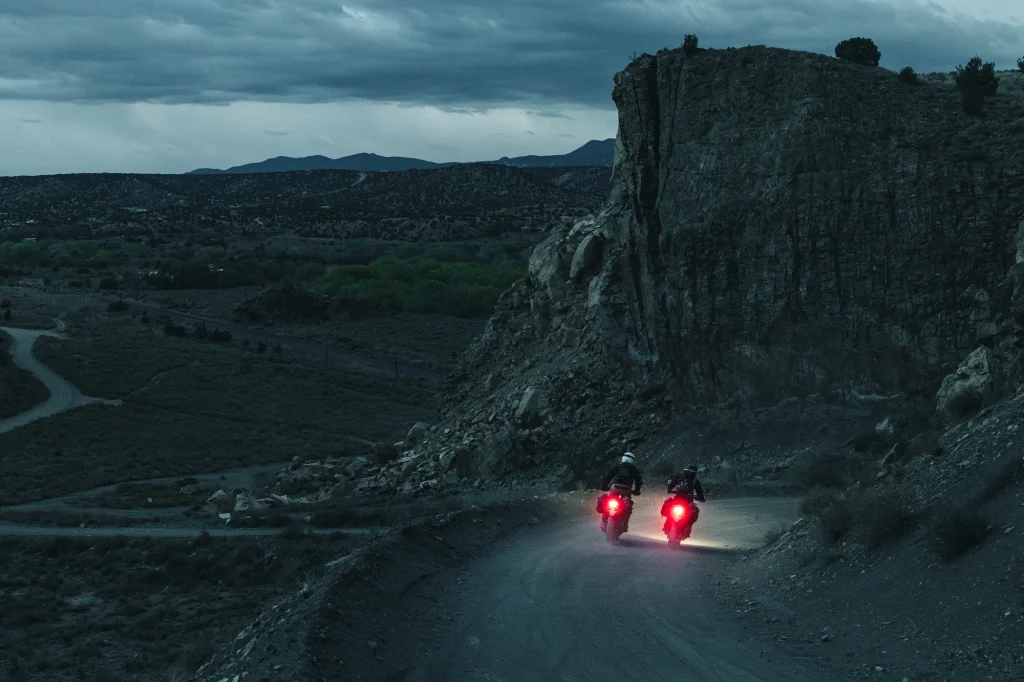
If the trip begins at the start of the BDR?
Ibex 450.
If the trip requires riding 600 highway miles to reach it?
The decision gets much harder.
The 450 will likely be easier once the route becomes difficult.
The 950 should be dramatically easier getting there.
The 800 E would be our choice if the route itself is predominantly pavement and maintained gravel, but its 19/17 wheels, lower ground clearance and additional weight make it the least appealing of the three if significant technical terrain is expected.
This exposes the fundamental problem every adventure rider eventually encounters:
You can’t optimize a motorcycle simultaneously for interstate travel and difficult trails.
The right answer depends on where you’re willing to compromise.
What About a New Adventure Rider?
The obvious recommendation is the 450.
But not simply because it has less power.
The lower financial commitment matters.
The lighter weight matters.
The approachable seat matters.
And learning off road technique is considerably easier when the rider isn’t afraid of the motorcycle.
A 112 horsepower adventure bike can make an experienced rider smile.
It doesn’t necessarily help a new rider learn clutch control while climbing a loose rocky hill.
The 450 gives a rider room to develop.
And unlike many traditional beginner motorcycles, there’s no obvious reason you’d have to sell it once you become experienced.
You might eventually appreciate it more.
What About Two Up Touring?
Now we’d move toward the 800 E or 950.
The 800’s road oriented chassis, lower seat and touring focus make it particularly attractive for pavement heavy two up trips.
The 950 brings substantially more torque and additional fuel capacity, making it the choice if those trips also involve meaningful off road travel.
If two up touring represents the overwhelming majority of your riding, though, we’d question whether the 450 is the right tool regardless of how attractive its price may be.
What About the Experienced Off Road Rider?
This becomes one of the most interesting choices.
450 or 950.
Not necessarily the 800.
The 450 gives the experienced rider less weight and more confidence in genuinely technical terrain.
The 950 provides far more performance while retaining 21/18 wheels and serious suspension.
The choice depends on the terrain.
Technical trails and exploration?
450.
Fast gravel, open desert, long-distance BDR travel, and substantial highway connections?
950.
That’s not a beginner versus expert distinction.
It’s a terrain distinction.
Which One Would We Buy?
If the goal were a dedicated backcountry exploration motorcycle, we’d choose the Ibex 450.
Its combination of weight, range, 21/18 wheels, suspension, and price makes an extraordinarily convincing argument.
If the goal were primarily long-distance road touring with gravel and occasional dirt, we’d choose the Ibex 800 E.
That’s exactly what its 19/17 wheels, lower seat and touring equipment appear designed to do.
But if we could own only one motorcycle for everything?
The Ibex 950 is the one we’d want to investigate most closely.
Not because 112 horsepower automatically makes it better.
Because CFMOTO appears to have combined that performance with the chassis specifications necessary to use the motorcycle somewhere more interesting than pavement.
The Answer Isn’t 450, 800 or 950
It’s easy to walk into a dealership believing that more motorcycle must mean a better motorcycle.
Adventure riding has a habit of proving otherwise.
The smallest Ibex may be the best motorcycle when the trail becomes difficult.
The middle Ibex may be the best motorcycle when the trip becomes long.
And the largest Ibex may be the best motorcycle when you need one machine to do both.
That’s what makes CFMOTO’s emerging adventure lineup interesting.
These motorcycles aren’t merely separated by engine displacement.
They’re separated by purpose.
So before deciding which one belongs in your garage, forget horsepower for a moment.
Forget which one costs the most.
Forget which one looks most impressive on a specification sheet.
Ask yourself where you actually ride.
How much pavement gets you there.
How difficult the terrain becomes once you arrive.
How much luggage you carry.
Whether you ride alone or with a passenger.
And how willing you are to pick the motorcycle up when things inevitably go wrong.
Answer those questions first.
Then the choice between 450, 800 and 950 becomes considerably easier.
Buy the 450 to explore farther into the dirt. Buy the 800 E to travel farther down the road. Buy the 950 when you want to do both and you’re willing to pay for it.
Continue Reading
2027 CFMOTO Ibex 950: Did CFMOTO Just Build the KTM 990 Adventure We Were Waiting For?
CFMOTO Ibex 950 vs KTM 890 Adventure R: How Close Are They Really?