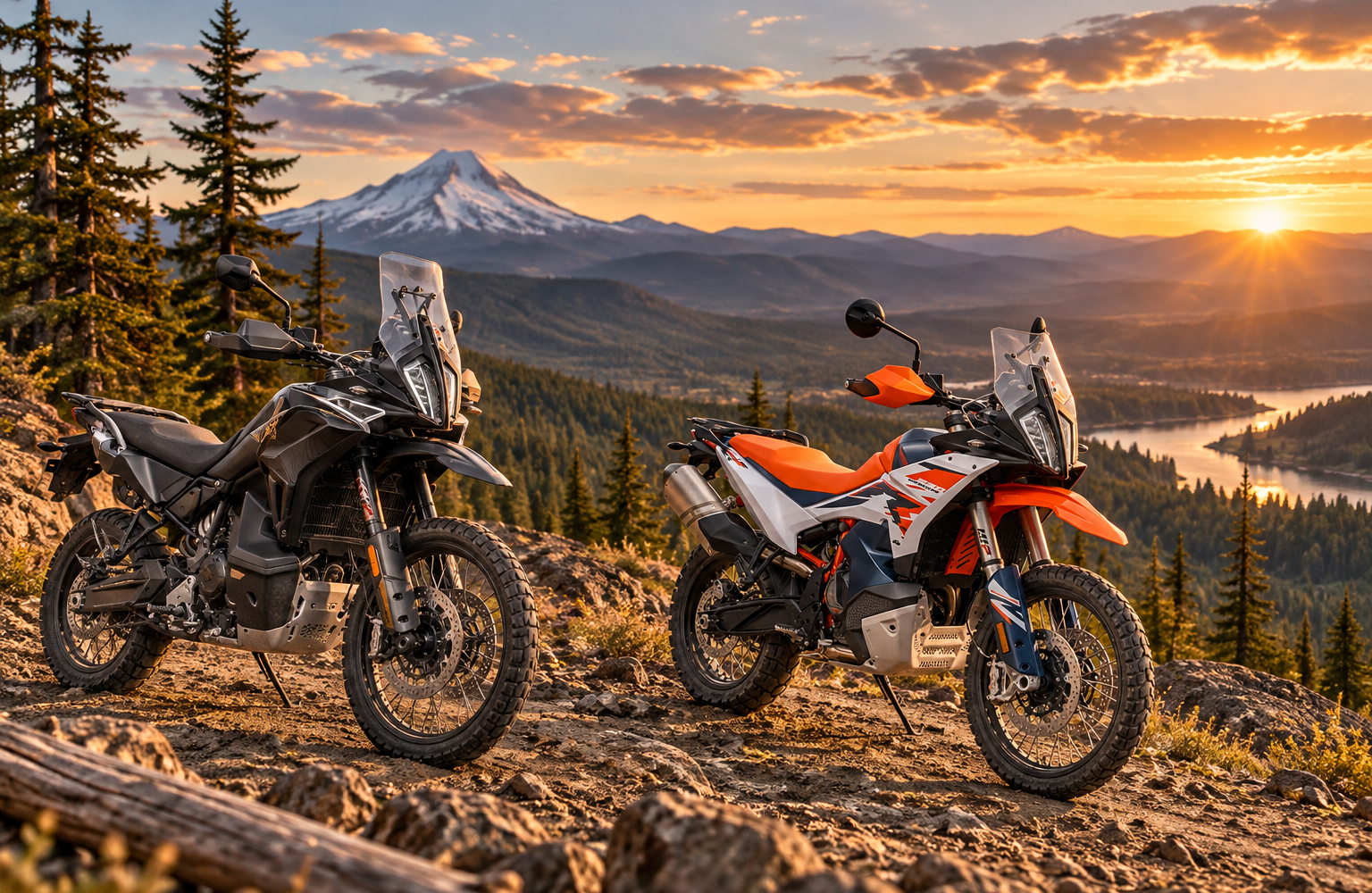
At first glance, comparing the new CFMOTO Ibex 950 with the KTM 890 Adventure R seems straightforward.
Both are large parallel-twin adventure motorcycles.
Both use 21-inch front and 18-inch rear wheels.
Both carry their fuel unusually low.
Both use long-travel suspension.
Both are intended to travel comfortably on pavement without surrendering serious off road capability.
Look underneath the bodywork, however, and things become much more interesting.
These aren’t simply two manufacturers arriving independently at similar solutions.
They’re relatives.
CFMOTO already manufactures KTM’s LC8c engines, and the new Ibex 950 uses a bored and stroked development of that same basic engine architecture. Both motorcycles employ tubular steel frames and low slung fuel tanks, and their overall specifications are remarkably close.
But CFMOTO hasn’t simply copied an 890 Adventure R and changed the badge.
It has made the engine bigger, added fuel capacity, changed the suspension supplier, included an enormous amount of standard equipment, and undercut the KTM significantly on price.
So just how close are they?
Perhaps more importantly:
Has CFMOTO taken KTM’s proven formula and created a better value version of it?
Start With the Family Connection
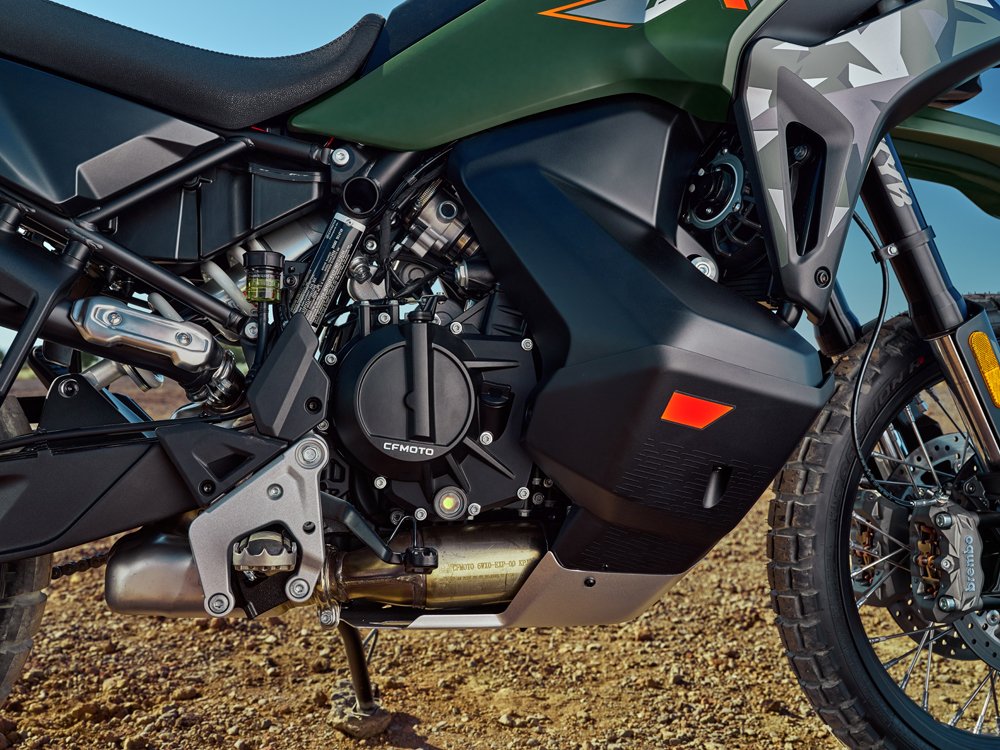
The most important place to start is the engine.
The KTM 890 Adventure R uses the 889cc LC8c parallel twin, producing roughly 105 PS and 100 Nm of torque.
The Ibex takes the same basic architecture in a different direction.
CFMOTO increased both bore and stroke, bringing displacement to 946cc. The result is a claimed 112 horsepower and 77.5 lb-ft of torque.
That makes an important point immediately:
The CFMOTO isn’t using a cheaper imitation of KTM’s engine concept. It’s using a development of the LC8c itself.
That doesn’t make the engines identical.
But it makes comparisons between the motorcycles considerably more meaningful than the usual spec-sheet battle between unrelated competitors.
Ibex 950 vs 890 Adventure R: By The Numbers
| Specification | CFMOTO Ibex 950 | KTM 890 Adventure R |
|---|---|---|
| Engine | 946cc parallel twin | 889cc parallel twin |
| Claimed power | 112 hp | ~104 hp / 105 PS |
| Claimed torque | 77.5 lb-ft | ~73.8 lb-ft / 100 Nm |
| Transmission | 6-speed | 6-speed |
| Front wheel | 21 in | 21 in |
| Rear wheel | 18 in | 18 in |
| Front suspension | 48mm KYB | 48mm WP XPLOR |
| Front travel | 9.1 in | 9.45 in |
| Rear travel | 9.1 in | 9.45 in |
| Ground clearance | 9.4 in | 10.35 in |
| Seat height | 34.3 in | 34.6 in |
| Fuel capacity | 5.9 gal | 5.28 gal |
| Wet/full-fuel weight | 489 lb | ~474 lb |
| U.S. MSRP | $12,499 | $16,299 + freight |
The overall picture is striking.
The CFMOTO has more displacement.
More claimed horsepower.
More fuel.
A slightly lower seat.
And a substantially lower MSRP.
The KTM counters with less weight, slightly more suspension travel, substantially more ground clearance, and a chassis with years of real-world development behind it.
That last point is important.
Because motorcycles aren’t spreadsheets.
The Ibex Engine Is More Than an LC8c Copy
Increasing displacement from 889cc to 946cc required CFMOTO to modify the engine rather than simply retune KTM’s existing unit.
The KTM’s 889cc twin uses a 90.7 mm bore and 68.8 mm stroke.
CFMOTO increases those dimensions to approximately 92.5 mm and 70.4 mm.
The result is an engine that should have its own character despite the shared ancestry.
More displacement brings the Ibex to a claimed 112 horsepower, while peak torque arrives at 6,250 rpm.
For an adventure motorcycle, the torque delivery may ultimately matter more than the headline horsepower number.
Technical dirt riding rarely involves searching for another eight horsepower near redline.
It involves controlling the motorcycle precisely at lower speeds, climbing loose grades and finding predictable drive when traction disappears.
That’s where we’ll need actual seat time before declaring a winner.
A stronger engine isn’t necessarily a better off road engine.
Throttle calibration, gearing, flywheel effect, and traction-control programming can matter more than the number printed in the brochure.
KTM Has the Proven Chassis
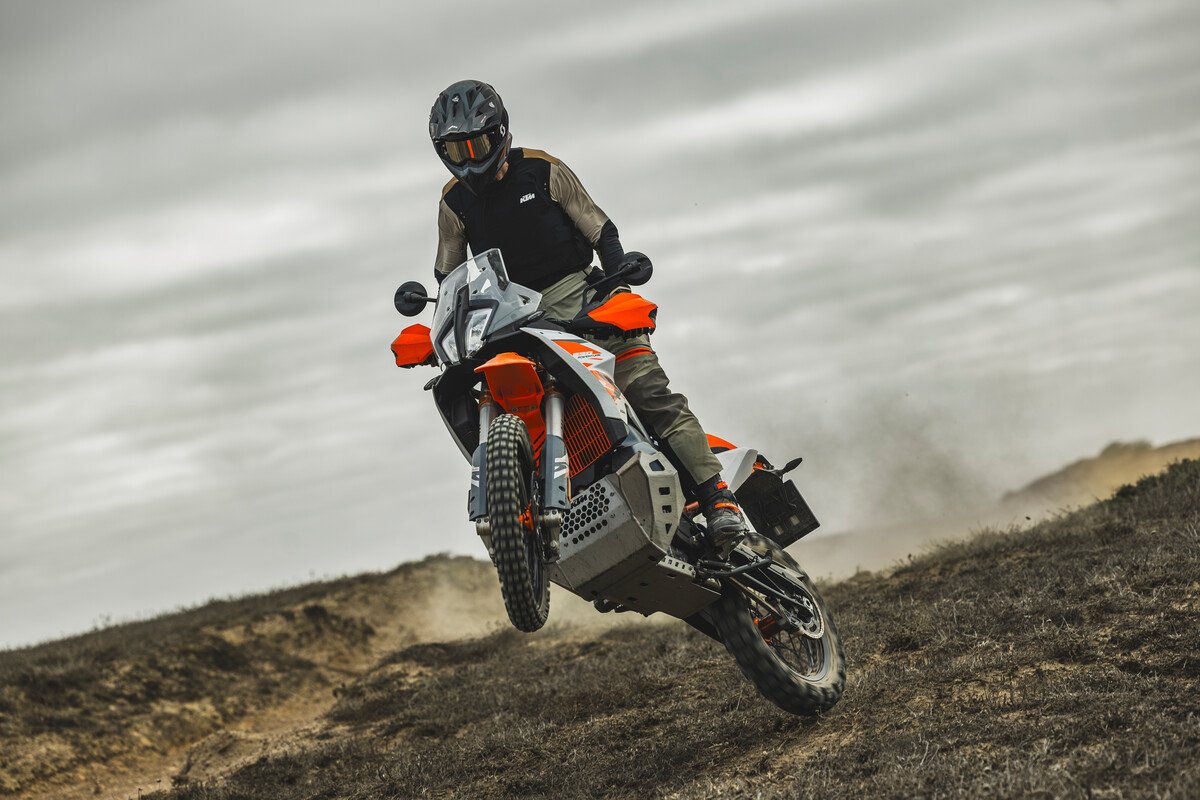
This is where the KTM deserves considerable respect.
The 890 Adventure R wasn’t accidentally good off road.
KTM deliberately built the motorcycle around that mission.
Its chromium molybdenum steel frame uses the engine as a stressed element, while the steel trellis subframe is designed to carry passengers and luggage under serious adventure use.
The geometry, ergonomics, and unusual low mounted fuel arrangement were all developed around keeping a relatively large adventure motorcycle manageable when ridden aggressively off pavement.
That’s difficult to quantify.
And it’s one reason we’d hesitate to look at the Ibex’s larger engine and lower price and immediately declare it the better motorcycle.
The 890 Adventure R has already proven that its combination works.
The Ibex still has to do that.
KYB vs WP Could Be the Real Battle
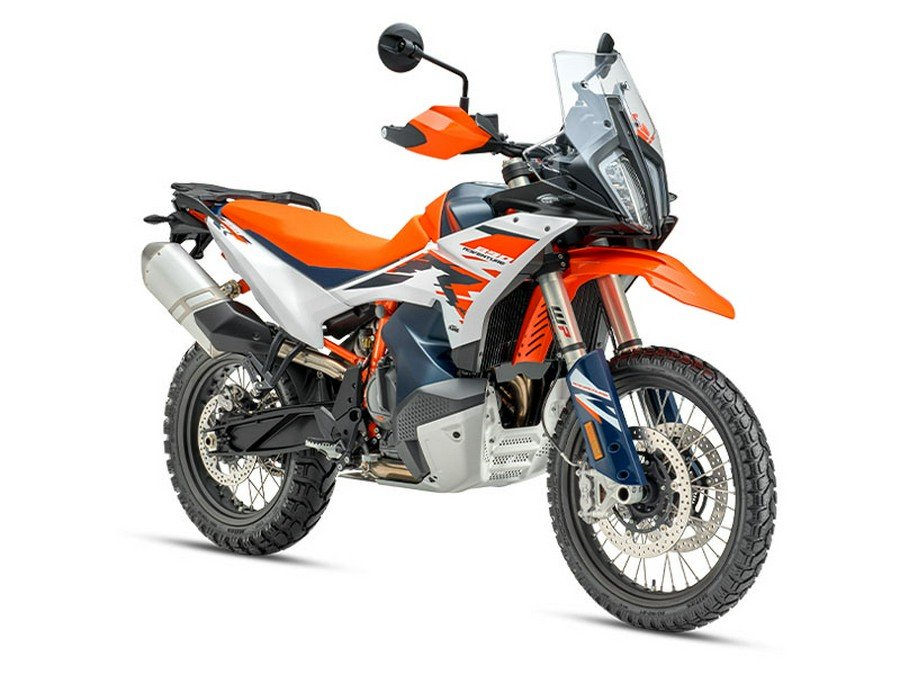
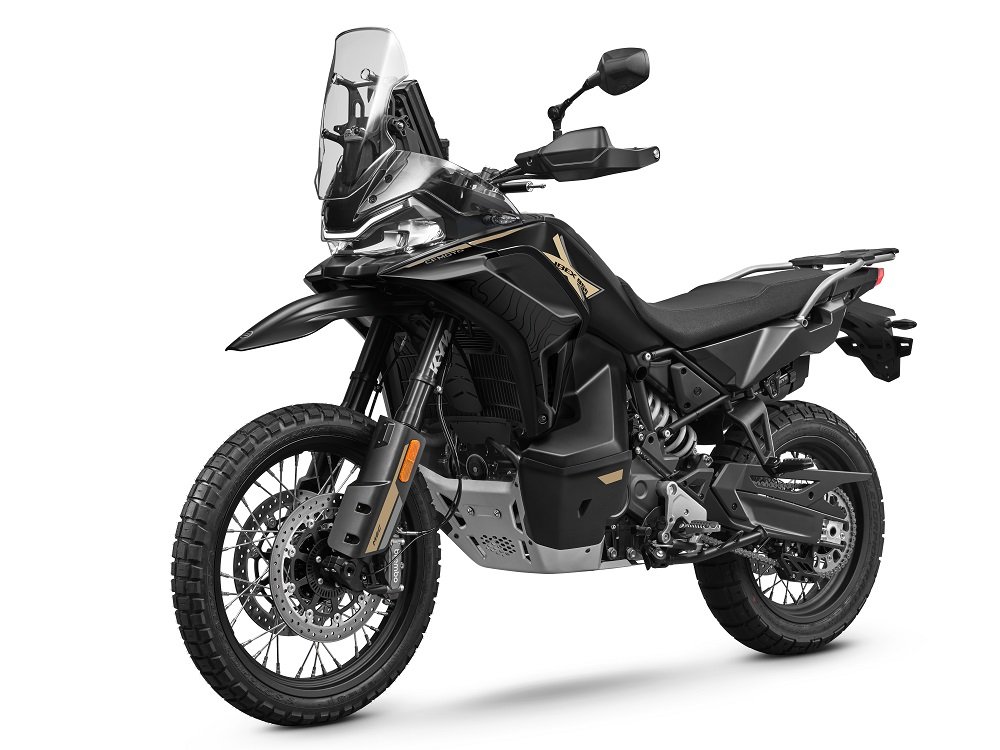
On paper, there isn’t much separating the suspension travel.
The Ibex provides approximately 9.1 inches front and rear.
The KTM provides 9.45 inches front and rear.
Both motorcycles use 48mm inverted forks.
But the hardware comes from different suppliers.
CFMOTO chose fully adjustable KYB suspension.
KTM uses its familiar WP XPLOR setup.
The difference in travel amounts to only about a third of an inch.
Ground clearance tells a somewhat different story.
The Ibex claims approximately 9.4 inches.
The KTM provides approximately 10.35 inches.
That extra clearance could become meaningful in rocks, deep ruts and other technical terrain.
For riders primarily exploring forest roads, gravel, and moderate BDR sections. But it may rarely matter.
Start asking these motorcycles to behave like oversized enduros and it becomes considerably more relevant.
Fifteen Pounds Doesn’t Sound Like Much
The Ibex weighs a claimed 489 pounds wet.
KTM lists the fully fueled 890 Adventure R at approximately 474 pounds.
That’s about a 15-pound advantage for the KTM.
On a highway?
Probably insignificant.
On a gravel road?
Still unlikely to decide the outcome.
Trying to recover a motorcycle that’s beginning to fall downhill on a rocky climb?
Now we’re interested.
Adventure bike weight has a nonlinear quality to it.
An additional 15 pounds doesn’t necessarily make a motorcycle 15 pounds harder to ride.
Where those pounds are located matters tremendously.
And this is where both motorcycles share one of their most distinctive characteristics.
Both Put the Fuel Down Low
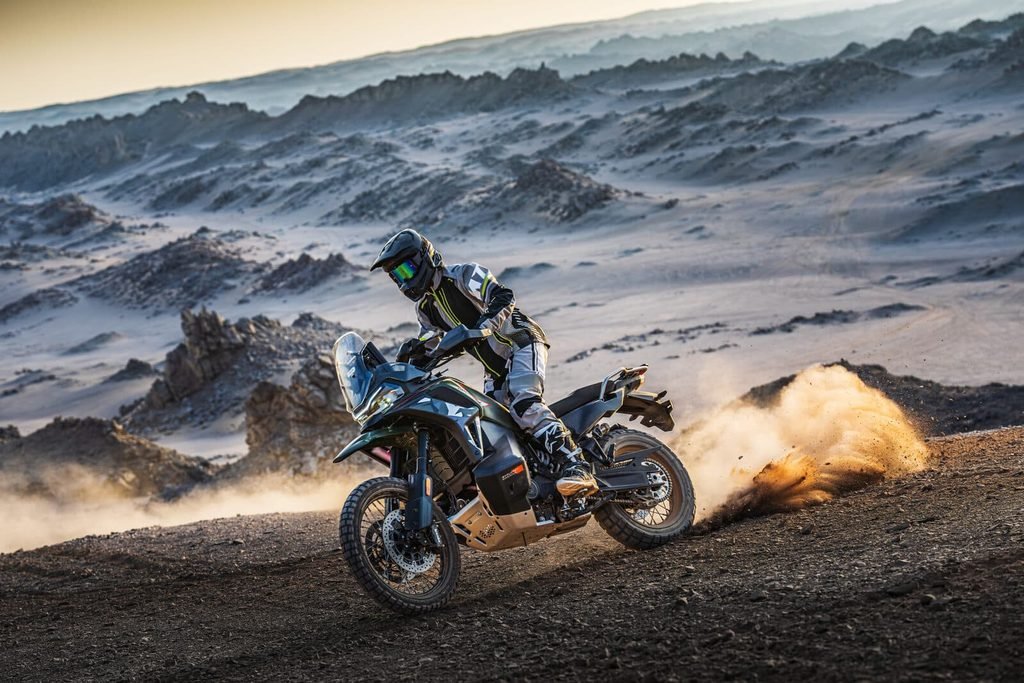
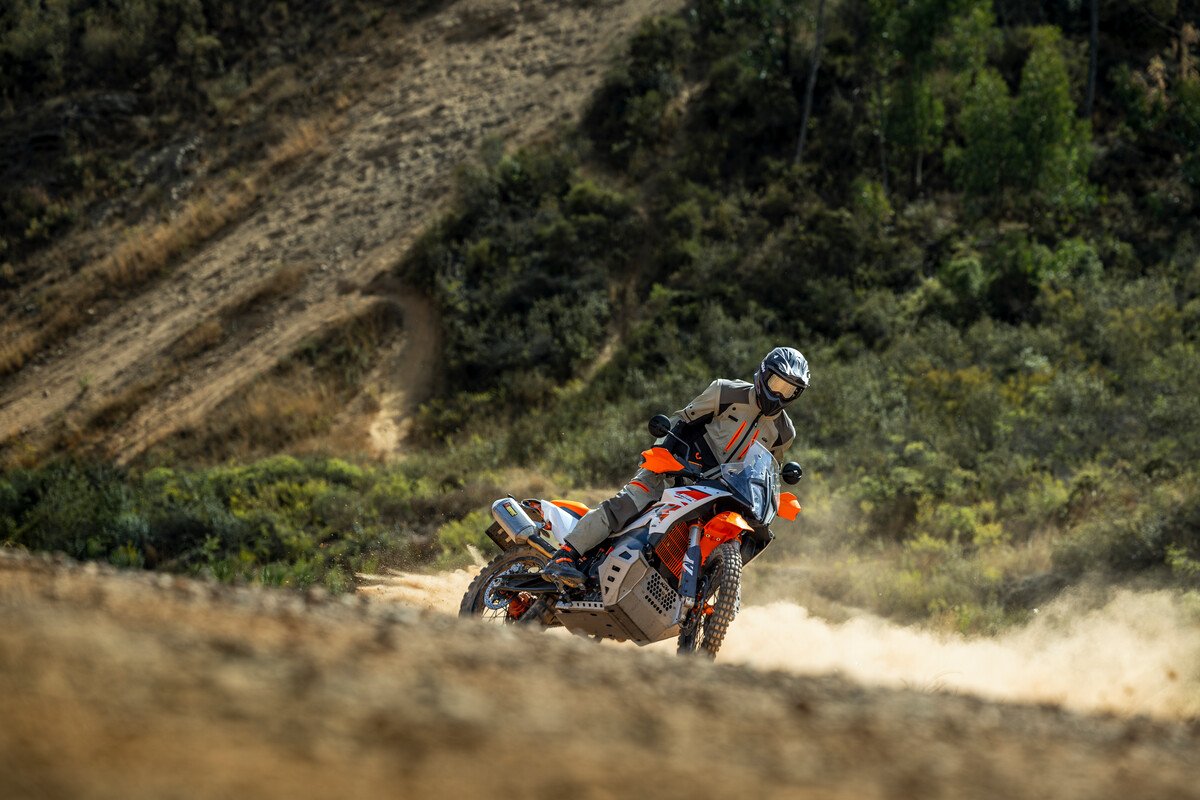
Rather than placing all their fuel conventionally above the engine, both motorcycles carry much of it down alongside the engine.
That design is one of the defining characteristics of the KTM Adventure platform.
The goal is simple:
Keep fuel mass low.
This can make a motorcycle feel considerably lighter than its scale weight suggests, particularly during low speed maneuvering, and when transitioning from side to side.
CFMOTO’s adoption of a similar arrangement makes the 489lbs figure particularly interesting.
We won’t know how light the Ibex feels until riding it.
But the number alone shouldn’t determine the verdict.
CFMOTO Gives You More Fuel
There’s another consequence to that tank.
The KTM carries approximately 5.28 gallons.
The Ibex carries 5.9 gallons.
That’s roughly six tenths of a gallon more.
It doesn’t sound dramatic, but range matters differently on an adventure motorcycle.
An extra 20 or 30 miles can mean very little commuting around town.
In eastern Oregon, Nevada, Utah or on a remote BDR section, it can matter considerably more.
Actual range will depend on fuel economy, of course.
But CFMOTO has clearly made long distance autonomy a priority.
For the way we think adventure motorcycles should actually be used, that’s a point in the Ibex’s favor.
Then We Get to Equipment
This is where the comparison becomes uncomfortable for KTM.
The Ibex 950 arrives with an extensive equipment package including features such as:
- Cruise control
- Heated grips
- Heated seat
- Bidirectional quickshifter
- Tire pressure monitoring
- Bosch cornering ABS
- Traction control
- Multiple riding modes
- Large 8in vertical TFT touchscreen
CFMOTO also equips the motorcycle with Brembo brakes, KYB suspension, and Pirelli tires.
KTM certainly isn’t short on technology.
The 890 Adventure R has sophisticated ABS, traction control and riding mode systems, and KTM’s off-road electronics are among the platform’s major strengths.
But there’s a catch.
Some desirable features, including Quickshifter+ and cruise control are optional additions on the KTM.
That’s difficult to ignore when the KTM already starts several thousand dollars above the Ibex.
The $3,800 Question
At current U.S. base pricing, we’re looking at approximately:
CFMOTO Ibex 950: $12,499
KTM 890 Adventure R: $16,299
That’s a $3,800 difference before KTM’s listed freight charge and before adding certain optional equipment.
Now the comparison changes.
We’re no longer asking whether a lower cost motorcycle can almost match the premium bike.
We’re looking at a motorcycle that offers:
More displacement.
More claimed power.
More fuel.
A long list of standard electronics.
Recognizable premium component suppliers.
And a price almost $4,000 lower.
So what does the extra money buy with the KTM?
That’s the real question.
What the KTM Gives You for the Extra Money
It’s tempting to look at that price difference and call the CFMOTO the winner.
That would be premature.
The KTM buys something difficult to represent in a comparison table:
development maturity.
The 890 platform has accumulated years of owner experience.
We understand its strengths.
We understand many of its weaknesses.
There is extensive aftermarket support.
Suspension tuners know it.
Luggage manufacturers support it.
Protection parts are everywhere.
Owners have taken them around the world.
And KTM’s dealer and parts ecosystem is considerably more established for this type of motorcycle.
Most importantly, we already know the 890 Adventure R is extremely capable off road.
CFMOTO has built an impressive specification sheet.
Now it has to build the résumé.
What the CFMOTO Gives You for Less Money
CFMOTO’s argument is different.
Rather than asking buyers to pay for that established reputation, it gives them tangible hardware.
The extra $3,800 theoretically leaves enough money to equip the Ibex for serious travel.
Protection.
Soft luggage.
Navigation.
Camping equipment.
Tires.
Tools.
Fuel.
Maybe even a significant portion of an actual trip.
That matters.
Adventure motorcycles exist to facilitate adventures.
If one motorcycle leaves thousands of dollars in the budget to actually go somewhere, price becomes part of capability.
That’s an angle that’s often missing from motorcycle comparisons.
The Reliability Question Can’t Be Avoided
This is probably the largest unknown surrounding the Ibex.
Not whether the engine can produce 112 horsepower.
Not whether KYB can manufacture good suspension.
Not whether Brembo can stop a motorcycle.
We already know those things.
The question is what ownership looks like after years rather than months.
What happens at 20,000 miles?
At 40,000?
How quickly can a replacement part reach a dealer?
How well does the finish survive repeated off-road use?
How strong is the aftermarket?
What happens to resale value?
How effectively does the dealer network support a rider halfway through a cross-country trip?
The KTM isn’t immune from reliability concerns of its own, and experienced KTM owners certainly know that European performance motorcycles can bring their own peculiarities.
But the LC8c Adventure platform has a large existing owner base.
The Ibex 950 starts from zero.
That uncertainty deserves to be reflected in any purchasing decision.
Which One Would We Want on a BDR?
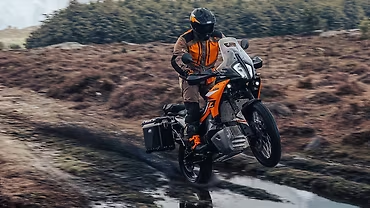
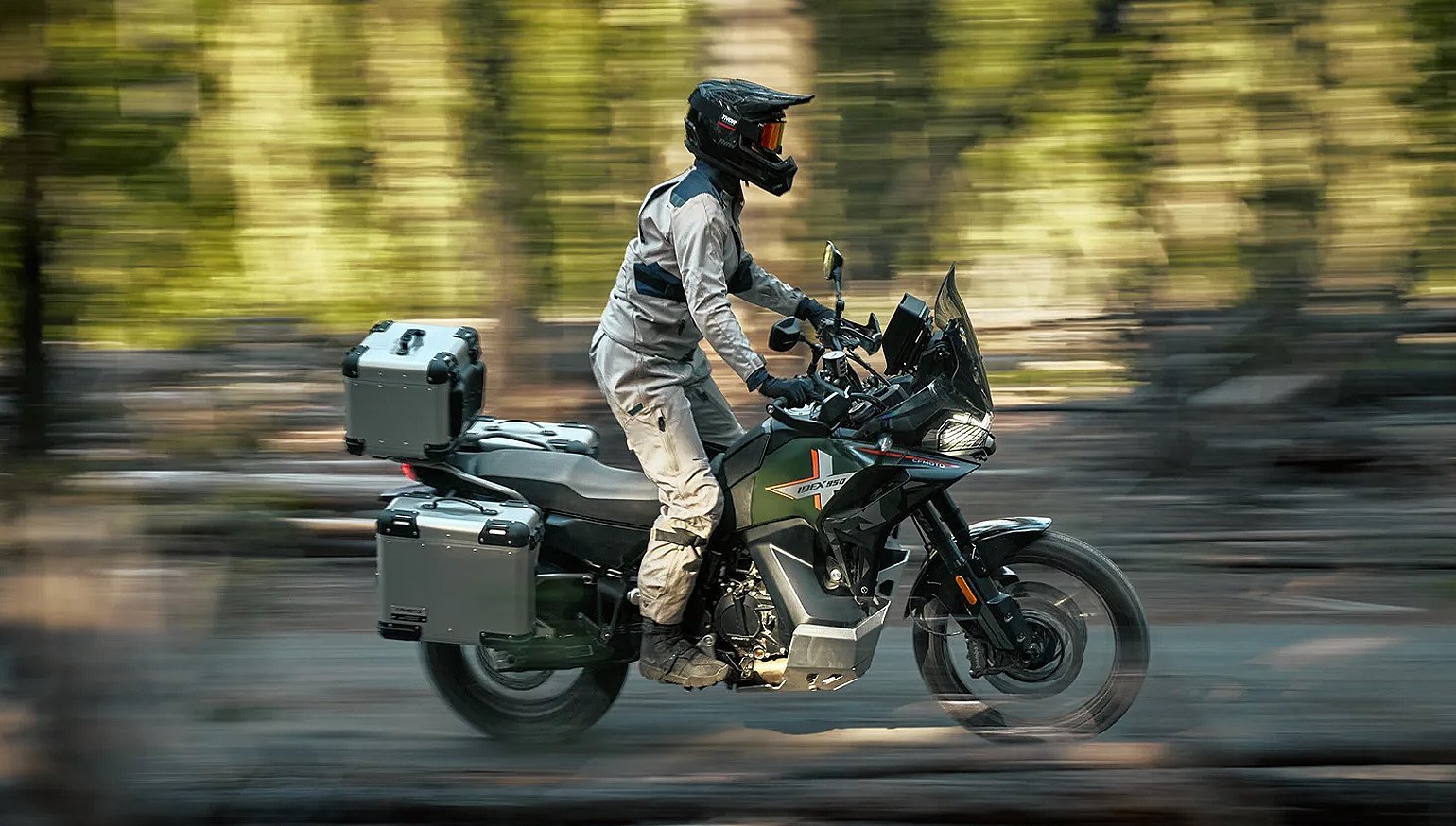
This is where we’d eventually like to put both motorcycles.
Same route.
Same luggage.
Same conditions.
Several days.
Highway transit at the beginning and end.
Because that’s where the differences that matter would reveal themselves.
The KTM’s lower weight and extra ground clearance should favor it when the terrain gets difficult.
The CFMOTO’s larger tank and extensive standard equipment may make it a better companion during long travel days.
But specification sheets can’t tell us:
Which has better standing ergonomics?
Which throttle is easier to control over rocks?
Which bike carries its weight better?
Which suspension remains composed when loaded with camping equipment?
Which one is less exhausting after eight hours?
Which one is easier to pick up?
And which one makes you want to keep riding when the route gets ugly?
Those questions determine the better adventure motorcycle.
The 890 Adventure R Is Still the Benchmark
Nothing about the Ibex’s specifications changes what KTM accomplished with the 890 Adventure R.
If your priorities lean heavily toward aggressive off-road riding, the KTM remains extremely compelling.
It is lighter.
It has more suspension travel.
It has more ground clearance.
And its chassis has a proven reputation in exactly the terrain where those advantages matter.
CFMOTO doesn’t erase that simply by putting a lower number on the price tag.
But it does force us to examine exactly how much those advantages are worth.
The Ibex 950 Changes the Question
For years, motorcycles from emerging manufacturers were often evaluated by asking:
“Is it good enough considering the price?”
The Ibex 950 may require a different question:
“Is the more expensive motorcycle actually better enough to justify the price?”
That’s a profound change.
Because the CFMOTO doesn’t arrive with bargain-bin suspension, unknown brakes and a dated engine.
It arrives with KYB.
Brembo.
Bosch.
Pirelli.
And an engine derived from the same LC8c family sitting inside the motorcycle it’s challenging.
So, How Close Are They Really?
On paper?
Extremely close.
Closer than the badges on the fuel tanks suggest.
The Ibex has more engine, more fuel and more standard equipment.
The KTM has less weight, more clearance, slightly more suspension travel, and a much longer record of genuine off-road performance.
The CFMOTO wins the price comparison decisively.
The KTM wins the experience comparison just as decisively.
And that’s why this is such an interesting matchup.
The Ibex doesn’t need to beat the 890 Adventure R everywhere.
At $3,800 less before options and freight, it arguably only needs to get close enough.
If its suspension works as well as the specifications suggest, if the low-mounted fuel makes those additional 15 pounds disappear beneath the rider, and if CFMOTO can deliver acceptable long-term reliability and parts support, the Ibex 950 becomes something much more important than another inexpensive adventure motorcycle.
It becomes a genuine alternative to one of the benchmarks of the category.
And perhaps the strangest part of all is how we got here.
CFMOTO didn’t simply study KTM from across the industry and attempt to recreate the 890 Adventure R.
It started with some of the same DNA and took the formula in its own direction.
Whether that direction is better will require thousands of miles to answer.
But for the first time, KTM may be looking across the showroom at a considerably less expensive competitor and seeing something very familiar staring back.
Continue Reading
2027 CFMOTO Ibex 950: Did CFMOTO Just Build the KTM 990 Adventure We Were Waiting For?
690 Rally vs 640 Adventure: Did KTM Finally Build the 640’s Successor?