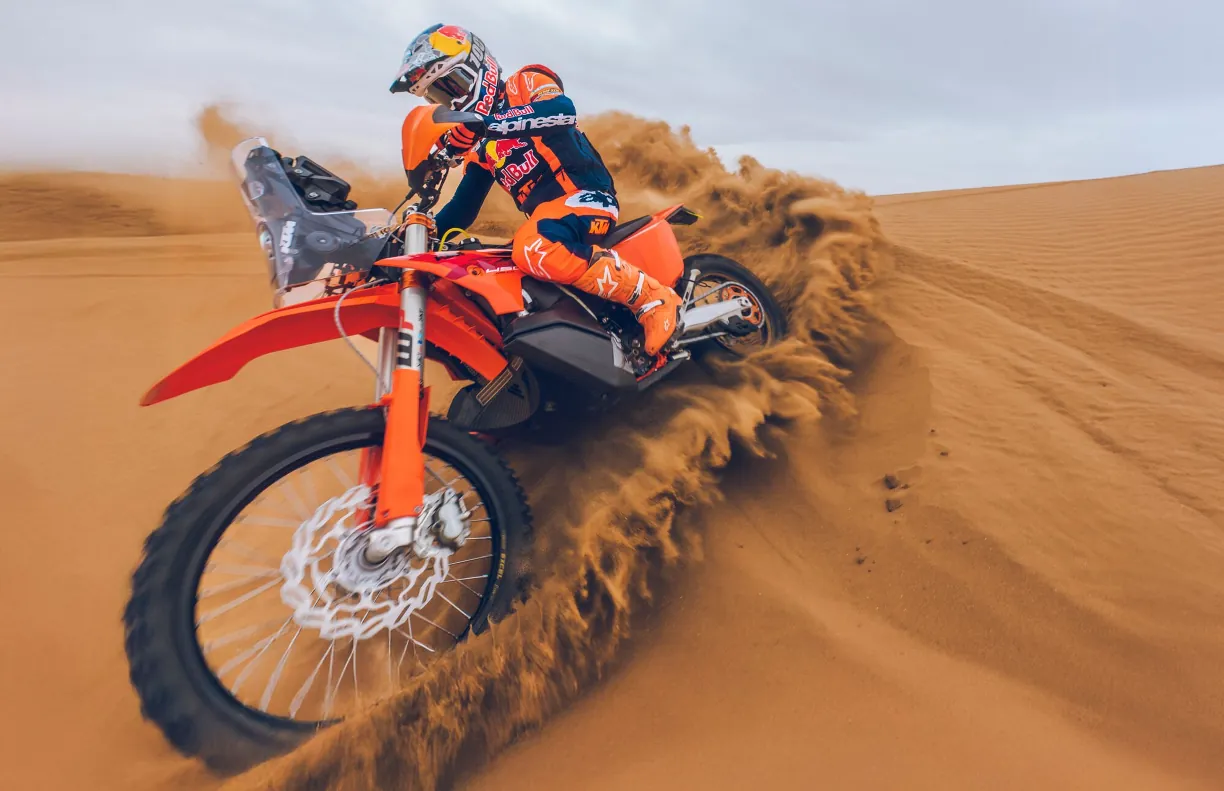
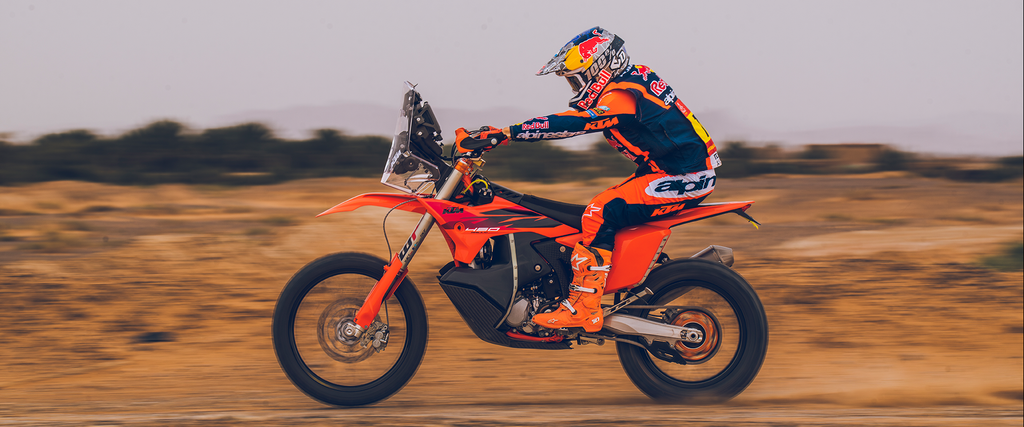
For the first time, KTM is officially bringing the 450 Rally Replica to the United States, a customer competition motorcycle derived directly from its rally racing program. Photo Credit: KTM 2026
For years, American adventure riders have looked at KTM’s 450 Rally Replica from a distance.
It is about as close as a normal customer can get to buying the kind of motorcycle built to compete at Dakar.
Carbon fiber rally tower.
Huge fuel capacity.
Long travel WP Pro suspension.
A 450cc single cylinder engine.
Three fuel tanks.
Rally specific gearing.
A navigation cockpit designed around a roadbook.
And roughly 300 pounds of motorcycle underneath it all.
For the first time, KTM is officially bringing that motorcycle to the United States.
The 2027 KTM 450 Rally Replica will arrive at authorized U.S. KTM dealers this fall in extremely limited numbers.
That is objectively very cool.
It also raises a question that may be even more interesting than the motorcycle itself:
Do adventure riders actually want a Dakar race bike?
Because the more closely you look at the 450 Rally Replica, the clearer something becomes.
This isn’t the ultimate adventure motorcycle.
It is a highly specialized racing motorcycle built to do something extraordinarily difficult extraordinarily well.
And there is a difference.
This Is the Real Thing
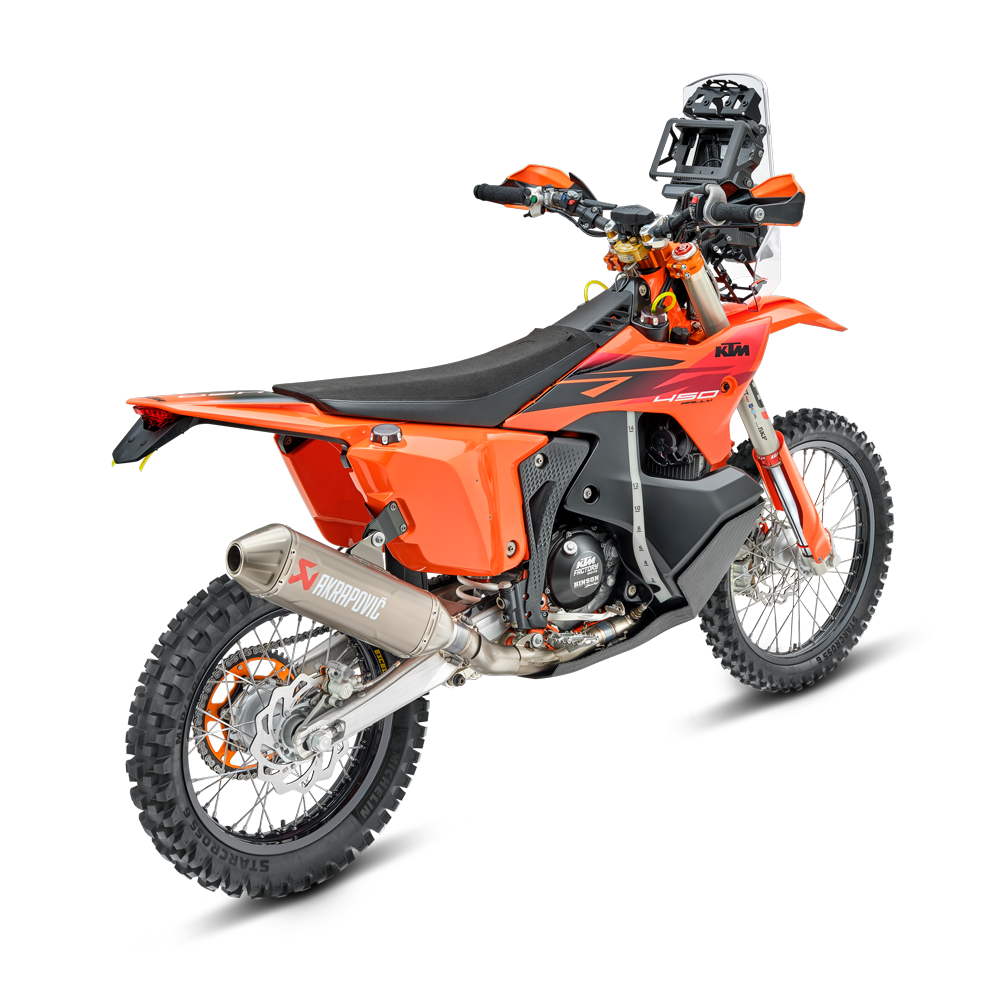
The 450 Rally Replica isn’t an adventure bike dressed to look like a rally machine. It is a customer competition motorcycle developed specifically for rally racing. Photo Credit: KTM 2026
Let’s get one thing out of the way first.
The word Replica undersells what KTM is offering here.
The 450 Rally Replica isn’t a normal production motorcycle wearing rally bodywork.
KTM describes it as its only customer race model developed, produced, and assembled by the official KTM Motorsports facility in Austria.
Its development comes directly from KTM’s rally competition program.
That means a 449.3cc fuel-injected SOHC single-cylinder engine paired with a six-speed transmission using rally specific gearing.
It means a hand built chrome moly steel frame.
It means a 48mm WP XACT PRO Cone Valve fork and matching WP XACT PRO rear shock.
It means a SCOTTS steering damper.
Brembo brakes.
Akrapovič titanium exhaust.
21 and 18 inch spoked wheels.
A carbon fiber navigation tower designed to accommodate rally navigation equipment.
And an enormous multi tank fuel system carrying roughly nine gallons.
This is not rally styling.
This is rally engineering.
And that distinction matters.
2027 KTM 450 Rally Replica: The Important Numbers
| Specification | 2027 KTM 450 Rally Replica |
|---|---|
| Engine | 449.3cc SOHC single |
| Transmission | 6-speed |
| Front suspension | WP XACT PRO 48mm Cone Valve |
| Front travel | 304 mm / 12.0 in |
| Rear suspension | WP XACT PRO |
| Rear travel | 280 mm / 11.0 in |
| Front wheel | 21 in |
| Rear wheel | 18 in |
| Front brake | 300 mm |
| Rear brake | 240 mm |
| Fuel capacity | Approx. 9.1–9.25 gal |
| Claimed weight | Approx. 304 lb race-ready |
| U.S. availability | Fall 2026 |
| Production | Extremely limited |
And then there is the price.
At the time of writing, KTM’s North American announcement does not list an official U.S. MSRP.
Published reports have placed the expected price somewhere around $36,000 to $40,000, while other reporting has cited $42,499.
Until KTM publishes an official U.S. MSRP, we’re going to treat the price as unconfirmed.
Whatever the final number is, however, this clearly isn’t going to be an inexpensive motorcycle.
Nor should anyone expect it to be.
You’re effectively buying a customer rally race bike.
The ADV Rider’s Dream Motorcycle?
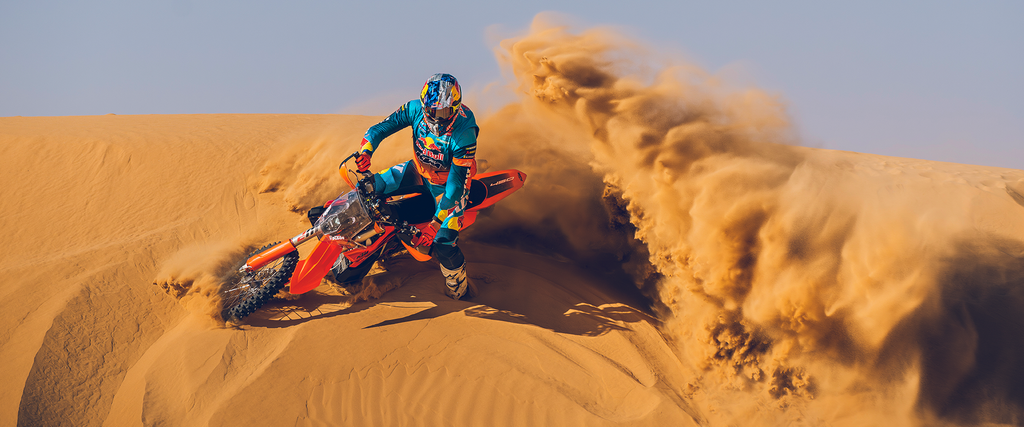
Nearly every major component of the 450 Rally Replica has been selected around the demands of high level rally competition. Photo Credit: KTM 2026
On paper, it sounds almost perfect.
Adventure riders have spent the last decade complaining about motorcycles becoming too heavy.
Here comes a roughly 300 pound rally machine.
We complain about small fuel tanks.
The Rally Replica carries approximately nine gallons.
We complain about inadequate suspension.
The Rally Replica has WP Pro suspension developed for rally competition.
We complain about fragile adventure bike components.
This motorcycle was designed around competition in some of the harshest riding environments on Earth.
We want 21 and 18 inch wheels.
It has them.
We want a rally tower.
It has one.
We want wind protection.
Range.
Ground clearance.
Off road capability.
Standing ergonomics.
Navigation.
Light weight.
The KTM 450 Rally Replica checks an astonishing number of boxes.
Which makes it tempting to look at this motorcycle and conclude:
This must be the ultimate adventure bike.
I’m not convinced that it is.
Dakar Is Not Adventure Riding
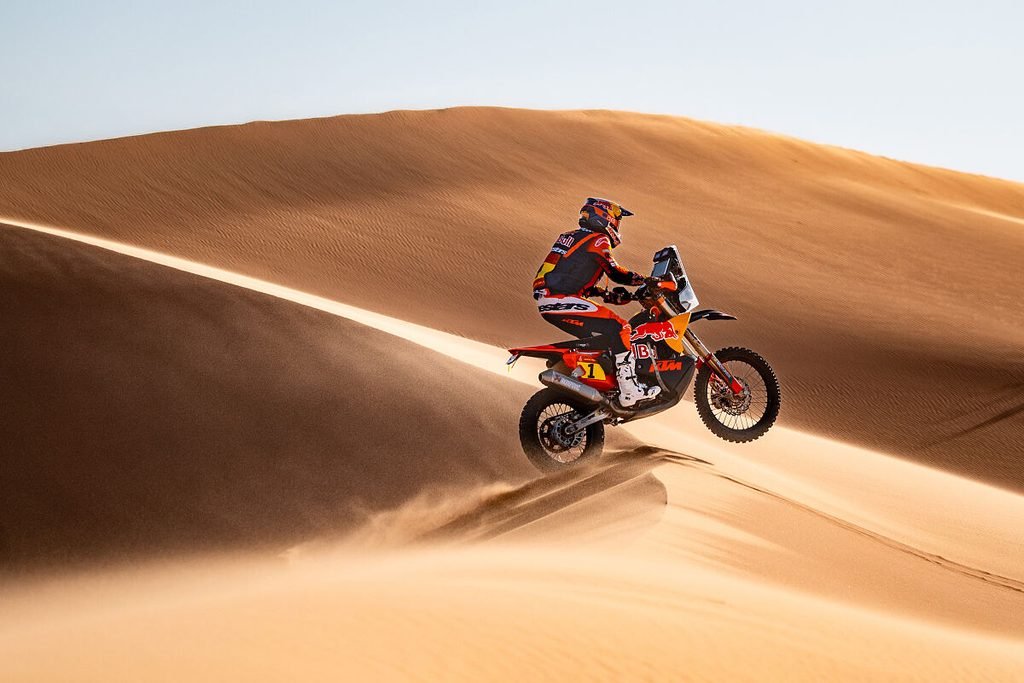
Rally racing and adventure travel may use similar terrain, but the motorcycles are designed around fundamentally different missions. Photo Credit: KTM 2026
This is where the distinction matters.
The Dakar Rally is an extraordinary test of motorcycles and riders.
But Dakar is not a BDR.
And a Dakar motorcycle isn’t designed around the same mission as an adventure motorcycle.
A rally bike is designed around one overriding objective:
Go extremely fast across difficult terrain for very long distances in competition.
Everything else follows from that.
The engine.
The suspension.
The ergonomics.
The fuel system.
The navigation system.
The chassis.
The service requirements.
Even the way equipment is carried.
The 450 Rally Replica is exceptionally good at its job because KTM has spent decades refining motorcycles for exactly that environment.
But specialization always involves tradeoffs.
And those tradeoffs don’t disappear simply because adventure riders think rally motorcycles are cool.
What Happens at the End of a Dakar Stage?
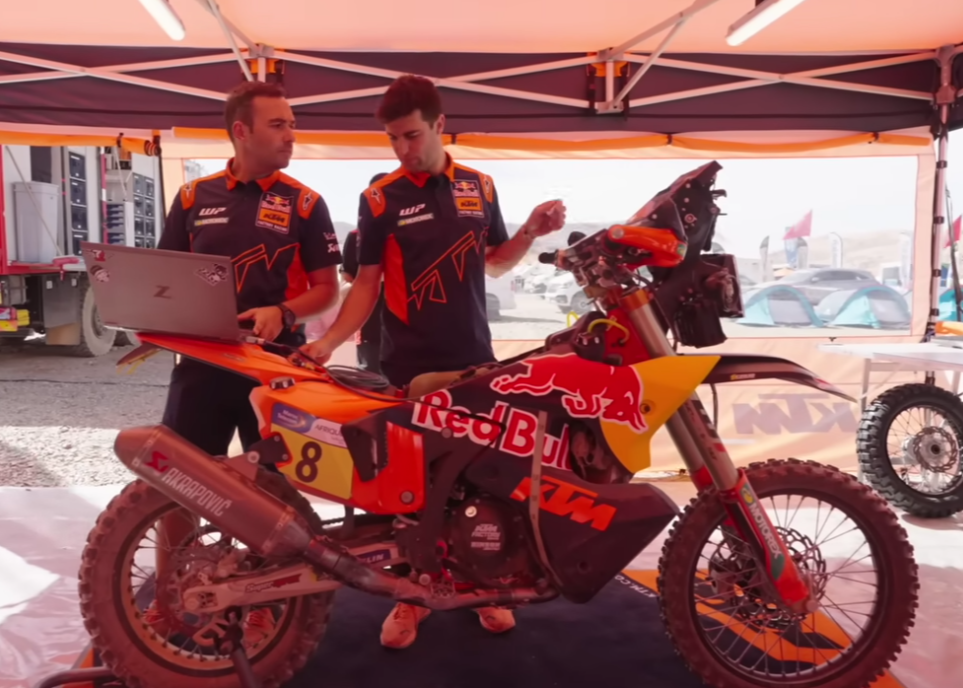
A competition rally motorcycle operates within an entire support system of mechanics, parts, tires and logistics something an ADV rider doesn’t have waiting at the next campsite. Photo Credit: Red Bull KTM Factory Rally 2026
This may be the biggest philosophical difference.
A Dakar motorcycle doesn’t need to live the same life as a normal adventure motorcycle.
Rally teams operate with an infrastructure behind the motorcycle.
Mechanics.
Parts.
Tools.
Tires.
Service equipment.
Logistics.
Technical support.
The motorcycle is designed to be maintained as a competition machine.
Adventure riding is almost the opposite.
You might ride several hundred miles and end the day at a campsite.
Then get up the next morning.
Load the bike.
Ride another few hundred miles.
Repeat.
There may be no mechanic waiting for you.
No truck full of parts.
No fresh tires.
No workshop.
Maybe it’s just you, your tool roll and whatever you strapped to the motorcycle three days earlier.
That changes what makes a motorcycle good.
Race Performance and Ownership Are Different Problems
There is a reason we don’t commute to work in Formula 1 cars.
It isn’t because an F1 car isn’t an extraordinary machine.
It’s because something can be extraordinarily good at one job while being unnecessarily compromised for another.
The same principle applies here.
The Rally Replica’s performance is fascinating.
But the average adventure rider should also be asking:
- How often does it need maintenance?
- How difficult is that maintenance?
- How available are parts?
- How expensive are replacement components?
- How well does the bike tolerate thousands of ordinary road miles?
- How comfortable is it when you’re not racing?
- How easily does it carry camping equipment?
- How does the suspension behave when loaded with luggage?
- What happens when you damage the navigation tower?
- What happens when you’re 1,000 miles from a KTM dealer?
And perhaps most importantly:
Are we actually using the capability we’re paying for?
Those questions matter more to an adventure rider than whether the motorcycle could theoretically cross the Saudi desert at race pace.
That Nine-Gallon Fuel System Is a Perfect Example
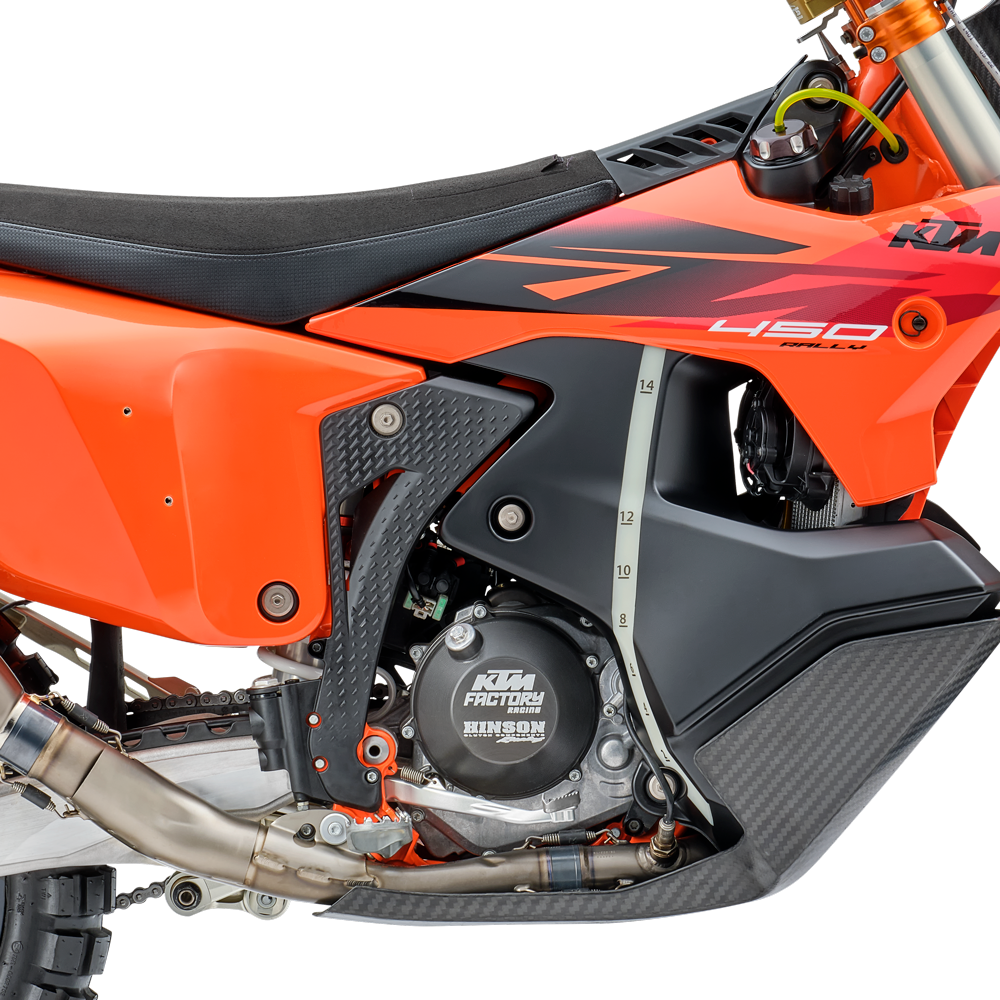
More than nine gallons of available fuel makes sense in rally competition, but maximum capacity isn’t necessarily the same thing as ideal ADV capacity. Photo Credit: KTM 2026
Nine gallons sounds fantastic.
We’ve talked repeatedly about range at In A Day’s Ride.
Range creates options.
Options are valuable in remote travel.
But rally fuel capacity exists for a specific reason.
The motorcycle needs enough fuel to complete long competitive stages at race pace.
That doesn’t automatically mean nine gallons is the ideal fuel capacity for every ADV rider.
Gasoline weighs roughly six pounds per gallon.
Nine gallons therefore represents more than 50 pounds of fuel when completely full.
Of course, you don’t have to fill every gallon.
And having the capacity available can be extremely useful.
But this illustrates something important:
Rally equipment exists to solve rally problems.
Sometimes those problems overlap perfectly with adventure riding.
Sometimes they don’t.
The Navigation Tower Tells the Same Story
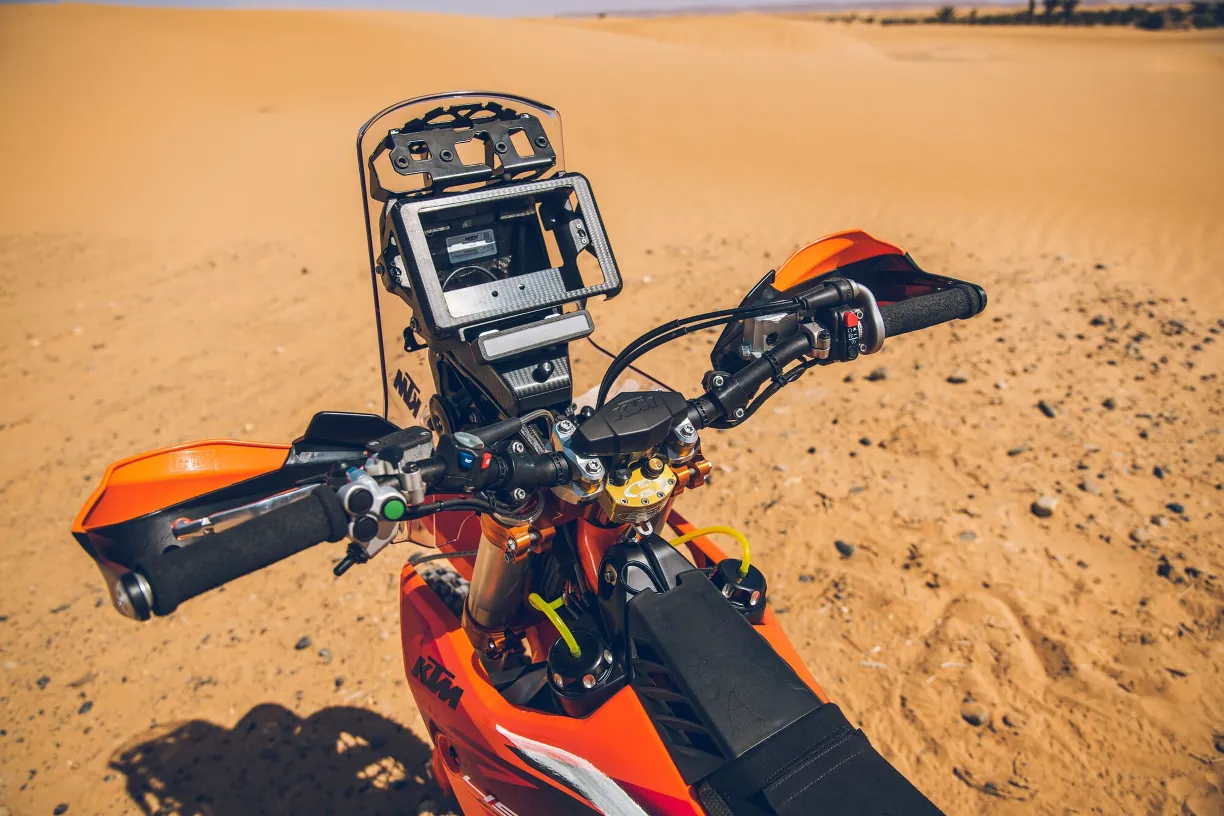
The carbon navigation tower exists around competition navigation requirements, not simply because rally towers look good on adventure motorcycles. Photo Credit: KTM 2026
Look at the cockpit.
It’s magnificent.
It looks exactly like what many of us picture when someone says “rally bike.”
But the tower exists to support competition navigation equipment.
Roadbook.
GPS Unik 4 and IRITRACK systems
Controls designed around navigating at speed.
An adventure rider might instead need:
A GPS.
A phone.
USB power.
Offline mapping.
Perhaps a satellite communicator.
Those requirements can fit into a vastly simpler cockpit.
Again, the rally solution is impressive.
That doesn’t automatically make it the best ADV solution.
And Then There Is the Suspension
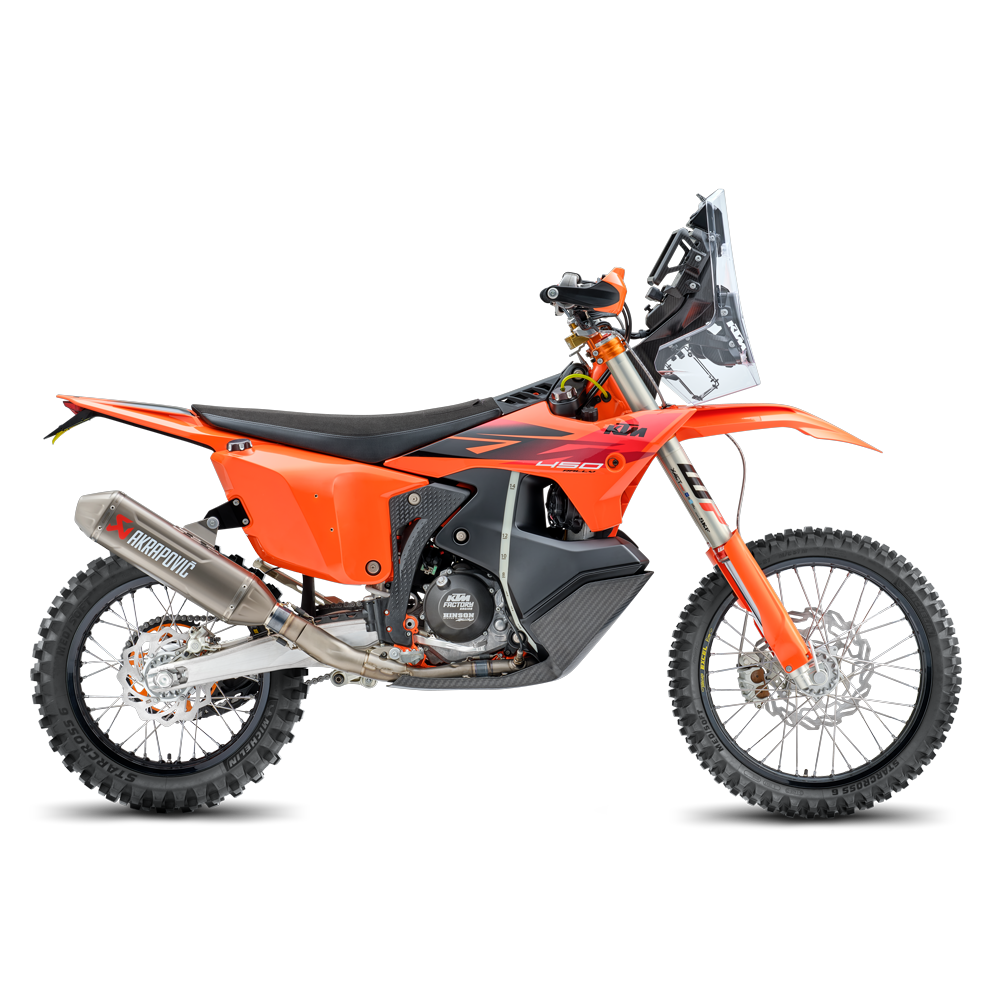
Photo Credit: KTM 2026
Twelve inches of front suspension travel.
Nearly eleven inches at the rear.
High end WP Pro components.
For aggressive off road riding, this is serious equipment.
But suspension isn’t simply better because it has more travel or because it came from a race program.
Suspension has a job.
A rally motorcycle needs stability and control while crossing rough terrain at speeds that most adventure riders will never approach.
An ADV motorcycle may instead need to work well:
- Loaded
- Unloaded
- On pavement
- On gravel
- At walking speed
- On washboard
- Over rocks
- With camping gear
- With a passenger
- After eight hours in the saddle
Those are different requirements.
The Average ADV Rider Isn’t Luciano Benavides
And that’s okay.
This is perhaps the most important point.
Adventure motorcycles shouldn’t be judged by whether professional racers could ride them faster.
They should be judged by whether we can ride them better.
A motorcycle capable of 100 mph across the desert doesn’t help much if its height, suspension, maintenance demands, or race focused character make the owner less comfortable riding it through a technical section at 12 mph.
We’ve made this argument before.
Related: The Best Adventure Bike Isn’t the Biggest One: How to Choose the Right ADV by Mission
The best adventure motorcycle isn’t necessarily the motorcycle with the greatest theoretical capability.
It’s the motorcycle that expands the number of places you’re willing to go.
That principle doesn’t suddenly stop applying because the motorcycle has Dakar credentials.
This Is Exactly Why the 690 Rally Is So Interesting
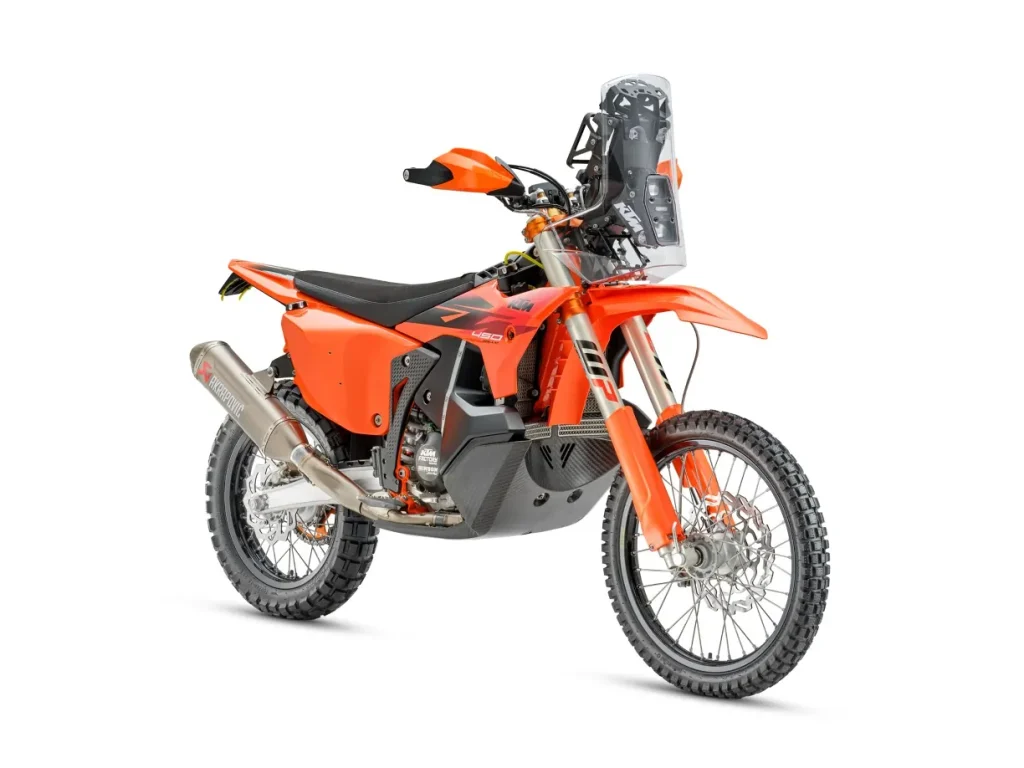
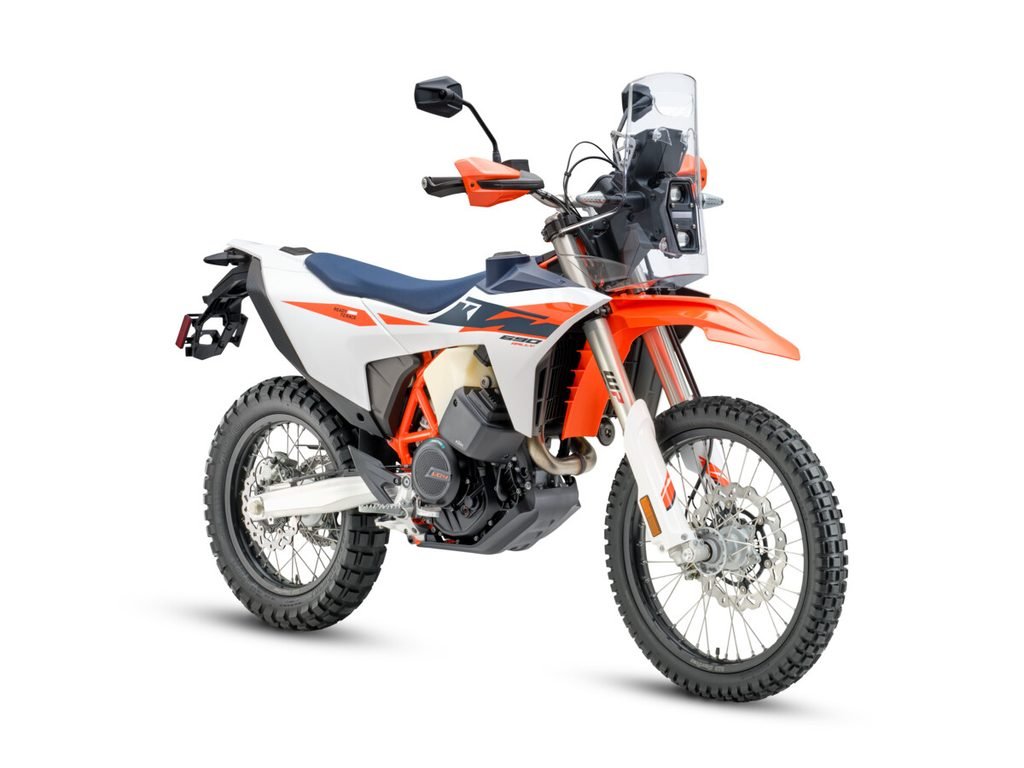
They share unmistakable rally DNA, but the 450 Rally Replica and 690 Rally are designed around very different definitions of long distance off road riding. Photo Credit: KTM 2026
KTM’s timing makes this comparison almost unavoidable.
Only days before announcing U.S. availability of the 450 Rally Replica, KTM unveiled the new 690 Rally.
Visually, the motorcycles speak the same language.
Rally tower.
Long suspension.
Large fuel capacity.
21/18 wheels.
Single cylinder engine.
Serious off road intent.
But philosophically, they are very different motorcycles.
The 450 Rally Replica is a race motorcycle.
The 690 Rally is a travel motorcycle shaped by rally experience.
That distinction may make the 690 far more interesting for the majority of adventure riders.
The 690 doesn’t need to be a Dakar motorcycle.
It needs to be something closer to what the old KTM 640 Adventure represented:
An off road motorcycle capable of traveling a very long way.
That is a very different design brief from:
A motorcycle capable of winning a rally stage.
Related: KTM Actually Did It: The 690 Rally Is the 640 Adventure Successor We Asked For
450 Rally Replica vs 690 Rally: Similar Look, Different Mission
| KTM 450 Rally Replica | KTM 690 Rally | |
|---|---|---|
| Primary mission | Rally competition | Adventure / travel enduro |
| Engine | 449.3cc single | 692.7cc single |
| Fuel capacity | Approx. 9.1+ gal | Approx. 5.3 gal |
| Navigation | Competition rally focused | Travel focused |
| Suspension intent | Rally racing | Off-road travel |
| Luggage priority | Minimal | Adventure travel |
| Maintenance philosophy | Competition | Production motorcycle |
| Ideal use | Rally competition | Adventure travel |
| Core question | How fast can we cross this terrain? | How far can we explore it? |
That last line may be the entire argument.
These motorcycles aren’t really competitors.
They represent two different interpretations of rally DNA.
The 450 Rally Replica Is Still Incredibly Cool
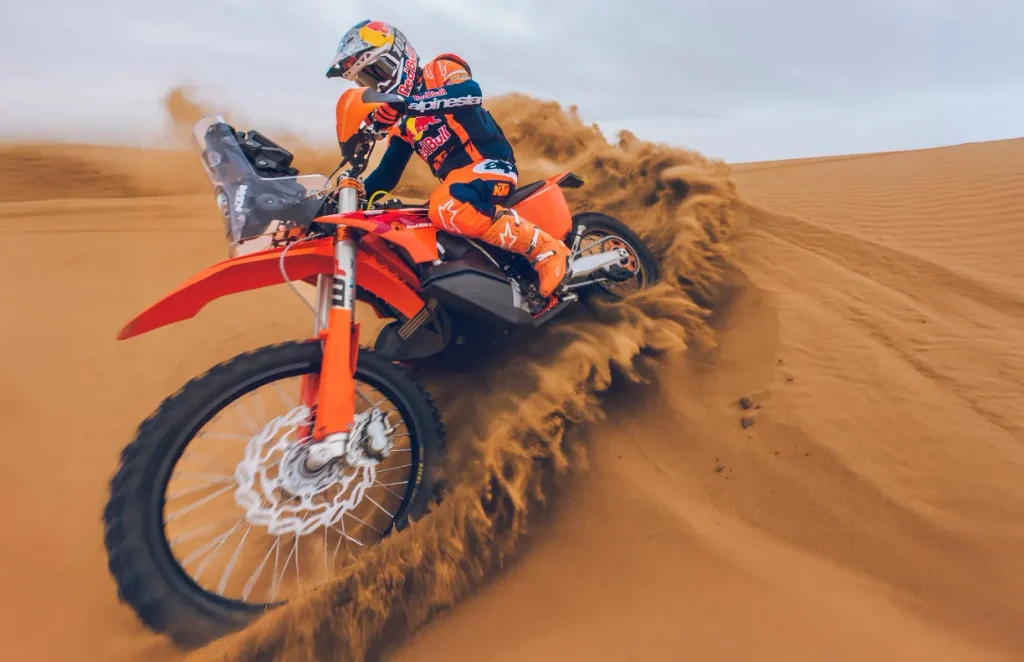
None of this makes me want the motorcycle less.
Quite the opposite.
There is something wonderful about KTM offering American customers something this uncompromising.
Motorcycles have become increasingly homogenized.
Ride modes.
TFT screens.
Adaptive electronics.
Heated seats.
Radar.
Bluetooth.
More weight.
More complexity.
The Rally Replica exists for one purpose.
Race across enormous distances as quickly as possible.
There is purity in that.
And the fact that someone in the United States can now walk into a KTM dealership and potentially buy something this closely related to KTM’s rally program is genuinely exciting.
If you want to race rallies, this motorcycle makes sense.
If you collect significant competition motorcycles, it makes sense.
If you’ve always wanted something close to a factory Dakar machine and can afford it, it’s difficult to imagine anything more interesting.
And if someone buys one, bolts camping equipment to it and rides across the country?
I absolutely want to hear about it.
But Don’t Confuse “Cool” With “Ideal”
Adventure motorcycling has always borrowed heavily from rally racing.
That’s part of what makes these motorcycles exciting.
The towers.
The navigation equipment.
The high fenders.
The long suspension.
The big tanks.
The upright riding position.
The graphics.
The entire visual language of modern ADV motorcycles owes something to rally competition.
But copying the appearance of a rally motorcycle isn’t the same as needing a rally motorcycle.
And even owning the real thing doesn’t automatically make it the right tool.
The 450 Rally Replica may actually demonstrate that better than almost any motorcycle we’ve discussed.
Because there is no question about whether this bike is authentic.
It is.
The question is whether authenticity to rally racing translates into suitability for adventure travel.
Sometimes it will.
Sometimes it won’t.
Maybe the Ultimate ADV Bike Isn’t a Dakar Bike
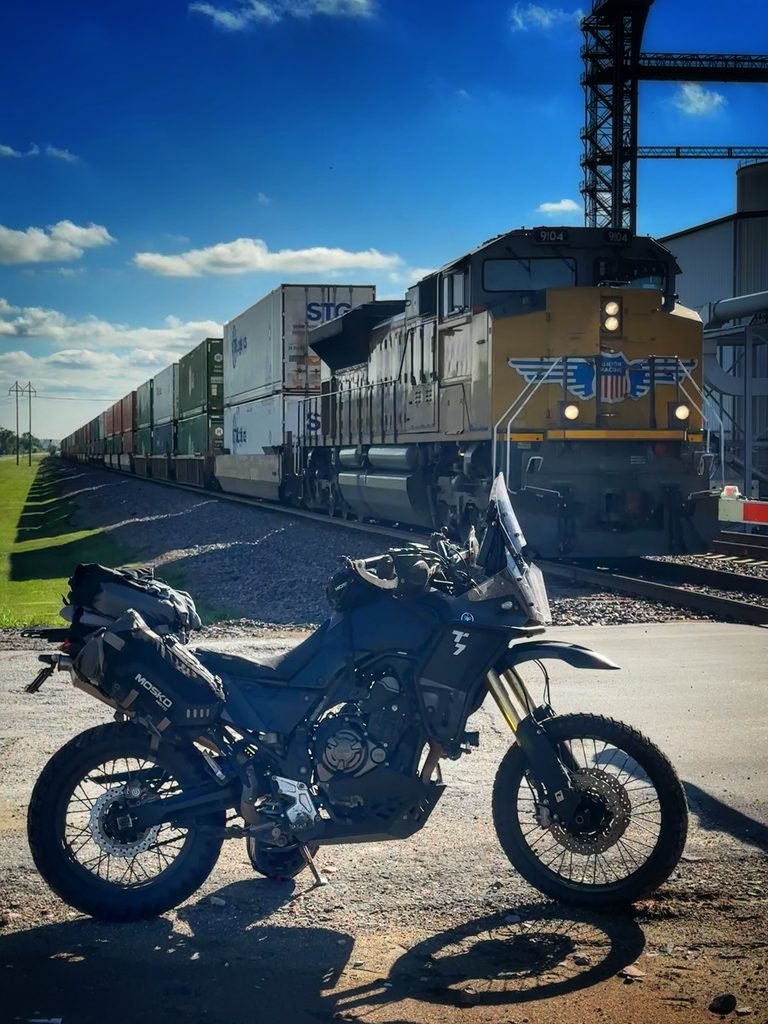
Photo Credit: RTWPaul 2026, follow his travels at rtwpaul.com
This brings us back to the question we’ve been exploring throughout this series.
What actually makes a great adventure motorcycle?
It probably isn’t maximum horsepower.
It isn’t maximum suspension travel.
It isn’t maximum fuel capacity.
It isn’t minimum weight at any cost.
And apparently it isn’t even maximum Dakar credibility.
The answer is balance.
Enough suspension for the terrain.
Enough fuel for the route.
Enough power for the highway.
Enough comfort for the distance.
Enough durability for the trip.
Enough simplicity to live with.
Enough carrying capacity for the equipment.
And little enough weight that we’re still willing to explore when the pavement disappears.
That’s why the new 450 Rally Replica is such an interesting motorcycle even for riders who will never buy one.
It shows us what happens when KTM removes nearly every compromise and builds a motorcycle around rally competition.
And that gives us a useful reference point for understanding what an adventure motorcycle needs to do differently.
Related: When Did Adventure Bikes Get Too Big?
Related: What Does a BDR-Ready Adventure Bike Actually Need?
The Rally Bike and the Adventure Bike
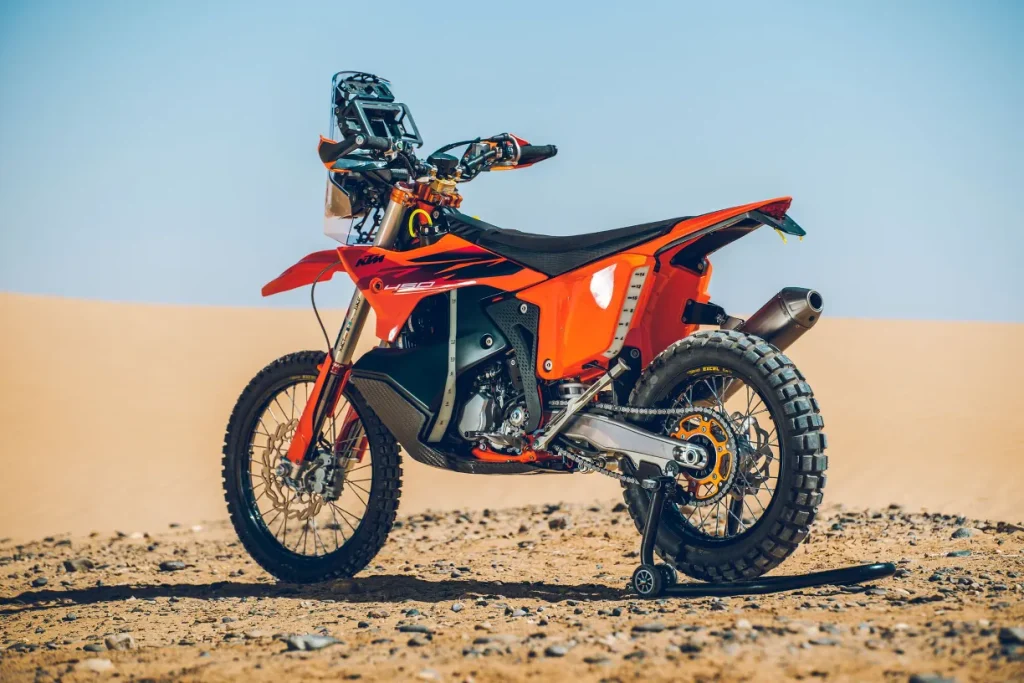
The 450 Rally Replica asks:
How quickly can we cross this landscape?
A great adventure motorcycle asks:
Where can we go next?
Those questions occasionally produce similar motorcycles.
But they don’t produce identical ones.
The 2027 KTM 450 Rally Replica may be one of the coolest motorcycles KTM has ever offered American customers.
It may be one of the closest things an ordinary rider can buy to a genuine Dakar competition motorcycle.
And I’d love to have one sitting in the garage.
But if the objective were to load a motorcycle tomorrow morning and disappear onto a BDR for a week?
I’d probably choose the motorcycle designed for the trip.
Not the race.
And that might be the most useful thing the 450 Rally Replica can teach adventure riders.
Sometimes the motorcycle we dream about and the motorcycle we actually need aren’t the same motorcycle.
Continue Reading
KTM Actually Did It: The 690 Rally Is the 640 Adventure Successor We Asked For
Why KTM’s new 690 Rally may represent a much more useful application of rally DNA for adventure riders.
690 Rally vs 640 Adventure: Did KTM Finally Build the 640’s Successor?
How KTM’s new travel enduro compares philosophically with one of the company’s most important adventure motorcycles.
The Best Adventure Bike Isn’t the Biggest One: How to Choose the Right ADV by Mission
Why choosing the right adventure motorcycle starts with deciding what you actually want the motorcycle to do.
When Did Adventure Bikes Get Too Big?
How adventure motorcycles evolved from relatively simple off road travelers into increasingly large adventure tourers.
What Does a BDR-Ready Adventure Bike Actually Need?
A practical look at the equipment and capability that matter when the objective is remote multi day adventure travel.